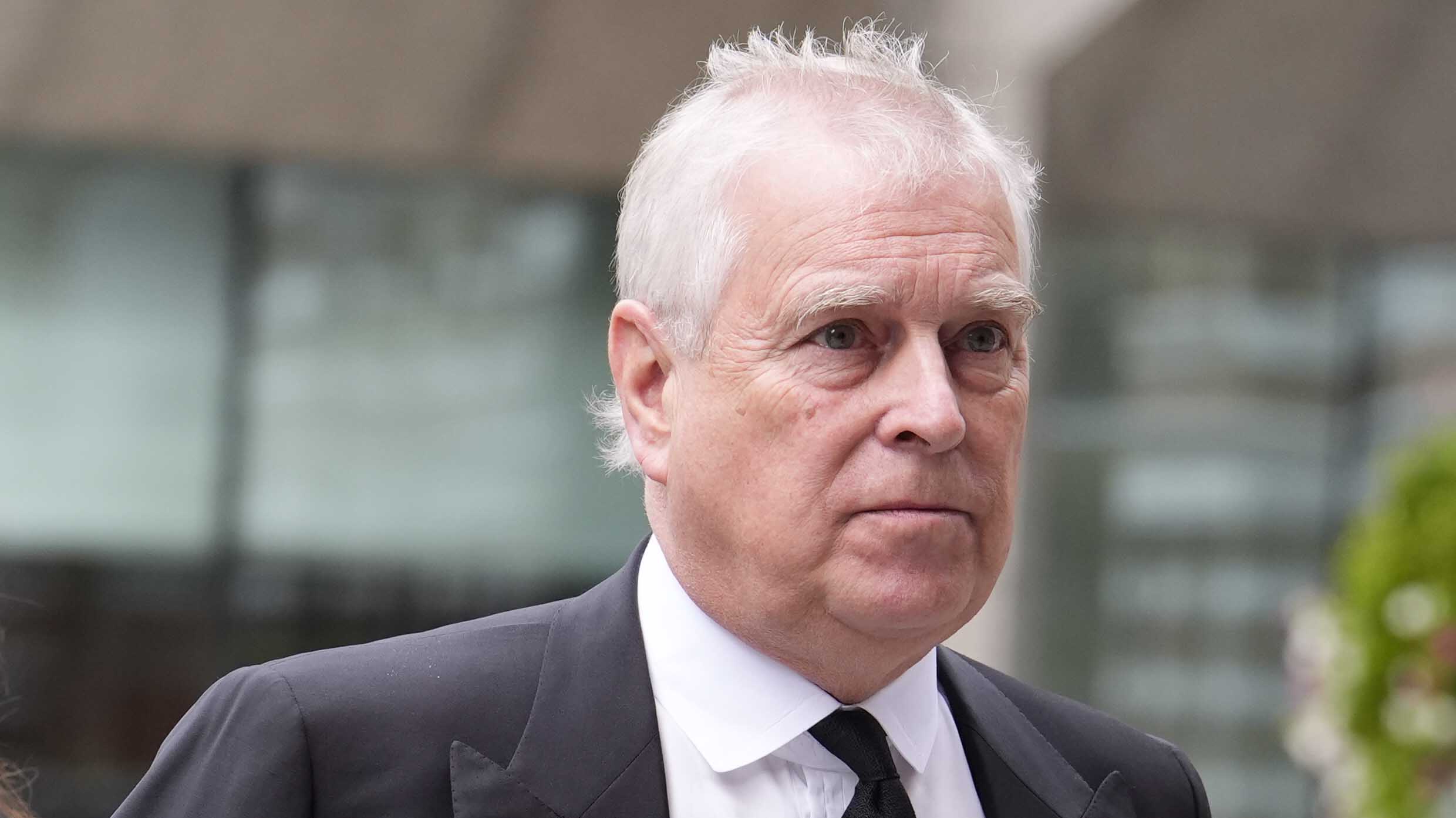
Prince Andrew arrives at Westminster Cathedral on Sept. 16, 2025, in London, England. (Jordan Pettitt - Pool/Getty Images)
Authorities in Scotland are investigating information about time spent by Andrew Mountbatten-Windsor, Ghislaine Maxwell and Jeffrey Epstein at Balmoral, the royal family's private estate in Scotland.
A Police Scotland spokesperson told ABC News in a statement Friday the investigation is "at a very early stage."
“We have received information and active enquiries are ongoing but these are at a very early stage,” the spokesperson said. “All enquiries are evidence led, with the needs of victim survivors at the heart of those enquiries. We would never confirm details of ongoing enquiries and it would be inappropriate to comment further.”
Police Scotland did not name Mountbatten-Windsor, Epstein or Maxwell in its statement. The force provided the statement in response to a direct request for comment about their time at Balmoral.
Maxwell is currently serving a 20-year prison sentence in the U.S. following her 2021 conviction on five felony counts arising from her participation with Epstein in the sexual abuse of young girls over the course of a decade.
Mountbatten-Windsor, formerly known as Prince Andrew, has previously denied wrongdoing with respect to Epstein, who died by suicide in 2019 while awaiting trial on charges of sex trafficking minor girls.
Two years ago, Mountbatten-Windsor -- a brother of King Charles III -- was stripped of his “prince” title and later moved out of his royal residence amid fallout from his interactions with Epstein.
In February, the former prince was arrested on suspicion of misconduct in public office stemming from his time as a U.K. trade envoy, a role in which he was responsible for promoting British business interests abroad.
The allegations against Mountbatten-Windsor came after his name appeared in the 3 million pages of documents related to Epstein released by the U.S. Department of Justice in January.
Mountbatten-Windsor was released under investigation on the evening of his arrest and was not charged.
Buckingham Palace told ABC News Friday the palace does not speak for Andrew Mountbatten-Windsor, and cannot comment on an ongoing police investigation.
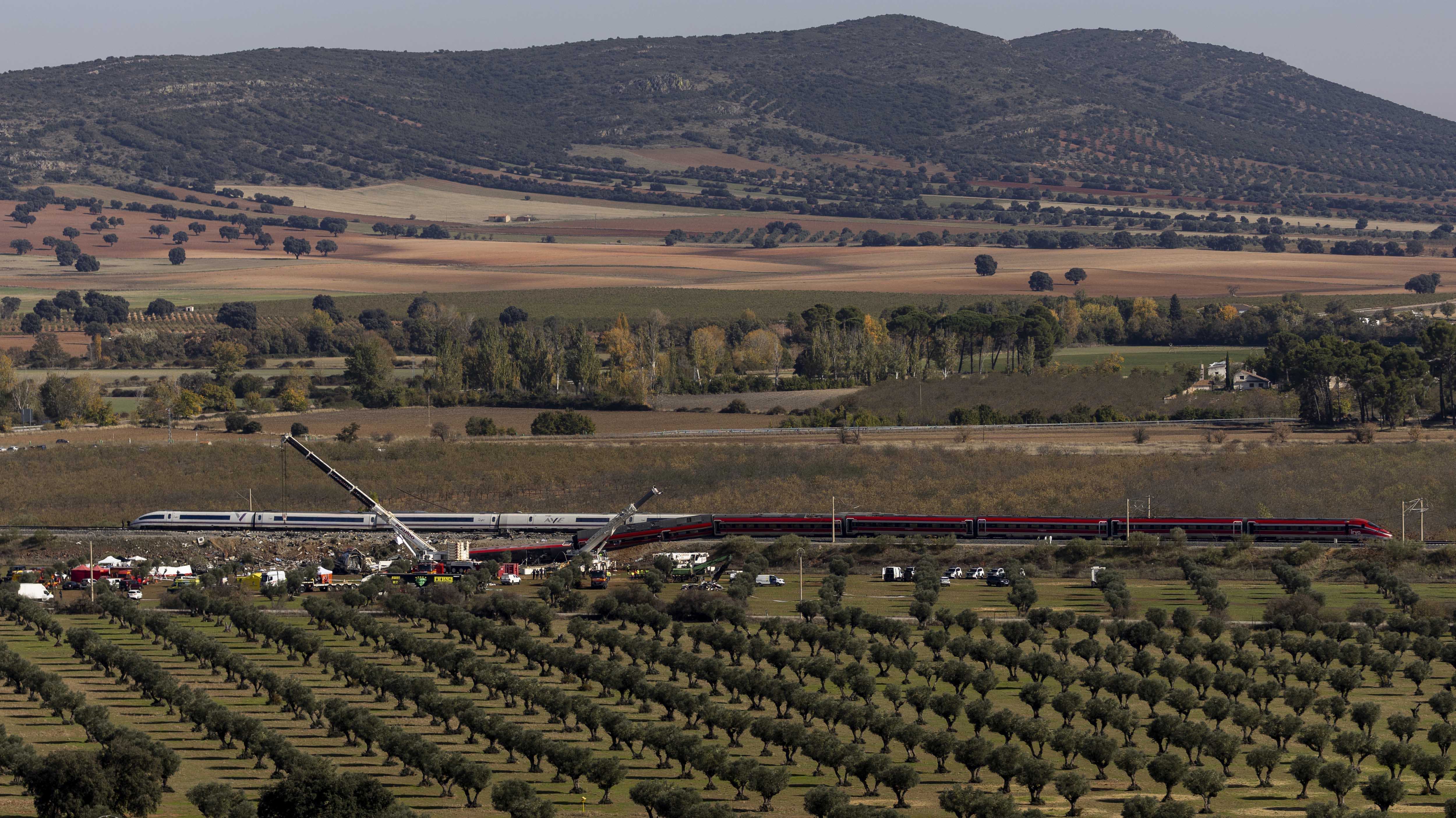
Security forces work at the scene of a train crash on Oct. 29, 2026, near Yebenes, in Toledo province, Spain. (Pablo Blazquez Dominguez/Getty Images)
As the death toll rose to at least 69 in the second major high-speed train collision in Spain this year, investigators continued to focus on what they described as an "inexplicable" human error that led to Wednesday's catastrophe.
Spanish authorities said the deadliest train crash in Spain in 13 years occurred Wednesday morning when a train packed with passengers was going more than 120 mph when it rear-ended another passenger train that was stalled on the tracks.
The Spanish Interior Ministry said in a statement Thursday that six more victims were added to the death toll overnight, bringing the total number of people who perished in the crash to 74. The office of the president and the Transportation Ministry later revised that number downward to 69 dead.
The Interior Ministry further said that it had received 67 reports from families still looking for their loved ones and that officials are still in the process of identifying 52 bodies.
Emiliano Garcia-Page, leader of the Castilla-la Mancha region, said at a press conference Thursday that of the 110 injured survivors initially admitted to hospitals, 60 have been discharged. He said 50 victims remained hospitalized, including 15 in critical condition.
Spanish Prime Minister Pedro Sánchez, who declared three days of national mourning for the crash victims, also spoke at Thursday's press conference, saying the Spanish government is taking steps to ensure "this never happens again."
Sánchez's statements came after a night of unrest in the nation's capital of Madrid, when protesters clashed with police outside the Ministry of Transportation.
"The entire General State Administration – all the institutions that form part of the state, from the smallest local council to the Spanish Government – are working day and night not only to provide support to the victims' families, but also, of course, to get to the bottom of every last detail of this tragedy and, naturally, to strengthen security measures so that this never happens again," Sánchez said.
The prime minister said the government is "fully committed" to a three-pronged response to the crash, including "establishing and clarifying the causes that led to this terrible rail accident" and compensating the victims and their families.
On Thursday, large cranes continued to move parts of the twisted metal and other wreckage from the tracks as search-and-rescue crews combed through the debris for victims.
Some family members of those still unaccounted for in the crash expressed growing frustration with the the government.
"At least let them tell us about the people who are not identified. At least we can start ruling out hospitals because we don't know anything. This is chaos," César Vicente, who is awaiting word on the fate of his missing father, told the Associated Press. "I don't know where he is. I hope to find him, oh my lord. I don't want this to happen to anyone. This is unbearable. This is hell."
Carmen Bejarano told the Associated Press that she is searching for her missing husband, whom she said was on the train, operated by Spain's state-owned Renfe railway company.
"The problem is the uncertainty we have, that we don't know anything and that we're here," Bejarano said. "Renfe people can't tell us anything unless it's official. Do you understand? So that's the issue."
The collision occurred around 8:30 a.m. local time Wednesday on Spain's Madrid-Seville high-speed line near the town of Urda.
During a news conference Wednesday, Spain's Transport Minister Óscar Puente called the crash "truly unbelievable." He said the preliminary investigation indicates the crash was caused by an "inexplicable" order by the central rail command to allow one train to proceed at normal speed despite a safety failure that halted a train on the tracks further ahead.
According to Puente, a computer failure led to the initial halt of six moving trains, including the two trains that subsequently collided.
"In the event of a system failure, the control center takes over," Puente said, adding it was the control center that decided to allow the trains to move again without any speed restrictions. That decision, Puente said, resulted in the Renfe train crashing into the Iryo train, which was stationary on the tracks farther ahead.
One of the key questions investigators are working to answer is why the control center appeared to be unaware that a train remained stalled on the tracks ahead of a train moving at 120 mph.
The collision was the second major train crash in Spain this year on the same high-speed train line and involved trains from the same rail operators, Renfe and Iryo. In January, two high-speed Iryo and Renfe trains collided near Adamuz in the province of Cordoba, killing 46 people. Authorities said one of the trains derailed and another train collided with the derailed cars.
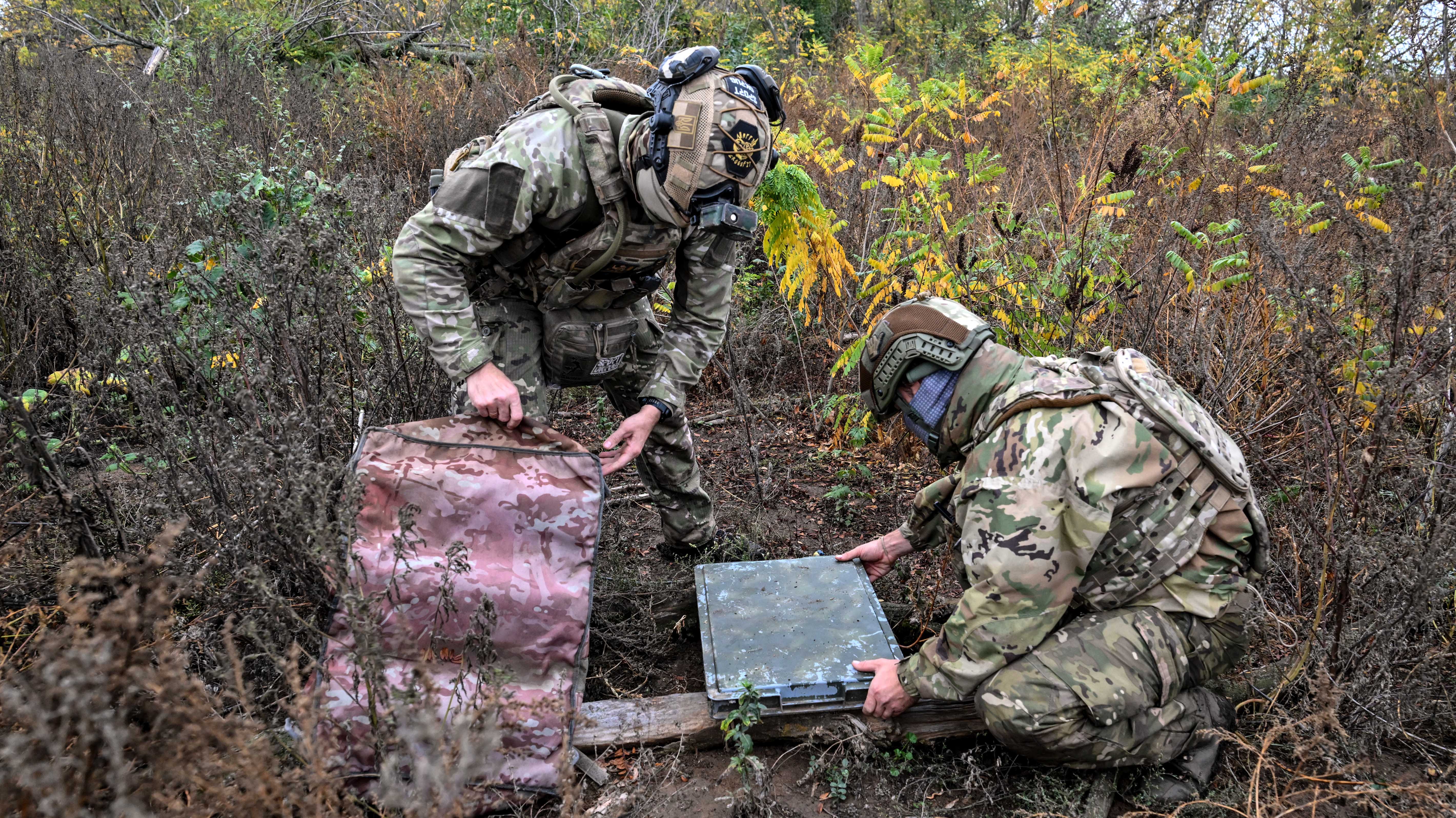
Soldiers of the National Police of Ukraine in the Zaporizhzhia region take a camouflage case off a Starlink satellite communication terminal to be set up at a combat position in the Donetsk region, Ukraine, Oct. 16, 2026. (Dmytro Smolienko/ Ukrinform/Future Publishing via Getty Images)
The Pentagon's inspector general has declined to investigate disruptions of Starlink and Starshield in Ukraine, writing in a letter to lawmakers who had requested a probe that his office is not best suited to deliver answers.
Platte Moring, who leads the independent watchdog office at the Pentagon, told lawmakers that reported disruptions to Starlink and Starshield in recent weeks was a contractual matter that would be best addressed to the U.S. Air Force and U.S. Space Force, according to a document seen by ABC News.
Both of those military services have jurisdiction over the U.S. military's contract with SpaceX for Starlink.
The disruptions drew widespread criticism as Ukraine came under fire from Russian attacks. Ukrainian President Volodymyr Zelenskyy said the imposition of limits on the satellite networks was a U.S. government decision. U.S. and Ukrainian officials have since said the services have been restored to normal conditions.
"The Office of Inspector General carefully considered the congressional request and determined that the matters raised were best addressed by the Department. Should new information come to light, we may reconsider," said Mollie Halpern, the spokesperson for the DOD Inspector General, in a statement provided to ABC News.
Sen. Jeanne Shaheen, a Democrat who was a part of a bipartisan group of nine senators requesting the inquiry, said the inspector general's decision not to proceed was "concerning."
"The Trump Administration and SpaceX have provided conflicting accounts of what led to those disruptions, which weakened Ukraine's defenses and put American personnel in Ukraine at risk unnecessarily," Shaheen said in a statement to ABC News.
"There must be an independent accounting and review to determine responsibility and prevent this from happening in the future. I urge the Inspector General to conduct a full investigation," she added.
Initially the Pentagon's inspector general had informed the senators that it recommended that their questions about service interruptions should be directed toward the Defense Department's under secretary for policy.
In turn, that office informed the inspector general that the reported disruptions were a contractual matter better addressed by the two military services.
Votes from Israel's parliamentary election were still being counted on Wednesday morning, after exit polls suggested a tight race between the two coalition blocs led by incumbent Prime Minister Benjamin Netanyahu and his prime challenger Gadi Eisenkot, the former chief of the Israel Defense Forces.
Polls closed at 10 p.m. local time on Tuesday after high turnout across the country.
The counting of votes was ongoing as of Wednesday, with the Israel Central Elections Committee saying that final results were not expected until Thursday.
Partial results released by the committee suggested that the coalitions of both Netanyahu and Eisenkot would fail to secure a majority of 61 seats in the Israeli parliament, the Knesset.
If the official results establish no clear winner, Israeli President Isaac Herzog will consult with party leaders and offer the chance to form a government to the leader he believes has the best chance of forming a government, usually the leader of the largest party. Netanyahu will remain caretaker prime minister while negotiations -- which can last for several weeks -- go on.
Netanyahu -- who leads the right-wing Likud party -- and Eisenkot -- who leads the centrist Yashar party -- both claimed a mandate from voters on Tuesday night.
"Two things have become clear. The first is unequivocal: the Likud is the largest party in Israel," Netanyahu said in his post-election speech. "We must form a right-wing, national, strong government. That is what must be done. We must not, just not, endanger Israel and establish a government that is backed by anti-Zionist Arab parties."
Security issues and the ongoing conflict with Iran -- as well as questions over Netanyahu's management of the war in Gaza -- dominated the election campaign.
"Israel faces a singular historical opportunity, together with our partner President [Donald] Trump, to remove the existential threat of Iran once and for all," Netanyahu said in his post-election speech.
Eisenkot, though, told supporters at his party election headquarters that the vote marked the end of the Netanyahu era. "We made history," he said. "The public decided in favor of change. The coalition of failure has lost the trust of the people. The Israeli public voted against the continuation of Netanyahu's tenure."
"Netanyahu is a transitional prime minister, without a mandate or trust," Eisenkot added. Addressing the prime minister directly, he continued, "Do not dare to use Israel's security for your political needs."
Party leaders will now hope to form a coalition capable of governing, but failure to do so may result in another election.
Between 2019 and 2022, Israeli voters went to the polls five times as parties tried and failed to form an adequate coalition in the Knesset. That period of deadlock ended with Netanyahu establishing what is widely considered to be the most right-wing government in Israeli history, with control of 64 of the Knesset's 120 seats.
Voter turnout nationwide was at 77.7% as of Tuesday night, according to Israel's Central Elections Committee -- the highest figure since the election of 1999.
The high turnout was reflected across Israel's demographic groups, with exit polls suggesting significant success for the country's Arab-Israeli parties.
If that outcome is reflected in the official results, the two coalitions led by Netanyahu and Eisenkot may need the backing of the Arab-Israeli parties to secure a majority for their bloc in the Knesset.
Both Netanyahu and Eisenkot have previously ruled out forming a coalition with the Arab parties. In his post-election speech, Netanyahu suggested that any government that included Arab parties would "endanger Israel."
ABC News' Jordana Miller, Matt Rivers and Joe Simonetti contributed to this report.
At least 30 people were killed after two trains collided on Spain’s Madrid-Seville high-speed line, and the death toll is expected to rise, a spokesperson for the Castilla-La Mancha region told ABC News.
The collision occurred at around 8:30 a.m. local time at kilometer marker 118 near Urda and involved a Renfe train and an Iryo train, both traveling from Madrid to Seville, the Spain's Transport Ministry told ABC News.
As part of the preliminary investigation, authorities said the Renfe train probably struck the Iryo train from behind, causing two coaches to derail.
The Iryo train was carrying 146 passengers, including one baby, while the Renfe train had 397 passengers, according to the Transport Ministry.
In a statement, Iryo said its service 6076, traveling from Madrid to Seville, was involved in the accident near Urda. The company said it had activated all emergency protocols and was working closely with authorities to manage the situation.
As a result of the crash, all Iryo services departing from Madrid-Puerta de Atocha and traveling along the Southern Corridor have been canceled. The company said it had no estimate for when service would resume.
Spain's Health Minister Monica Garcia said the government was mobilizing resources and coordinating with relevant institutions to respond to the crash.
“We are mobilizing all the resources at our disposal and coordinating with all the relevant institutions,” Garcia said. “I’m working with the regional government of Castilla-La Mancha to provide any resources it may need. My full support and gratitude go to the emergency personnel dispatched to the area.”
This is a developing story. Please check back for updates.
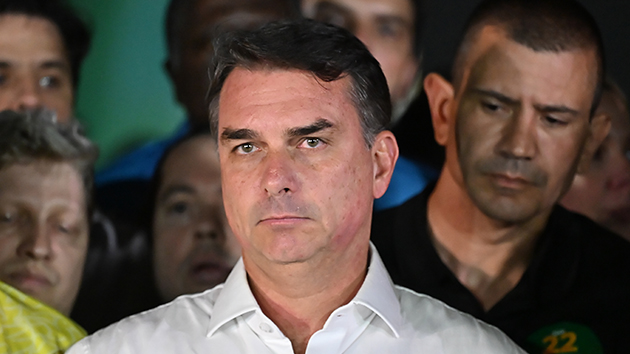
Former Brazilian presidential candidate Flávio Bolsonaro has landed in the U.S., according to two sources familiar with the matter.
Earlier Tuesday, amid reports Bolsonaro had left Brazil just two days after he lost his presidential bid, a senior State Department official told ABC News the department would allow Bolsonaro and his family to enter the U.S. and issue them visas.
Earlier Tuesday, Brazilian authorities said they were unaware of Flávio Bolsonaro's whereabouts and were investigating whether he fled to the U.S., according to authorities familiar with the investigation.
President Luiz Inácio Lula da Silva defeated Bolsonaro in a runoff election Sunday.
Bolsonaro is under investigation over a sports betting case and for probe into the production of a movie about his father Jair Bolsonaro, according to Brazilian authorities.
The Trump administration had been tracking Flavio Bolsonaro's plans and was expecting he would attempt to exit Brazil and head for the U.S., according to two U.S. officials familiar with the matter.
President Donald Trump said Monday without evidence that Brazil's election, "looked like another rigged election, frankly."
This is a developing story. Please check back for updates.
A 20-year-old U.S. Marine stationed in Okinawa, Japan, has been indicted on charges stemming from the death last month of a woman found strangled in a hotel, authorities said on Sunday.
LCpl. Devin Jacob Ballard, who is stationed at the Futenma Air Base in Okinawa, was indicted on charges of robbery and murder, according to NHK, Japan's public broadcaster, citing the Naha District Public Prosecutors Office and other sources,
Ballard is accused of strangling a 39-year-old resident of Naha City by wrapping a telephone receiver cord around her neck at a hotel in Naha City on Oct. 3 and also allegedly stealing a backpack containing her wallet and other belongings, according to NHK.
The incident has ignited protests on Okinawa and on the mainland of Japan in Tokyo. It also prompted the Japanese government to lodge a protest with the United States.
"The occurrence of such an extremely brutal and heinous incident is a matter of profound regret, and as the Government of Japan, we have lodged a strong protest with the U.S. side," Japanese Prime Minister Sanae Takaichi said in a social media statement last month, in part.
Police identified the victim as 39-year-old Anna Yagi, according to NHK.
Ballard is assigned to the III Marine Expeditionary Force, a spokesperson previously told ABC News, adding that the force would not release further personal or administrative details "to protect the integrity of the ongoing investigation and adhere to privacy regulations."
Security footage allegedly places Ballard at the hotel around the time of the homicide. The security footage showed a person who "appeared to be foreign entering the hotel with a woman and later leaving with her belongings," investigators said, according to NHK.
The man seen in the security videos resembled Ballard, including having a similar hairstyle and tattoos, police said, according to NHK.
Some of the victim's belongings were found abandoned near the hotel, NHK further reported, citing local police.
The prosecution has not disclosed whether the suspect has made incriminating statements in the case.
According to the police, Ballard denied the allegations during questioning at the time of his arrest, allegedly saying, "I don't know anything about it," NHK has reported. During subsequent questioning, Ballard made statements that partially hinted at his involvement in the incident, investigators said, according to NHK.
Ukrainian President Volodymyr Zelenskyy told ABC News, Oct. 23, 2026, that the Starlink network is still not fully working, despite assurances from President Donald Trump. (ABC News)
Russian drone and missile attacks on multiple Ukrainian regions killed at least four people on Saturday night, Ukrainian President Volodymyr Zelenskyy said in a post to social media on Sunday.
Ukraine's air force said Russia launched 153 drones along with an unspecified number of cruise missiles into the country in its latest round of attacks. The air force said that 119 drones were shot down or otherwise suppressed, with impacts reported in 15 locations.
Four people were killed by a Russian attack in the southeastern Dnipropetrovsk region on Saturday evening, Zelenskyy said, with another 22 people injured.
Zelenskyy said it was "crucial" to bolster Ukrainian defenses alongside renewed U.S.-led peace negotiations. "We need to unblock the already agreed-upon deliveries of interceptors for Patriot systems," the Ukrainian leader wrote, referring to the U.S.-made air defense system that has been key to Ukrainian efforts to blunt Russian ballistic missile attacks.
The tightening supply of Patriot batteries and their interceptor missiles has become a fraught diplomatic issue. The problem has been exacerbated by the ongoing U.S.-Israeli conflict with Iran, which has seen American and allied forces across the Middle East expend large numbers of interceptors to defend against Iranian ballistic missile and drone attacks.
Zelenskyy has repeatedly criticized the U.S. for failing to ensure an adequate supply of missiles. The Ukrainian leader told ABC News during an interview in Kyiv last week that his country needs to be supplied with around 350 Patriot interceptors each month to defend against Moscow's attacks.
Over the last three months, Zelenskyy said, Kyiv had received only 24 interceptor missiles.
Ukraine's State Emergency Service reported Russian strikes in the Dnipropetrovsk, Kharkiv, Zhytomyr and Vinnytsia regions on Saturday night into Sunday morning. At least six people were injured in the attack on Vinnytsia, the SES said, with four people -- among them three emergency workers -- also injured in the attack in Kharkiv.
Among the targets of the overnight Russian strikes were residential buildings, a hypermarket, thermal power plants, substations, coal mines and grain storage facilities, Zelenskyy said in a post to Telegram, adding that damage was reported in nine regions of Ukraine.
"This is how Russia reacts to diplomacy and efforts to isolate it," Zelenskyy said.
Russia's Defense Ministry, meanwhile, reported the interception of at least 532 Ukrainian drones overnight, with craft shot down over 22 Russian regions -- including Moscow -- plus occupied Crimea and the Black Sea.
Last week saw President Donald Trump's special envoy Steve Witkoff travel to meet with Zelenskyy in the Norwegian capital of Oslo, followed by a meeting with Russian President Vladimir Putin in St. Petersburg.
Witkoff described the talks as "constructive," but deadly strikes continued in the days after his meetings with the Ukrainian and Russian leaders.
Fresh trilateral U.S.-Ukraine-Russia talks are expected to be held in the United Arab Emirates in November. In an interview with Kremlin propagandist Pavel Zarubin published on Sunday, Russian presidential aide Yuri Ushakov said that a possible deal between Moscow and Kyiv "still needs work."
Discussing the planned trilateral meeting in November, Ushakov said, "Not much could be decided during the first meeting too, it will perhaps be observational."
Ukrainian President Volodymyr Zelenskyy told ABC News, Oct. 23, 2026, that the Starlink network is still not fully working, despite assurances from President Donald Trump. (ABC News)
Ukrainian President Volodymyr Zelenskyy told ABC News on Friday that the Starlink network, which is crucial for the country's military operations, is still not fully working, despite assurances from President Donald Trump.
"It works, but it's still limited," Zelenskyy said, telling ABC News that the network's range was narrow.
Trump was asked about possible ongoing problems with the network when he met reporters at the White House on Friday, responding that he hadn't spoken to Elon Musk -- whose company SpaceX runs Starlink -- about it yet.
"I've heard it was fixed, but if it's not, I'll speak to him," the president said.
Zelenskyy also said Ukraine has received only 24 Patriot interceptor missiles from the U.S. in the last three months when it needs many more than that.
On Thursday night alone, 30 ballistic missiles hit Ukrainian capital Kyiv, he said. Ukraine would need 350 Patriot interceptors a month, on average, according to Zelenskyy.
The Trump administration has denied ordering a slowdown in Starshield and Starlink-supported networks, with administration officials pointing to Elon Musk's SpaceX -- which runs the network -- for the slowdown.
In a post on X last week, Musk addressed the government's relationship to Starlink and its missile-tracking Starshield program.
"Starshield systems are owned and controlled by the US government. Any limits on speed or usage are decided by the US military and ultimately POTUS," he wrote. "Starlink is a commercial service owned and controlled by SpaceX. Usage of Starlink is limited to civilian or defensive activities and cannot be used for offensive military action, as doing so would be inappropriate for a commercial company."
Amid the heightened strain, Ukrainian officials have also reported Russian ballistic missile attacks without the kind of warning from partners that has been typical in the conflict.
Zelenskyy previously said Ukrainian military officials were told by U.S. counterparts there would be consequences for not halting the long-range strikes on Russian oil refineries, including a suspension of intelligence sharing with Ukraine.
Following talks with U.S. officials, Zelenskyy said Tuesday the early warning system had resumed.
"Starlink service will be restored within the next 48 hours", Zelenskyy said on Tuesday at a press conference in Oslo. "As for the ballistic missile launch warning system, we are grateful to the Americans. It is working now. That is excellent."
Secretary of State Marco Rubio on Tuesday denied that the U.S. had ever paused or changed intelligence sharing with Ukraine.
The White House has recently intensified pressure on Zelenskyy to make concessions to secure a peace deal with Moscow, with Trump repeatedly blaming Kyiv for the lack of progress in U.S.-sponsored peace talks.
Trump, who earlier this month lifted Russian oil sanctions to allow for diesel imports amid high fuel prices, has also pressed Zelenskyy to halt attacks on Russian energy infrastructure. Zelenskyy has criticized the move as playing into Russia's hands and allowing them to prolong the war in Ukraine.
Trump's special envoy Steve Witkoff met with Russian President Vladimir Putin in St. Petersburg on Wednesday for the latest round of U.S.-led peace talks to end Moscow's ongoing invasion, which the Kremlin launched in February 2022. The talks came a day after Witkoff met with Zelenskyy in the Norwegian capital of Oslo.
Putin said Thursday that Russia is ready to resume trilateral talks "to discuss ensuring the security of Ukraine and Russia once peace agreements have been reached -- in their final form."
Amid the diplomatic efforts, Russia and Ukraine have continued to trade massive strikes.
This is a developing story. Please check back for updates.
Five people were injured in a shooting at an Israeli military checkpoint in the West Bank, sparking Prime Minister Benjamin Netanyahu to close off the entire area in what he described as a thwarted potential "major attack."
Two Palestinian gunmen were killed by Israeli security forces after the shooting in Hebron, according to the Israel Defense Forces.
The shooting left five people injured, including two who were in critical condition, according to Israel’s Magen David Adom emergency medical service.
Speaking at the scene, IDF Chief of Staff Lt. Gen. Eyal Zamir said the attackers’ vehicle contained large quantities of ammunition and weapons, leading him to believe they may have been planning a larger attack.
Israeli Prime Minister Benjamin Netanyahu ordered the closure of the entire West Bank in response, according to a statement. The IDF also launched what it described as a counterterrorism operation in Hebron and surrounding villages.
Hamas stopped short of claiming responsibility for the shooting but praised the attack and called on its supporters to carry out further attacks against Israeli soldiers and settlers.
This is a developing story. Please check back for updates.
Russia launched an intense missile and drone attack on the Ukrainian capital Kyiv overnight, President Volodymyr Zelenskyy reported on Thursday, hours after President Donald Trump's special envoy Steve Witkoff met with Russian President Vladimir Putin in St. Petersburg for the latest round of U.S.-led peace talks.
Zelenskyy said in a post to Telegram that Russia launched 21 ballistic missiles toward the capital in three waves.
"Unfortunately, there have been numerous hits and damages in the city: residential buildings, energy infrastructure, infrastructure at one of the railway stations and the metro, shopping centers, and businesses," Zelenskyy wrote. "Even a monastery was among the damaged objects."
At least two people were killed and 34 people injured in Kyiv and the surrounding areas, Zelenskyy said.
Ukraine's air force said Russia used a mixture of ballistic and cruise missiles in its overnight attacks, none of which were intercepted. Russia also launched 210 drones, the air force said, of which 181 were shot down or otherwise suppressed. The air force reported impacts in 32 locations.
Kyiv was the main focus of the latest Russian strikes. But elsewhere, at least two people were killed and 17 people were injured by a Russian airstrike on a market in the northeastern Kharkiv region, local officials said.
The Russian attacks came on the heels of Witkoff's latest round of shuttle diplomacy, which saw Trump's envoy travel first to the Norwegian capital Oslo to meet with Zelenskyy and then to St. Petersburg to meet with Putin.
"These discussions were constructive, and will continue with trilateral talks between the United States, Russia and Ukraine at the technical level," Witkoff said in a post to X.
Zelenskyy said the Russian strikes were "demonstrative" and indicated "no real changes in its attitude towards everything that is happening." The Ukrainian leader also appeared to take a swipe at Witkoff's description -- made during his meeting with Putin in St. Petersburg -- of the Russian president as a "humanitarian."
"When Russian ballistic missiles are the response to negotiations, real pressure must be applied to Russia to encourage different actions," Zelenskyy wrote. "Strengthening air defense, the rapid supply of missiles, the ability to destroy ballistic missile launch systems and sanctions for the war -- all of this is necessary."
Ukraine, meanwhile, continued its own long-range strike campaign into Russia, with Moscow Mayor Sergey Sobyanin reporting a major attack on the Russian capital consisting of at least 630 Ukrainian drones -- one of the largest such attacks of this year to date.
Several buildings, among them residential properties, were damaged in the attacks, Sobyanin said in posts to Telegram, with at least two people injured in the capital and two in other towns.
In total, Russia's Defense Ministry said its forces shot down at least 808 Ukrainian drones overnight, with interceptions reported over 17 Russian regions, occupied Crimea and the Black Sea.
Russia's federal air transport agency, Rosaviatsiya, reported temporary flight restrictions at all four of Moscow's international airports -- Vnukovo, Domodedovo, Zhukovsky and Sheremetyevo -- as well as airports in Pskov, Tambov, Sochi, Gelendzhik, Kaluga and Yaroslavl.
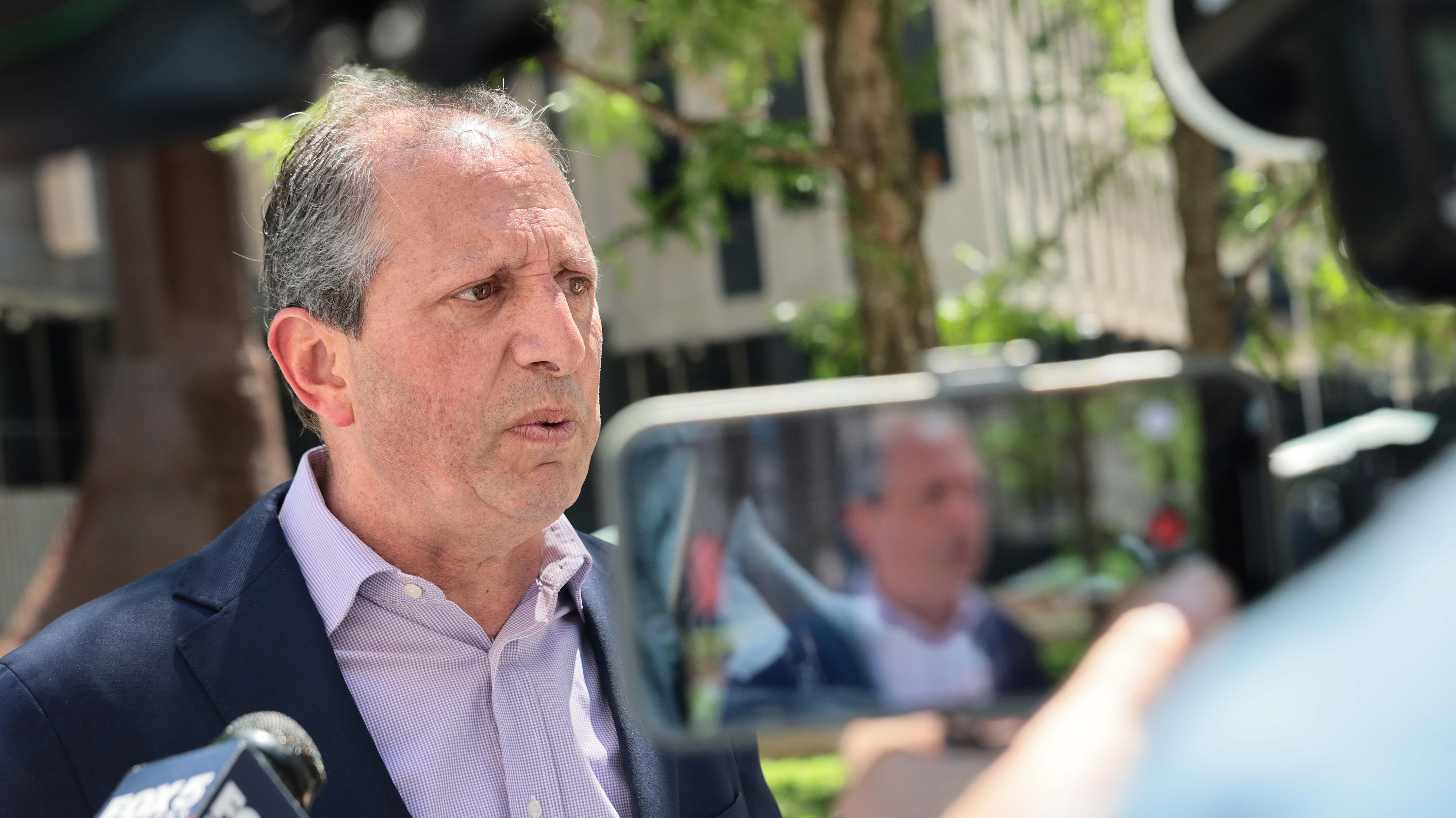
Brad Lander speaks during a press conference on June 24, 2026, in New York City. (Michael M. Santiago/Getty Images)
Brad Lander, the Democratic nominee for a New York City congressional seat, said Wednesday he was briefly detained by the Israel Defense Forces while he was harvesting olives with other volunteers in the West Bank.
Lander, the former New York City comptroller and council member, joined rabbis and other volunteers to take part in Protect the Harvest, a non-profit that helps to harvest olives for Palestinian farmers in the West Bank, according to his campaign.
"There are Israelis and American Jews and people from all around the world trying to provide a protective presence as part of this broader effort," Lander, who is Jewish and has been vocal of his support for Palestinians, said in a video posted by his campaign Tuesday night before the incident.
During the harvesting Wednesday, the group was stopped by armed military members and police in uniform and were placed on buses, according to Lander and other volunteers who filmed the incident.
"I've been detained by the IDF, along with a group of rabbis & volunteers. We were simply harvesting olives in a grove near Nehalim in the West Bank," Lander wrote on social media where he shared a selfie on the bus taking the group away.
"The occupation is a crime under international law. Harvesting olives isn't a crime under any law I know," he added.
Later Wednesday, Lander posted an an update that the IDF released him from custody "with a 'warning,' apparently because of my public profile."
"I told them I wasn't even a congressmember yet, just a nominee," Lander said in the post which included a video of him inside the bus with other activists.
Lander added that "several dozen rabbis & participants," were still being detained when he was released.
Israeli authorities said in a statement Wednesday afternoon that most of the detained volunteers had been released.
The IDF released a statement that said, "Regarding reports of the detention of a congressional candidate, we note that he was released once the matter was brought to our attention."
"The plot in question requires only a small number of harvesters to collect its produce. The security establishment views the arrival of dozens of activists as an act intended solely to provoke, which undermines the harvesting process," the IDF added.
The group of volunteers, which included the non-profit Rabbis for Human Rights, have disputed allegations that they did not follow protocol with the authorities and said they were harvesting peacefully.
"We came to accompany farmers to land they have not been able to reach in three years, and after two hours of quiet harvesting large forces arrived and closed the area. No one could have known about this order in advance," Anton Goodman, the acting executive director of Rabbis for Human Rights, said in a statement Wednesday.
"Instead of protecting people working their own land, the army is removing them from it, and detaining those who came to stand beside them," he added.
Israel's Foreign Ministry blasted Lander in a social media post Wednesday, calling the incident a "stunt."
"His own team contacted Israeli representatives in the United States ahead of his visit and was explicitly informed that proper coordination with the relevant authorities was required. He chose to ignore those instructions," the foreign ministry alleged.
The Lander campaign did not immediately respond to a request for comment on the Israeli foreign ministry's statement.
Lander won the Democratic primary in June, beating U.S. Rep. Dan Goldman, who represents parts of Brooklyn and lower Manhattan that are heavily Democratic. Lander, who received endorsements from New York City Mayor Zohran Mamdani and other progressive Democrats, faces Republican nominee Jennifer Moore in the general election.
Mamdani released a statement Wednesday criticizing the Israeli government for detaining Lander and the other activists, some of whom are new Yorkers, according to the mayor.
"I am thankful that Brad has been released. But other New Yorkers remain detained, and they must be released immediately," Mamdani said in a statement.
In a response to an inquiry from ABC News, a State Department spokesman said the department was “aware of reports of Americans detained in the West Bank.”
"The Trump Administration takes its commitment to assist Americans abroad seriously and we are tracking the situation,” the spokesman said.
"When Americans are detained abroad, the Department works on their behalf to obtain access to adequate medical care, proper treatment, and consular visits,” he added.
-ABC News' Jared Kofsky and Othon Leyva contributed to this report.
President Donald Trump's special envoy Steve Witkoff traveled to Russia on Wednesday to meet with Russian President Vladimir Putin and oversee the release of Stephen Hubbard, a 74-year-old retired teacher from Michigan who had been in Russian detention since 2022, according to reports in Russian state-run media.
Witkoff landed in the Russian city of St. Petersburg on Wednesday morning, a Kremlin aide confirmed, ahead of the planned meeting with Putin.
Trump's envoy thanked Putin for freeing Hubbard, according to a readout of the meeting published by the Kremlin. Putin said that Hubbard -- who was detained in eastern Ukraine in April 2022 -- was taken to St. Peterburg's Pulkovo Airport, the readout said.
"I want to thank you very much. The president sends his thanks," Witkoff said, according to the Kremlin readout. "Because of you, he's going home to his family," Witkoff added, describing Putin as "a humanitarian."
Trump later wrote in a post to social media he asked Putin to release Hubbard in a phone call that took place last week. "Stephen is on his way back home and will soon be with his family," Trump wrote.
The U.S. "was not required to give anything in return -- an unprecedented situation for Russia," Trump added. "There was no 'swap' necessary for this release."
The president then posted to social media again defending his recent decision to waive numerous sanctions on Russia. "If sanctions would have been placed, certainly those negotiations would have come to a complete and total halt," Trump wrote of the discussions over Hubbard's release.
Witkoff arrived in St. Petersburg as the Trump administration was closing in on a deal that would see multiple Americans released from detention in Russia, two U.S. officials and another source familiar with the matter told ABC News.
The talks were centered on Hubbard and several other U.S. citizens held by Moscow on what the administration believes are dubious charges, the source said.
Hubbard had been living in eastern Ukraine as a civilian since around 2014, where he taught English and had a relationship with a Ukrainian woman, according to his family.
After he was detained, Russian authorities charged Hubbard with acting as a mercenary and fighting for Ukraine, sentencing him to nearly seven years in prison. Hubbard's family and U.S. officials said the charges were false and the State Department designated him as wrongfully detained.
During their meeting, Witkoff and Putin discussed the latest U.S.-led efforts to end Moscow's ongoing invasion, which the Kremlin launched in February 2022.
"One thing that I hope to accomplish today is to have some good conversation between us about resumption potentially of trilateral talks between Ukraine, Russia and the United States," Witkoff said, per the Kremlin readout.
Witkoff also touted U.S.-Russian "business and economic cooperation" as "an example of what the possibilities are in the future."
Witkoff traveled to St. Petersburg following a meeting with Ukrainian President Volodymyr Zelenskyy in the Norwegian capital of Oslo on Tuesday. Norwegian Prime Minister Jonas Gahr Store and Finnish President Alexander Stubb also attended the talks, which focused on ceasefire proposals to halt Russia's full-scale invasion of Ukraine.
Witkoff's latest round of shuttle diplomacy comes amid intensifying White House pressure on Zelenskyy to make concessions to secure a peace deal with Moscow.
In recent weeks, Trump waived a raft of sanctions on Moscow and again blamed Kyiv for the lack of progress in U.S.-sponsored peace talks, even suggesting that Zelenskyy should be replaced as Ukrainian president.
On Tuesday, Trump told reporters in the Oval Office that the U.S. had received "nothing" for its support of Ukraine.
"Look, we have given tremendous amounts to Ukraine. We've got nothing back other than high diesel," Trump said. "We have given, probably, possibly, more money to Ukraine than almost anybody over the years, hundreds of billions of dollars. We've got nothing back, and the American taxpayers are tired of it. We want Zelenskyy to make a deal."
Following his meetings in Oslo on Tuesday, Zelenskyy said in posts to social media that he was "thankful to the American side" for its input on propose future security guarantees for Kyiv. The Ukrainian president also said he spoke with Secretary of State Marco Rubio by phone to discuss "sensitive issues such as Starlink, ballistic missile interceptors and intelligence."
On Wednesday, Zelenskyy said he continued to hold meetings in Oslo. "A lot depends on whether the American side manages to hear something new from Russia today -- about peace, not about continuing the war," he wrote.
ABC News' Joe Simonetti, Shannon K. Kingston, Fritz Farrow, Nicholas Kerr, Emily Chang, Patrick Reevell, Anna Sergeeva and Justin Gomez contributed to this report.
French Prime Minister Sebastien Lecornu credited localized overnight curfews in Paris and other major cities for providing a measure of calm after intense nationwide protests that have seen thousands arrested and sustained violent clashes between demonstrators and police.
Nighttime curfews went into effect on Monday night in cities including Paris, Bordeaux, Nice and Lyon as French police sought to combat rioting and looting associated with the recent protests.
The curfews came in response to protests over the weekend which devolved into the worst rioting seen in France for several years, with some demonstrators targeting businesses and government buildings while protesters accused the police of using excessively violent tactics.
The demonstrations initially erupted in September as a student-led movement demanding reforms to the education system. In recent weeks, the demonstrations have evolved into a broader movement demanding action to address rising costs of living.
The protests come ahead of the next French presidential elections in April 2027, which will mark the end of President Emmanuel Macron's two terms in power. Among the most prominent candidates to take over the office are Marine Le Pen, the leader of the far-right National Rally Party, and Jean-Luc Melonchon, who leads the left-wing France Unbowed party.
"Targeted curfews have contributed to the calm of this night," Lecornu wrote in a post to X on Tuesday morning. "I thank the police officers and gendarmes who ensured their enforcement, as well as the prefects for their mobilization."
"Tonight, new curfews will be decided where the situation requires it. These decisions will be made on the ground, by the prefects, in coordination with the mayors," Lecornu added.
Interior Minister Laurent Nunez said on Monday that 2,513 people had been taken into custody amid the recent protests, with 67 people imprisoned. Nunez said that "dozens of judicial investigations" are still ongoing.
Nunez said that around 60,000 police and other security forces had been deployed around the country, though admitted that authorities had been unable to suppress riots in cities like Paris, Marseille and Lyon.
"You couldn't look shopkeepers in the eye after hundreds of shops had been looted and say we hadn't lost control," Nunez told French radio on Monday, blaming "rioters, looters and ultra-left militants" for the unrest.
Among the most notable incidents of damage to public buildings occurred in the central city of Limoges, where a historic town hall was set ablaze on Saturday. Justice Minister Gerald Darmanin said in a post to X on Sunday that counter-terrorism authorities were involved in the investigation into the fire.
"The fire at Limoges town hall affects us just as much as that of Notre-Dame," Darmanin wrote, referring to the accidental 2019 fire that badly damaged the historic Notre-Dame Cathedral in Paris. "We are taking the situation very seriously."
"The national anti-terrorism prosecutor's office has positioned itself as an observer. It is carefully assessing the situation and will determine in the coming hours whether it takes charge of this case," Darmanin wrote.
While France is reeling from its ongoing wave of protests, major demonstrations related to education and the cost of living have also been taking place elsewhere in Europe. Over the weekend, protesters took to the streets of major cities in Belgium, Spain, Portugal, Italy, Greece and Albania.
On Sunday, Italian Prime Minister Georgia Meloni said in a post to X that "criminals" had been seeking to "exploit demonstrations to seek confrontation and sow chaos" amid protests and violent clashes between marchers and police in the northern city of Milan.
Luxury shops in the historic center of Milan closed early on Monday and boarded up their shop fronts amid fears of further unrest there, local media reported.
In the Portuguese capital of Lisbon, meanwhile, protests set up a tent camp in Rossio Square in the heart of the city demanding government action to address rising rents and property prices.
Portuguese Prime Minister Luis Montenegro acknowledged the concerns of protesters, though also warned against "importing into Portugal climates of instability and protest that, in fact, have no support in Portuguese society."
ABC News' Tom Soufi Burridge contributed to this report.
Workers with UNICEF's 'U-Report' group raise awareness about Ebola transmission at Alanine market on June 24, 2026, in Goma, Democratic Republic of Congo. (Daniel Buuma/Getty Images)
Kenya health officials have reported a new case of Ebola, bringing the total number of confirmed infections to eight.
All the cases appear to be linked to the original patient, a Kenyan man who had been living in the Democratic Republic of the Congo (DRC) and traveled to Nairobi. That man subsequently died on Oct. 5, according to authorities.
Officials said on Sunday that the latest confirmed case is a 49-year-old patient attendant who was already in quarantine.
The other six cases that have been detected are in isolation and there is currently no sign of community spread, according to Kenya's Ministry of Health. The risk to the public remains low, it noted.
Over the weekend, the Office of the Director General for Health in Kenya issued a press release stating that of 130 contacts of the original patient who have been identified, 128 have been traced and are in quarantine.
"Intensive efforts are ongoing to trace and quarantine the two remaining contacts," the press release said. "In addition, new cases among quarantined contacts are possible until their 21[-day] monitoring period ends."
Aden Duale, Kenya's cabinet secretary of health, said earlier this month that the patient who was Kenya's first Ebola case had been living in the DRC for the last seven years.
The Ministry of Health told ABC News at the time that the patient was 40 years old and traveled from Buta, a city in the northwestern DRC.
Duale said the patient fell ill about a month ago and was treated in several hospitals while in the DRC. He traveled from the DRC to Kampala, the capital of neighboring Uganda, by road, then boarded a Jambo Jet flight, arriving in Kenya's capital Nairobi on Saturday, Oct. 3.
Duale said the patient had symptoms including fever, chills, fatigue, weakness, muscle pain, sore throat and painful swallowing. Doctors collected a sample from the patient, which was positive for Ebola and specifically Bundibugyo virus, a rare variant of Ebola behind the current DRC outbreak for which there are no vaccines and no treatments.
The patient was given supportive treatment but died on Monday, Oct. 5, according to Duale.
Dr. Patrick Amoth, Kenya's director general for health, said during the briefing that officials believe the patient knew he was ill and reached out to friends and relatives to transport him from the airport to the hospital directly.
In a press release on Monday, the humanitarian NGO International Rescue Committee (IRC) said it is ramping up its Ebola response in Kenya, partnering with the country's Ministry of Health to support screenings at airports and border crossings, as well as provide personal protective equipment to clinics and hospitals.
'Kenya has a chance to stay ahead of an Ebola outbreak in the country," Irene Bosire, IRC deputy director of programs in Kenya, said in a statement. "We must act fast, stopping any potential spread here and at its source in eastern DRC."
It comes as the nearby DRC continues to experience its worst Ebola outbreak on record. As of Oct. 12, 9,144 cases of Ebola and 4,410 deaths have been confirmed, according to the Congo Ministry of Health, with 899 patients in isolation or hospitalized.
The case fatality rate currently stands at 48.2% while contact tracing stands at 77.6%, an improvement from the earlier days of the outbreak.
LONDON -- Russian missiles and drones targeted Ukraine overnight, striking civilian infrastructure along with energy facilities, knocking out power for some 550,000 families, Ukrainian officials said.
Ukrainian President Volodymyr Zelenskyy said there was "no early warning from our partners" that the missile attack was imminent.
Moscow launched at least 16 ballistic missiles at the capital region, the Ukrainian Ministry of Defense said in a statement. Russia also fired some 200 drones, "including jet-powered Shaheds," at targets across Ukraine, the ministry said.
"Energy facilities were the main target, but a clinic, a school, a metro station and homes were also hit," the ministry said. "There are casualties."
The attacks targeted the Kyiv region, along with several others, including Kharkiv and Dnipro, Zelenskyy said. More than 10 energy infrastructure facilities were damaged, he said, adding that repair crews had been dispatched to the sites.
Russia's Ministry of Defense said the military's "massive" overnight strike targeted sites associated with the Ukrainian defense industry, saying it had hit "facilities storing cruise missiles, unmanned aerial vehicles" and a data center in the Kyiv region.
The Russian attack on energy sites follows a massive Ukrainian attack over the weekend, which similarly targeted energy and oil and gas infrastructure in Russia.
Russia's Ministry of Defense said early on Sunday that it had shot down some 1,015 drones near Moscow and several other western regions, making the attack one of the largest of the war.
Drones struck a major oil terminal in St. Petersburg, along with other targets throughout western Russia, officials in Moscow said on Sunday.
Russia has continued to heavily target Ukraine's energy infrastructure without pause despite Trump’s declaring the two sides had agreed to the "ceasefire" last weekend.
Zelenskyy on Monday said Putin's Russia was the driving force behind the war, not Ukraine. As ceasefire proposals have periodically been presented, Kyiv has been receptive to negotiations for each one, Zelenskyy said, but "Russia's response, time and again, has been ballistic missiles, 'shaheds,' and killings."
"Putin not only doesn't want to end this war -- he doesn't even want to take any steps toward de-escalation," Zelenskyy said. "EVERY ONE of our partners has experienced this firsthand when they heard Russia's refusals. And it is crucial to call things what they are. To call the aggressor an aggressor and help Ukraine defend lives."
Multiple people were killed and dozens more were injured when an explosion erupted at a Canadian military base, according to authorities.
The deadly blast occurred on Saturday afternoon at the Canadian Forces Base (CFB) Wainwright in Alberta province, igniting a massive fire that was fanned by high winds and spread from the sprawling military facility into the surrounding rural area, Canadian officials said.
During a news conference on Sunday, Canadian Prime Minister Mark Carney said at least four service members were killed in the blast and subsequent "violent fire," and that "dozens more are seriously wounded."
Carney called the incident "one of the worst tragedies for the forces on Canadian soil in peacetime."
The four service members were identified as Sergeant Morgan Wong, Private Shaun Farrell, Private Aidan Goulding and Private Hayden Lykkemark, according to a press release from the Canadian government.
In addition to those killed, 39 Canadian Armed Forces members sustained injuries, according to the release.
"I cannot recall an incident like this in recent memory," Canadian Minister of National Defense David McGuinty said during a news conference on Saturday night at the military base near the small town of Wainwright.
The cause of the explosion is under investigation, military officials said. Asked to provide details, McGuinty would only say that "this is a very, very active and delicate situation."
In a statement on Sunday, the Canadian Department of National Defense said, "There are no indications that it was the result of any terrorist activity."
Multiple Canadian Armed Forces sources told CGTV's Global News that the incident occurred during a live-fire training exercise, and that a gas line or a gas well was struck and ignited the explosion.
A fire erupted within the training area of the military base around 4 p.m. local time on Saturday, officials said.
"The fire spread rapidly beyond the boundaries of the training area, while military and civilian emergency services responded quickly to control that fire and to support those affected by this tragic event," the Canadian government said in a statement Sunday morning.
Carney said his office is gathering information on the "serious incident that triggered a large-scale fire" at a military base.
"Our thoughts are with all the brave women and men affected," Carney said in a social media post.
Alberta Premier Danielle Smith said in a social media post that the "significant and tragic" incident is affecting many military personnel.
Neither Carney nor Smith provided details about what caused the fire.
Admiral Giuseppe Cavo Dragon, chair of the NATO Military Committee, also addressed the incident in a social media post on Sunday, saying, "Canada does not carry this grief alone. All 32 Allied Chiefs of Defense stand with you and the Canadian Armed Forces."
"Wainwright is where Canadian soldiers, and so many Allies with them, train for the hardest tasks of our profession," Dragon said. "Those who fell there served our common security, and the Military Committee will honor their memory."
One of Canada's largest and busiest military training bases, CFB Wainwright is where soldiers train for combat operations, military officials said. The base is home to the Canadian Manoeuvre Training Center, which conducts realistic battlefield exercises.
ABC News' Chris Barry, Matthew Holroyd and Michael O'Keefe contributed to this report.
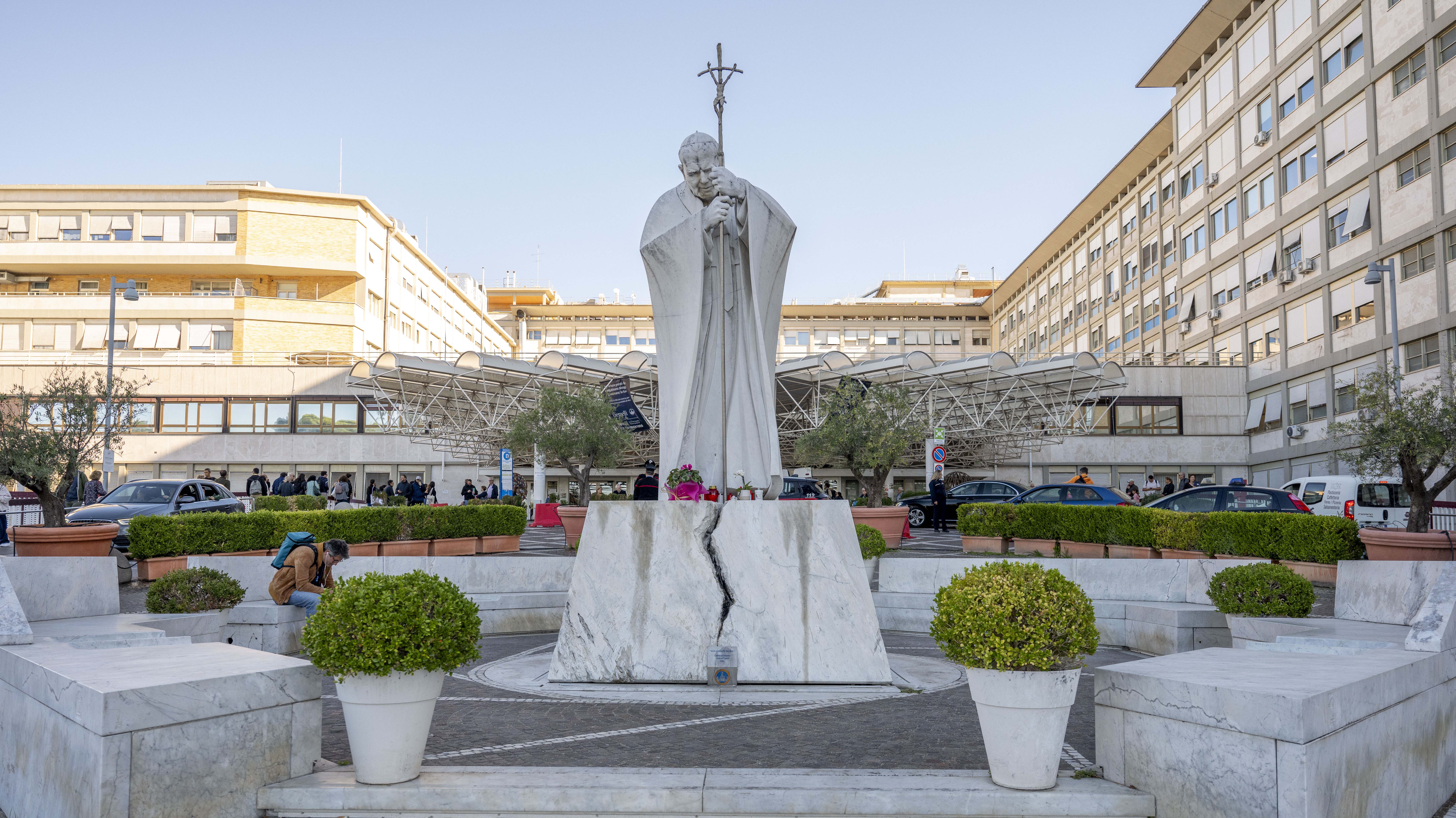
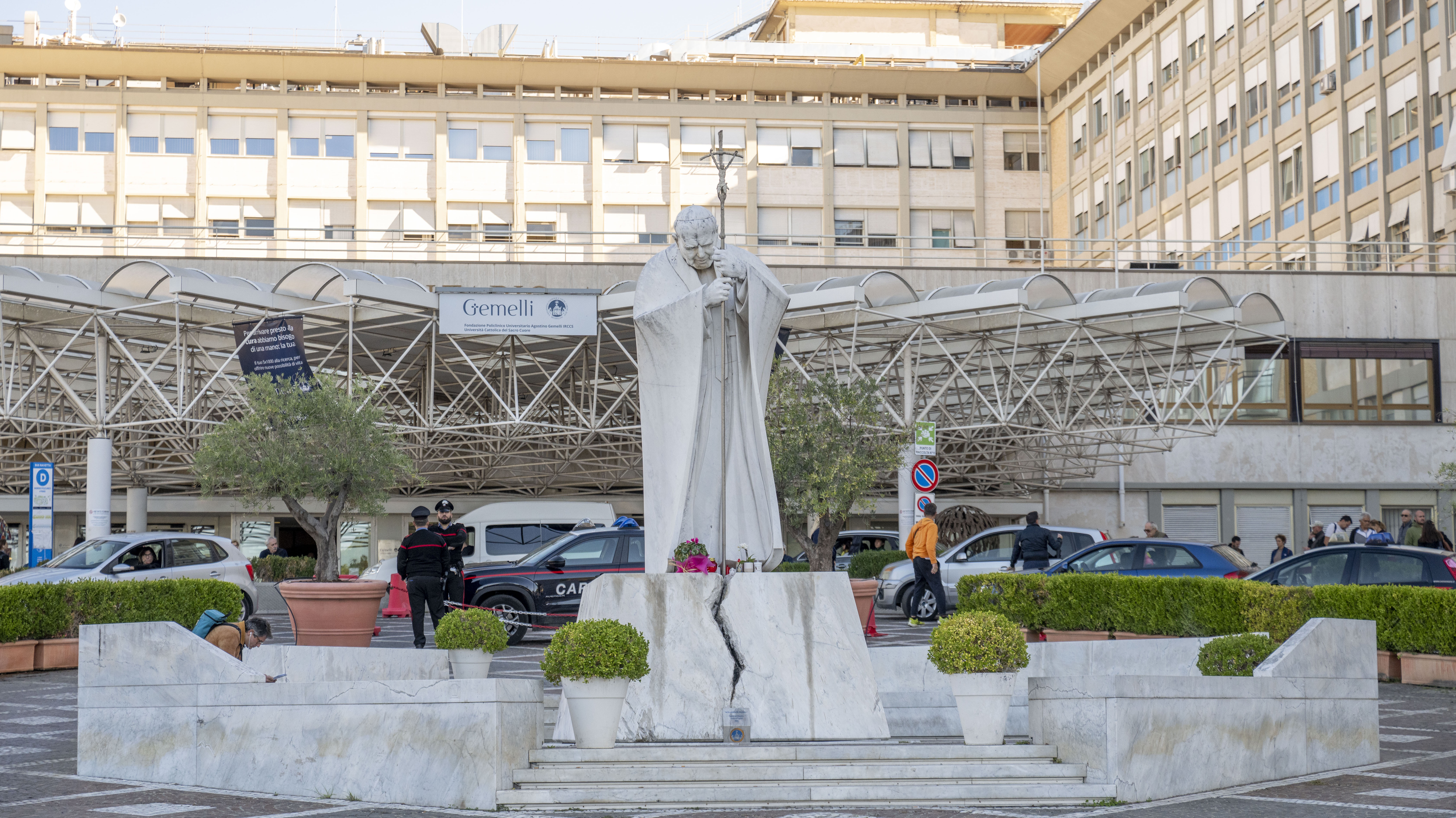
A view of Gemelli Hospital is seen on Oct. 13, 2026 in Rome, Italy. (Antonio Masiello/Getty Images)
Pope Leo XIV will recite the Angelus prayer in public on Sunday, the Vatican said in an update on Friday.
The Vatican did not say where the pontiff would speak on Sunday.
Asked whether the pope could be discharged from the hospital and return to the Vatican on Saturday, a spokesperson said doctors had established a time frame for his hospital stay.
"If that changes, they will communicate the change; we will let you know," the spokesperson said.
The spokesperson also said the pope's mood was good, and confirmed that he had received letters and drawings from children.
"We sent the letters and drawings," the spokesperson said, adding that Leo had been able to celebrate Mass and give Communion.
Pope Leo XIV resumed work activities on Thursday, just days after undergoing an operation, the Vatican said Thursday.
The pope was diagnosed with lung adenocarcinoma, which is the most common subtype of non-small cell lung cancer, accounting for roughly 40% of all lung cancer cases, according to the Lung Cancer Foundation of America.
Lung adenocarcinoma begins in cells in the lung that make mucus, called epithelial cells, which line the surface of the lungs, the American Cancer Society says.
Leo was in the operating room for about three hours, with the surgery itself lasting approximately 90 minutes, according to doctors.
The surgery was described as "successful" with no complications.
The Vatican previously said that his recovery at Rome's Agostino Gemelli University Hospital was expected to last about a week.
LONDON -- Russia targeted Ukraine with a "massive" aerial attack, including waves of drones, launching so many of them that "there was not a single hour when our skies were clear" for most of Wednesday and into Thursday morning, President Volodymyr Zelenskyy said.
Hundreds of attack drones were fired between midnight and 9 a.m. local time on Thursday, the president said.
"It is obvious that Russia deliberately chose to escalate its attacks after receiving sanctions relief and seeing attempts to pressure Ukraine," Zelenskyy said. "Russia exploits every such opportunity and must be held accountable for what it does."
The overnight attack followed Ukrainian officials saying this week that the U.S. government-owned Starshield satellite infrastructure used by Ukraine's military for drone navigation and air defense was not operating at its normal functionality.
Those systems are used in part for early warnings when Russia launches a projectile.
"Strong decisions are needed to end this war. Ukraine needs steady support, above all in defending our skies," Zelenskyy said on Thursday. "We need HONESTY from our partners about this war: It is important that everyone in America stand not with the aggressor, but with our efforts to protect lives, end this war, and guarantee security."
President Donald Trump had said in a statement on Sunday that both sides had agreed to an "energy ceasefire." Russia in the following days continuedstriking energy infrastructure throughout Ukraine, according to Kyiv.
Russia's Ministery of Defense on Thursday said Ukraine had also resumed its strikes on energy infrastructure, saying that Kyiv had overnight "attempted a massive attack on the oil refinery in Ryazan."
A view of Gemelli Hospital is seen as Pope Leo XIV is recovering from surgery. (Antonio Masiello/Getty Images)
Pope Leo XIV's recovery is "proceeding as expected" following his surgery on Tuesday, the Vatican said.
The pope underwent blood tests and a chest X-ray following surgery and "the results confirm a normal postoperative course: the values are within the normal range for the type of surgery performed," according to the Vatican.
Leo had respiratory physical therapy and was eating regularly, the Vatican said, adding that his recovery "is proceeding as expected."
Earlier on Wednesday, the Vatican press office said the pope had a "peaceful" night in the hospital following surgery.
The pontiff was diagnosed with lung cancer and underwent surgery to have the lower lobe of his right lung removed, the Vatican said on Tuesday.
Dr. Luigi Carbone and professor Stefano Margaritora said the pontiff underwent a minimally invasive camera-guided surgical procedure, according to the Vatican.
"The intraoperative histological examination confirmed the diagnosis of lung adenocarcinoma, as suspected by the preoperative tests," the Vatican said.
Leo was in the operating room for about three hours, which included about 90 minutes for the "successful" surgery, the Vatican said.
He's recovering at Gemelli Hospital, the largest hospital in Rome and the primary medical facility used by popes, including Leo's immediate predecessor, Pope Francis, who died in 2025 at the age of 88.
Leo, a Chicago native and the first American pope, who was previously Cardinal Robert Prevost, was elected the church's 267th pontiff in May 2025.
Cardinal Blase J. Cupich of Chicago said in a statement that the pope's diagnosis was "not the news we hoped for," but added that he and his archdiocese were "heartened by the skill and optimism of his physicians and the countless prayers offered around the world for his complete recovery."
"I ask that the people of good will everywhere, but particularly here, in Pope Leo’s hometown join me in asking the Lord to return this son of Chicago to wellness," Cupich said. "He has much more good work to do, many more wise words to preach and many more ways to inspire others."