





Listeners Club

Forgot Password

Not a Member? Sign up here!

banner

LISTEN TO Hits FM ANYWHERE!

Politics

Marine One loses communication with air traffic controllers again

Marine One (L) carrying U.S. President Donald Trump lifts off from The Ellipse near the White House en route to Joint Base Andrews on Aug. 27, 2026, in Washington, D.C. (Andrew Harnik/Getty Images)

(WASHINGTON) -- Presidential helicopter Marine One lost communication with air traffic controllers at Reagan National Airport for the second time this month, according to audio reviewed by ABC News.

The incident occurred on Thursday, just one hour after federal officials released a report saying the problem was fixed.

President Donald Trump was about to take off from the White House Ellipse when Marine One pilots gave a three-minute warning to controllers, but in air traffic control audio another helicopter can be heard relaying the information to the tower after controllers failed to respond.

Moments later, a controller can be heard saying she did not hear anything from Marine One. 

"Marine One is trying to reach you. Three minutes to lift," a nearby helicopter pilot said to the tower.

"Oh I couldn't hear any of that. Thank you," a controller responded.

A few minutes later, Marine One tried to contact the tower two more times, but the controller didn't hear the transmission and asked another chopper in the air if they can hear Marine One.

"Hey Nighthawk 8, do me a favor, I can't hear Marine One," the controller said. If you hear Marine One can you let me know?"

Once Marine One lifted off from the Ellipse, it regained communication ability with the tower and proceeded to take Trump to Joint Base Andrews, where he boarded Air Force One.

A similar incident happened on Aug. 4, when Marine One took off at the same time an American Airlines regional jet was lifting off from nearby Ronald Reagan Washington National Airport (DCA).

The two aircraft came within .82 miles and 700 feet vertically, but were not on a collision course. Normally all air traffic is held until the president's helicopter is out of the area. 

FAA rules require that commercial aircraft maintain a minimum of 1.5 miles horizontal separation and 500 feet vertical separation from any helicopter passing near DCA.

The National Transportation Safety Board (NTSB) and the Federal Aviation Administration launched an investigation. FAA engineers determined that a radio transmitter did not allow line of sight to Marine One's temporary landing area on the White House Ellipse. The temporary landing zone is being used while White House construction takes place on the South Lawn. 

The FAA moved the transmitter to the top of the control tower at Reagan National Airport from a local residential area. Tests conducted following the move showed Marine One had no further communication issues, according to the NTSB report released Thursday. 

The FAA released a statement to ABC News, but did not explain how this happened again. 

"The FAA took immediate action following the Aug. 4 incident involving Marine One, including relocating an antenna to improve communications between DCA air traffic controllers and Marine One pilots and reviewing the procedures involved," the agency said. "The three-minute notification was communicated by alternate means, acknowledged by a controller and positive contact was established with Marine One before takeoff."

The NTSB continues to lead this investigation.

Copyright © 2026, ABC Audio. All rights reserved.

Judge rejects President Trump's attempt to move his criminal hush money case to federal court

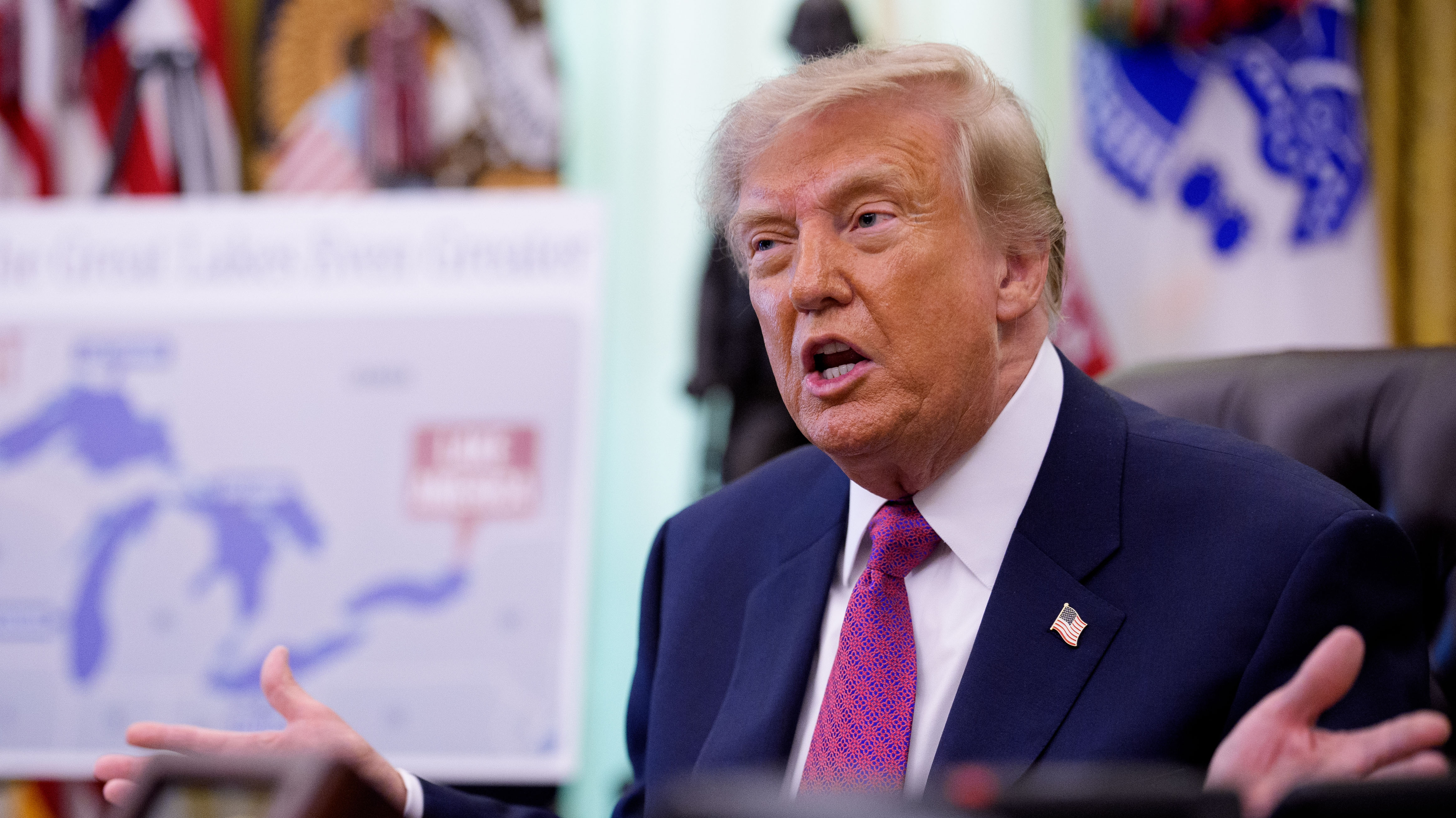
U.S. President Donald Trump speaks after signing an executive order during an event in the Oval Office of the White House on Aug. 27, 2026, in Washington, D.C. (Andrew Harnik/Getty Images)

(WASHINGTON) -- For a second time, a federal judge on Friday rejected President Trump’s attempt to move his criminal hush money case to federal court, where his conviction could be vacated.

“The grounds for a second removal cited by Defendant, Donald J. Trump, are neither new nor legally sufficient. He has failed to show good cause and diligence,” Judge Alvin Hellerstein decided.

Trump was convicted of 34 felony counts of falsifying business records related to a $130,000 hush payment to adult film actress Stormy Daniels, whose legal name is Stephanie Clifford. He is appealing his conviction.

A federal appeals court ordered Hellerstein to take a second look at Trump’s attempt to move the case from state to federal court after the U.S. Supreme Court’s landmark immunity opinion.

"I reaffirm my former decision. The president's motion is denied," Hellerstein said.

Trump has argued the Supreme Court's controversial 2024 presidential immunity decision, which established sweeping protection from prosecution for "official acts," made some of the evidence and testimony from the prosecution's case off-limits.

Copyright © 2026, ABC Audio. All rights reserved.

Fed's Warsh: 'We have work to do' on inflation

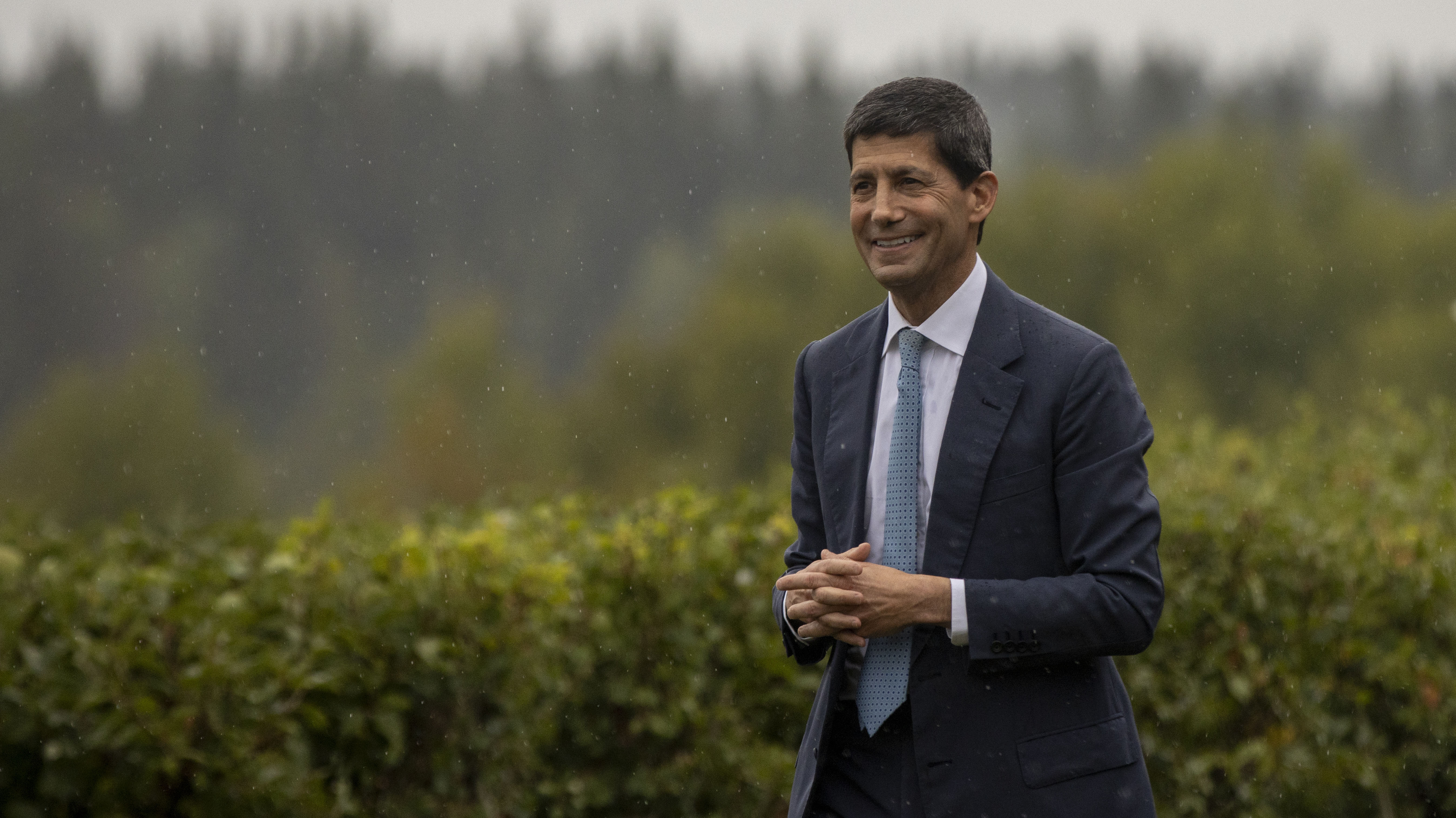
Federal Reserve Chairman Kevin Warsh at the Jackson Hole Economic Symposium Aug. 28, 2026, in Jackson Hole, Wyoming. (Natalie Behring/Getty Images)

(WASHINGTON) — In a highly anticipated speech Friday morning, Federal Reserve Chairman Kevin Warsh voiced concern about persistently high inflation, saying the central bank should focus on bringing down prices -- but stopped short of explicitly calling for an interest rate hike.

"We must be confident that underlying inflation is moving to our objective, clearly and at sufficient speed. Otherwise, we have work to do," Warsh said in remarks prepared for delivery at the Fed’s annual conference in Jackson Hole, Wyoming.

The remarks signaled a strong commitment by the newly installed Fed chair to fight inflation.

Inflation eased slightly in July, the most recent month on record, but has spiked in recent months fueled by higher oil prices from the Middle East crisis. Overall prices have been increasing at a pace above the Fed’s 2% target for more than five years, which Warsh said is a responsibility that lies "squarely" with the central bank.

"The Fed’s predominant focus right now should be on prices," said Warsh, who is in his third month in the role after replacing Jerome Powell.

Typically the Fed hikes interest rates to tame high prices. Warsh did not directly comment on the central bank's interest rate plans, noting the practice of “forward guidance” -- where the Fed telegraphs its next moves in advance -- "should be limited" and "has overstayed its welcome."

President Donald Trump has repeatedly called on the Fed to cut interest rates.

Investors are now pricing in a roughly 60% chance the Fed increases its key borrowing rate next month, up from 35% Thursday ahead of Warsh’s speech, according to CME FedWatch.

"We believe that markets heard what they needed to hear to believe that Warsh will tighten monetary conditions to restrain inflation, and that he will encourage the FOMC to pull the trigger soon," said Carl Weinberg, chief economist at High Frequency Economics, in a research note after Warsh's speech.

Warsh said Friday that he is "impressed by the overall performance of the economy, which appears to have strengthened." He pointed to solid consumer spending and a steady job market. But Warsh noted that certain sectors of the economy like housing and agriculture "are showing strains."

He also detailed how artificial intelligence is reshaping the economy, with more than half of capital expenditure growth this year so far attributed to the buildout of AI.

"We’ve come to a hinge point in history," Warsh said.

Copyright © 2026, ABC Audio. All rights reserved.

DOJ says no action to add Trump's name to Kennedy Center before October

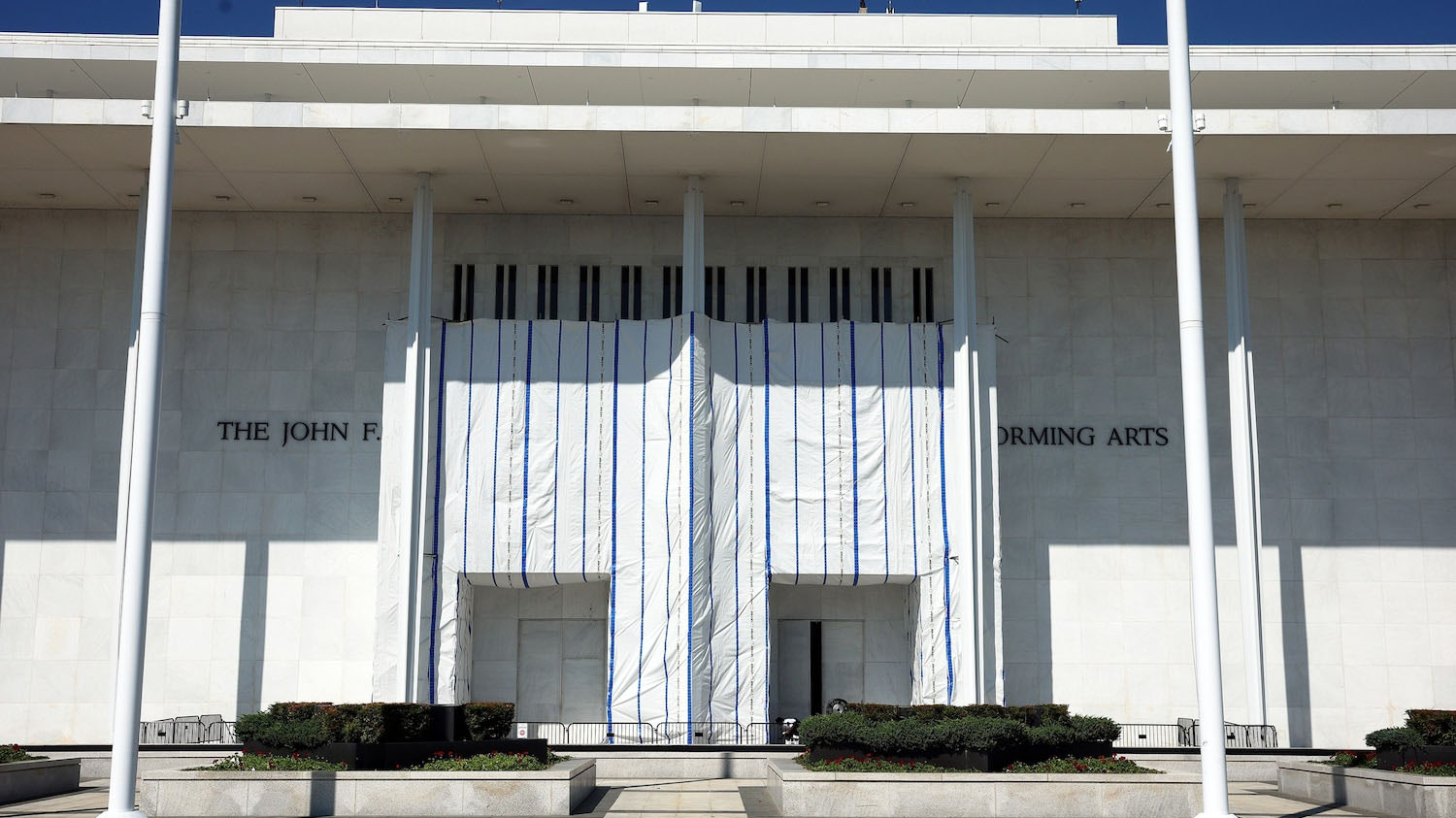
A tarp remains in place on the facade of the John F. Kennedy Center for the Performing Arts on Aug. 25, 2026, in Washington, D.C. (Kevin Dietsch/Getty Images)

(WASHINGTON) -- The Justice Department notified a federal judge Thursday night the Kennedy Center will delay implementation of its board's resolution honoring President Donald Trump for more than a month.  

In a filing late Thursday, the DOJ said the effort to add Trump's name to the facade and plaza will "not be effectuated before October 8, 2026."

The Trump administration's filing came following a two-hour hearing Thursday during which U.S. District Judge Christopher Cooper urged the center to delay its plans to give him more time to consider his decision.

The hearing Thursday featured the lead attorney for Ohio Democratic Rep. Joyce Beatty, who sits on the Kennedy Center's Board of Trustees as an ex-officio member, repeatedly accusing the Kennedy Center board of thumbing its nose at the court by voting to honor Trump after Cooper ordered his name off the building in a decision earlier this year

"I don't say this lightly," said attorney Nathaniel Zelinsky.  "We view this as outright defiance."

"Are they attempting a renaming?" Zelinsky asked. "Absolutely, yes. They are doing the same thing they were told they couldn't do before."

Cooper did not signal at the hearing that he necessarily agreed.  Nor did he leap at the chance to issue an order stopping the board from immediately moving forward with its plans to honor Trump as the man who "renovated and restored" the center.  

Instead, he used the hearing to probe both sides on the legality of the board's move earlier this month to again add Trump's name to the famed cultural institution.  

Cooper seemed to grapple with whether the renaming of the plaza after Trump violates a 1983 law blocking "additional memorials" in the center's "public areas." 

"Could a plaza just outside the building be considered the 'public area' of the building?" Cooper asked Zelinsky. 

Zelinsky pointed to the Justice Department's most recent filing in the case, in which administration lawyers said the board's intent was to rename "the complex" after Trump.  

But the administration's lawyer insisted the Kennedy Center would continue to exist as a memorial to John F. Kennedy.

"There is no renaming here," said Justice Department attorney Brantley Mayers.  "The board has not taken any action to rename."  

Mayers also said there was "no evidence" that the move to add Trump's name back onto the building is imminent, even as he said it was "clear that recognizing the president will help address both the financial and structural issues" he said the center faces.  

Cooper shrugged off the bluster of the Trump administration's most recent filing, which suggested the performing arts center could face demolition in the event he issued an order permanently blocking President Donald Trump's push to renovate the facility with additions intended to recognize Trump personally.

"That may be great atmospherics," Cooper told Mayers. "But I gotta say, the first four of five pages of your brief seem to be a non-sequitur.  We're here to discuss whether the board's resolution was consistent with my order and consistent with the statutes."

Cooper said he'll need to take some time to "give the issues the attention they deserve" and asked the DOJ to delay any plans to give him time to rule. 

Cooper suggested he might impose an order keeping the status quo if center management didn't go along. 

Zelinsky had asked the judge to act more urgently, pointing to the "overnight" move to add Trump's name to the center following a similar vote by the board earlier this year.

"They don't contest that the last time they did this, they ruined the marble," Zelinsky said.  "Talk about an irreparable injury! They've drilled into it and they're going to be poised to do that again."

Copyright © 2026, ABC Audio. All rights reserved.

Federal judge temporarily blocks Trump administration's attempt to restrict mail-in voting

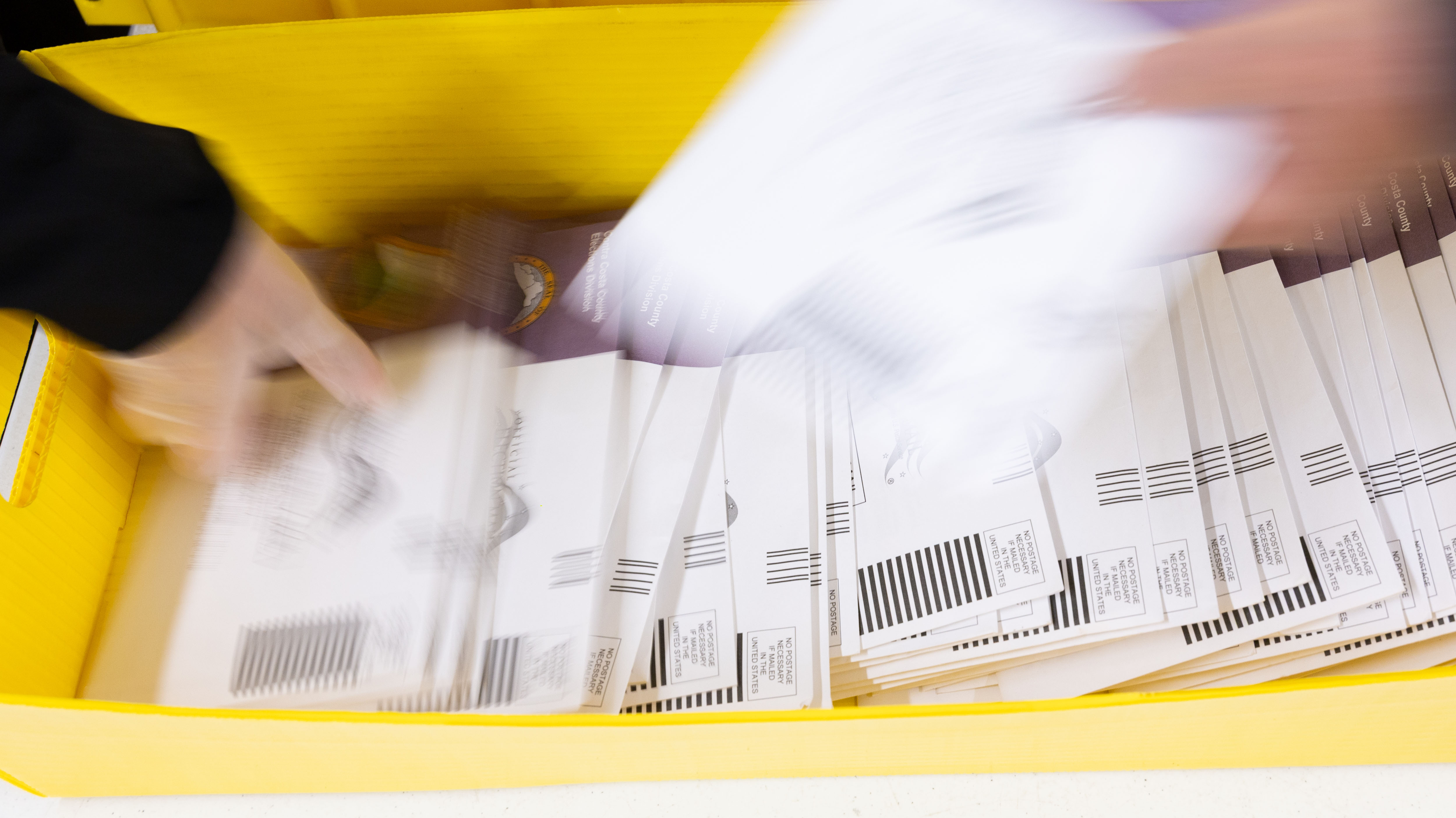
Election workers sort ballots at Contra Costa County's election operations facility on May 27, 2026, in Martinez, California. (Benjamin Fanjoy/Getty Images)

(WASHINGTON) -- A federal judge on Thursday night blocked the Trump administration from implementing key provisions of a new rule restricting mail-in voting.

U.S. District Court Judge Indira Talwani issued a temporary order preventing the United States Postal Service from increasing its oversight of mail-in voting, following an executive order from President Donald Trump that would effectively employ the Postal Service as the primary enforcer of mail-voter eligibility.

Talwani blocked the newly finalized rule for at least 14 days. 

The same judge had previously blocked Trump's executive order but lifted that decision on Wednesday after the Supreme Court ruled Monday she had initially acted too quickly.

With the judge's latest order, it is likely the legal battle over the USPS rules will eventually make its way back to the Supreme Court.

Dozens of Democratic state attorneys general sued the Trump administration over the USPS directive in April, arguing it is unconstitutional since states -- not the federal government -- have primary authority for administering elections.

The Supreme Court in a 6-3 decision ruled Monday that the states lacked standing to challenge Trump's order at that stage since nothing had formally impacted how they will administer elections, but the high court did not weigh in on the legality of Trump's order.

The judge's order Thursday comes after state attorneys general brought a new challenge after USPS published a finalized rule governing steps states must take to print ballots to be carried and tracked by mail carriers.

In her order Thursday pausing the now finalized USPS plan, the judge wrote: "Plaintiff States face irreparable harm where they are required to comply with a likely unconstitutional regulation for which compliance is practically impossible as to the 2026 midterm elections, now little more than two months away," she wrote.

The new rules finalized by the USPS last week add verification requirements to all mail-in ballots, falling short of Trump's expectations but providing additional scrutiny.

Under the proposed change, states would be required to collect and report basic voter information, such as a voter's name and home address, attached to a unique barcode on every mail-in ballot distributed. Currently, there is no standardized requirement or method for states to track this information, instead letting each state independently decide how its mail-in voting system operates.

State election authorities would then be required to input this information into a "federal ballot mail portal" before the ballot is accepted into the mail stream.

The USPS said it would not deliver ballots to any state not in compliance with these changes.

In a statement Thursday night, New York Attorney General Letitia James said: "This rule is a clear attempt by the federal government to interfere in elections it has no power to control. Today, a federal court halted it before this administration could wreak havoc on our elections. The USPS does not have the authority to decide who can and cannot vote by mail. My office will keep fighting to ensure this rule cannot disrupt our midterm elections."

Trump issued an executive order in March seeking to restrict mail-in voting, directing the Department of Homeland Security to build a federal citizenship list and give it to the states; the Department of Justice to target state officials who give ballots to noncitizens; and the USPS to direct states to abide by certain mail-ballot design and tracking requirements.

Copyright © 2026, ABC Audio. All rights reserved.
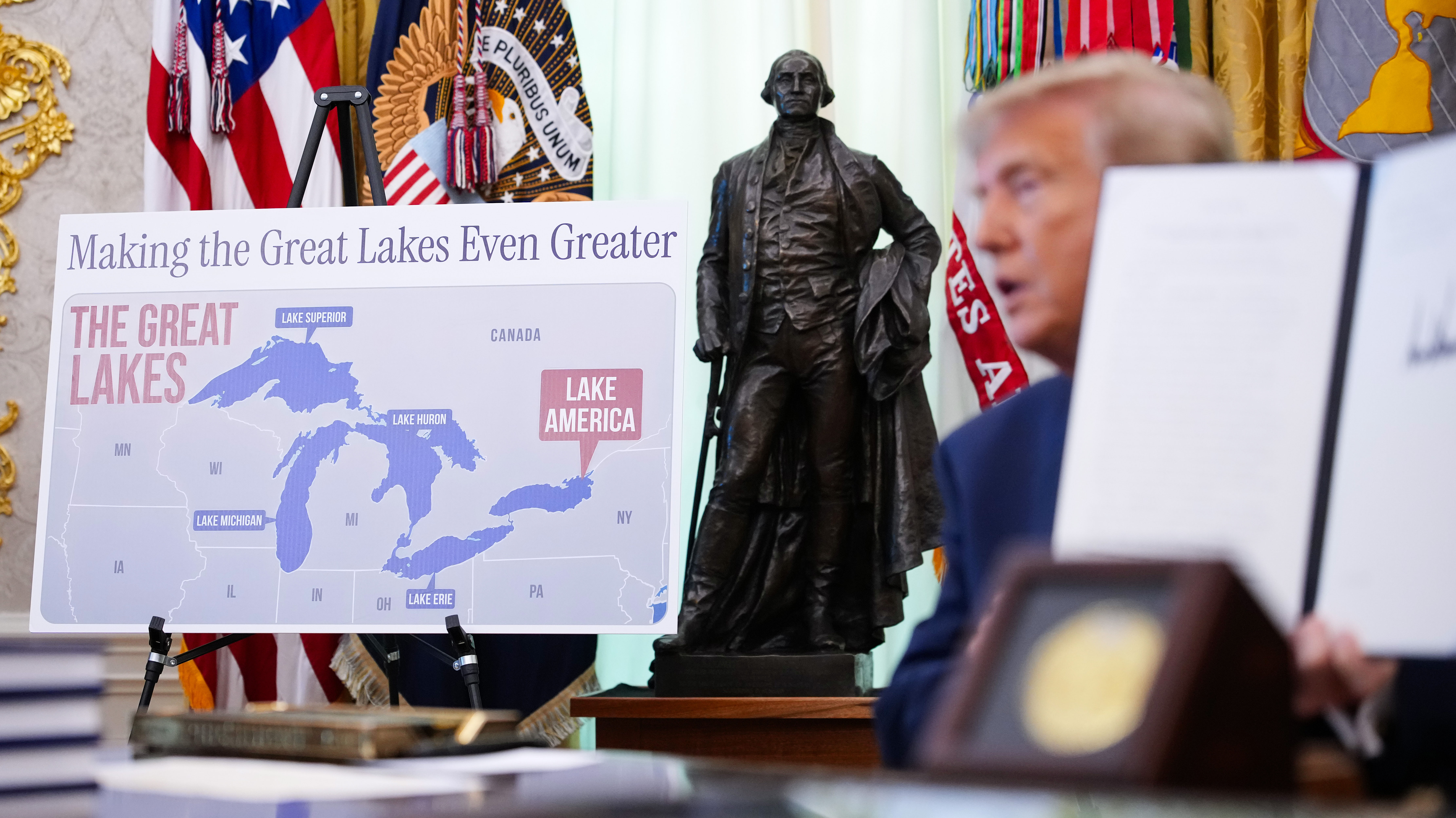

Trump signs executive order renaming Lake Ontario to 'Lake America'

A map labeling Lake Ontario as "Lake America" is displayed as U.S. President Donald Trump signs an executive order during an event in the Oval Office of the White House on Aug. 27, 2026, in Washington, DC. President Trump signed an executive order to rename Lake Ontario as "Lake America" amid an ongoing trade war between the U.S. and Canada. (Andrew Harnik/Getty Images)

(WASHINGTON) -- executive order changing the name of Lake Ontario to "Lake America" "effective immediately" amid the ongoing trade war between the United States and Canada.

"The lake change -- 'Lake of America' -- was something I've been thinking about for a long time," said Trump, who was flanked by two large boards that depicted the label "Lake America."

The president can unilaterally change a geographic name for official U.S. federal government use, like his action via executive order in January of 2025 renaming the Gulf of Mexico as the "Gulf of America." However, he can't dictate what other countries or international bodies call it.

In social media posts over the past few days, Trump has repeatedly suggested he would change the name of the lake on the U.S.-Canada border.

The lake's name change comes amid the ongoing trade war between the U.S. and Canada. Negotiations between the countries broke down over the weekend and a fresh round of 50% U.S. tariffs on some Canadian goods took effect on Saturday, leading Canada to retaliate with a set of its own levies.

"The Canadian officials have treated us very badly. They're nasty people," Trump said in the Oval Office on Thursday. "People oftentimes they'll ask me who's the worst to deal with on trade, and I said that's easy, Canada. They are the worst to trade, and they feel entitled, and just we can't have that."

When asked by a reporter about what his message is with the name change, the president said he has "no message," but did criticize Canada. 

"No message, as you know, Canada has been ripping us off for a long time on trade, very sadly," Trump said.

Asked why he is focused on doing things like this to America's allies rather than focusing on other issues, Trump cited his belief that Canada has treated the U.S. "very badly" with regards to trade for many years -- an argument he has used as justification for the sweeping tariffs he has imposed upon America's northern neighbor.

In a statement to ABC News, Ontario premier Doug Ford said of the move, "He can change it to whatever he wants. But it will always be Lake Ontario to all Canadians and the rest of the world!"

Rep. Debbie Dingell, a Michigan Democrat, agreed with Ford that it will always be known as Lake Ontario and said "Canada is not our enemy."

"It is our neighbor, our ally, and one of Michigan’s most important economic partners. It is a friendship that no stroke of a pen can erase," she said in a statement.

Trump suggested other name changes could be ahead.

"If you think about it, we have a gulf and we have a lake. Now, all we need is an ocean," Trump said. "So maybe we'll have to change the name of the Atlantic and/or the Pacific. Maybe we'll change them both."

Copyright © 2026, ABC Audio. All rights reserved.

FBI says Chinese hacking group targeted US government agencies for years

Official seal of the Federal Bureau of Investigation mounted on the exterior wall of the J. Edgar Hoover FBI Building in Washington, D.C. (Getty Images/Michelle Brittain)

(WASHINGTON) -- The Justice Department and FBI said a Chinese government-backed hacking group has for years engaged in targeted attacks against hundreds of entities in the United States including NASA, National Institutes of Health, the Department of Health and Human Services, the Justice Department, the Department of Energy, the U.S. Senate and the Federal Reserve. 

According to a DOJ statement and an affidavit unsealed Wednesday in federal court in California, a group known as "QTFY" -- which includes former members of China's military -- has used its infrastructure to compromise critical infrastructure since 2018 in networks spanning from government agencies, hospitals, telecommunications providers, power companies and defense contractors. 

As part of their efforts to expose and disrupt the group, prosecutors successfully seized three internet domains affiliated with the Chinese company, Nanjing Xinjiuwei Network Technology Company, and multiple advisories have been issued to companies and other federal agencies so that potential victims of the group can better protect themselves from future attack.

In the seizure warrant, prosecutors say that in September 2024, QTFY hackers "conducted computer intrusions" at three Energy Department laboratories, NIH, an HHS agency as well as an unnamed U.S. security device manufacturer. The group is further alleged to have attempted a hack against NASA in 2019, though court documents do not suggest that the effort was successful.

The court documents do not state clearly the scale of the attacks against several of the other government agencies identified as victims or the group's level of success in infiltrating specific networks.

"Today’s announcement demonstrates the Justice Department’s steadfast commitment to going on the offensive against cyber threats to the national security,” said Assistant Attorney General for National Security John Eisenberg in a statement announcing the seizures. "These court-authorized seizures deny PRC-linked hackers access to tools they use to mount online attacks against our Nation’s critical infrastructure."

The FBI and National Security Agency released an advisory with indicators of QTFY activity. Also, Lumen Technologies' threat intelligence group, Black Lotus Labs, published a description of QTFY’s tactics, techniques and procedures to help thwart future hacks.

While the U.S. says it has exposed and disrupted this major Chinese cyber-espionage campaign, China's cyber operations against the United States remain "relentless," said Javed Ali, a former senior director for counterterrorism at the National Security Council.

"China has been using cyber operations against the United States for probably 20 years through a relentless campaign of operations that have involved multiple targets, multiple attack methods, and nothing the U.S. has done to date seems to be deterring this activity because it is it has existed for so long and this goes over multiple administrations here in the United States," Ali told ABC News.

Whether China is attempting to hack into telecommunications companies, attempting to breach water systems or waging a broader campaign of trade secret theft, China's actions reveal a clear pattern, Ali said.

"[China] just uses different tools against different targets here in the United States, and they do not appear to be deterred, even when there are disruptions or people get indicted," Ali, now an associate professor at the University of Michigan Ford School of Public Policy, said. "None of this is stopping China's strategic efforts of targeting the U.S. with these cyber operations."

Copyright © 2026, ABC Audio. All rights reserved.

Federal judge lifts all blocks on Trump mail-in ballots executive order

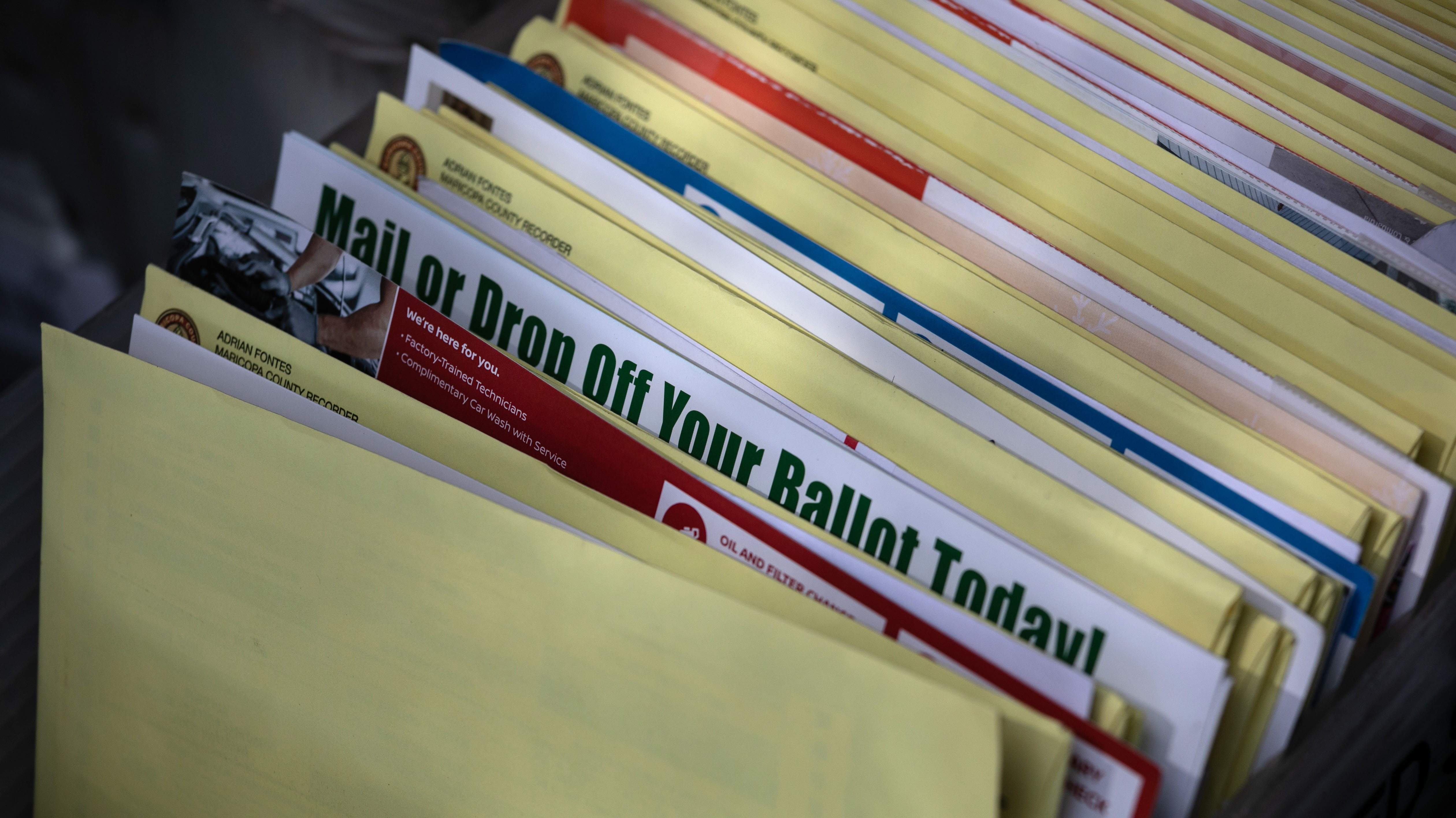
Yellow mail-in ballots sit in a U.S Postal Service truck while being delivered Oct. 8, 2020, in Phoenix, Arizona. (John Moore/Getty Images)

(WASHINGTON) -- A federal judge who blocked the most controversial aspect of President Donald Trump's executive order aimed at restricting mail-in ballots — namely, employing the Postal Service as the primary enforcer of mail-voter eligibility — has now lifted that decision following the Supreme Court's ruling Monday that legal challenges are premature.

The move means there are no longer legal holds on any aspect of Trump's March 2026 mail-in ballot executive order and that the administration is free to move forward, for now, with its implementation without caveats.

Trump's executive order directs the Department of Homeland Security to build a federal citizenship list and give it to the states; the Department of Justice to target state officials who give ballots to noncitizens; and the USPS to direct states to abide by certain mail-ballot design and tracking requirements.

Most critically, the order would require states to provide a list of registered eligible voters to USPS for verification and mandate that postal workers only deliver ballots to persons on the list.  

Dozens of Democratic state attorney's general sued the Trump administration over the USPS directive in April, arguing it is unconstitutional since states — not the federal government — have primary authority for administering elections. 

A separate lawsuit by voting rights advocates challenged the proposed USPS ballot verification scheme.

The Supreme Court ruled Monday that the states lacked standing to challenge Trump's order at this stage since nothing had formally impacted how they will administer elections.  

The conservative majority made clear, however, that the decision "does not mean that any measure taken by the government to implement the order will necessarily be lawful. On that score, time will tell."

The Postal Service this week published its finalized plan with respect to the November election, focusing largely on state ballot design and barcode tracking requirements. Notably, it leaves out or waters down the most controversial aspects envisioned by Trump's order.

At this time, states are not being asked to provide detailed voter eligibility lists to USPS that include personal identifiable information, including citizenship. The USPS also says outright it "will not play any role in determining voter eligibility, maintaining voter rolls, or counting ballots."

The Postal Service, however, will soon proceed with directing states to ensure their mail ballots comport with certain design standards — including a barcode — and to provide voter address information to verify delivery. 

Twenty-five states filed a new legal challenge against the Postal Service on Wednesday, alleging it is illegal. 

"It displaces state laws adopted pursuant to each State’s constitutional authority to administer elections, erects new USPS functions and ballot mail constraints that are inconsistent with USPS’s governing statutes, flouts USPS’s procedural requirements, violates the Privacy Act, and cannot be reconciled with federal voting rights law," they wrote in a lawsuit filed in a Massachusetts District Court. 

Copyright © 2026, ABC Audio. All rights reserved.

Trump calls Canada 'one of the worst countries' to deal with amid ongoing trade war

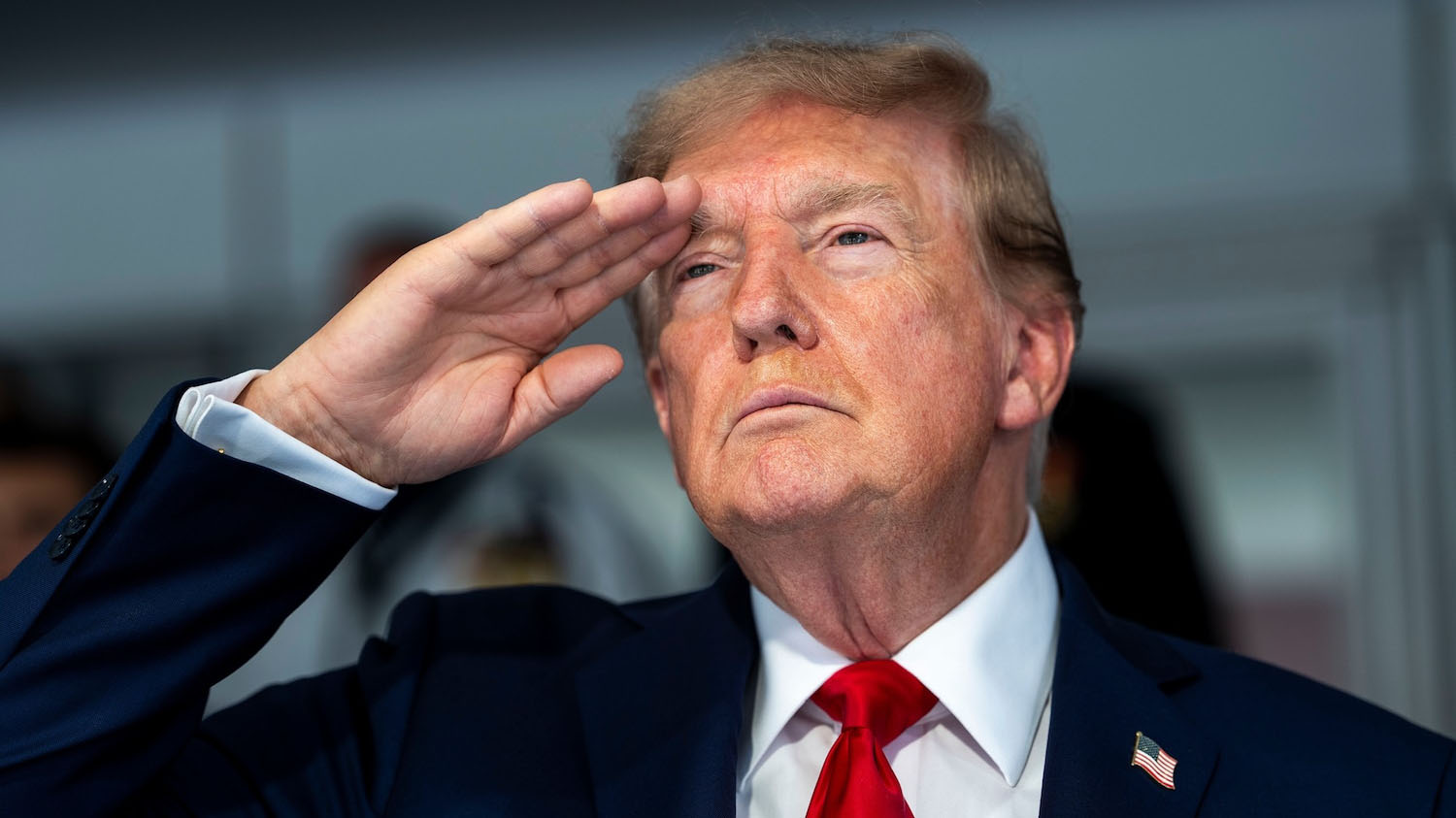
President Donald Trump stands during the national anthem at the start of the NTT INDYCAR Series, Aug. 23, 2026, in Washington. (Doug Mills/Pool via Getty Images)

(WASHINGTON) -- President Donald Trump maintained his firm stance amid the ongoing U.S.-Canada trade war on Wednesday, repeating his claims that Canada is one of "the worst countries" in the world to deal with and that they have taken "advantage" of the U.S. during a radio interview with conservative host Glenn Beck.

"Look, I don't know how you feel about Canada. They are one of the worst countries in the world to deal with," Trump said, remarking on negotiating with the Canadians.

Negotiations between Canada and the U.S. broke down over the weekend and a fresh round of 50% U.S. tariffs on some Canadian goods took effect on Saturday, leading Canada to retaliate with a set of its own levies.

"They take advantage of us as though they were a state, and they're not a state," Trump added.

The president then mentioned the "good deal" with Canada last week, which fell apart just before the deadline.

"I had a deal that was a pretty good deal, you know, quite good, because they're afraid that I won't do any business. In other words, we won't trade. They don't have anything that we have to have. OK, we can get by," Trump said. "I mean, there are a couple of things that would make it a little inconvenient, but we can get them elsewhere. And it's time to teach Canada you can't do this anymore."

On Tuesday, Trump said in a call with CNN that Canada's claim that the U.S. added more conditions to their agreement in the final hours of negotiations "sounds like" him, seeming to confirm the Canadian position. He later added, according to CNN, that he doesn't "deny anything" when pressed on whether he denies the Canadians' claims.

Those comments from Trump contradict what some in his own administration, including Vice President JD Vance, have said about the collapse of the talks. Vance has insisted that it was Canada who was at fault for the talks falling apart, pinning the blame on Canada during a campaign stop in Maine earlier this week, saying they were making "unreasonable last-minute demands."

During his radio interview on Wednesday, the president also brought up his call this week to rename Lake Ontario as "Lake America." He added that maybe he "wasn't" joking about it, pointing to the fact that he renamed the Gulf of Mexico as "Gulf of America" last year.

"You saw the Lake Ontario -- you know, people thought I was kidding. Maybe I wasn't because the last one you saw was the Gulf of Mexico, Gulf of America," Trump said.

Copyright © 2026, ABC Audio. All rights reserved.
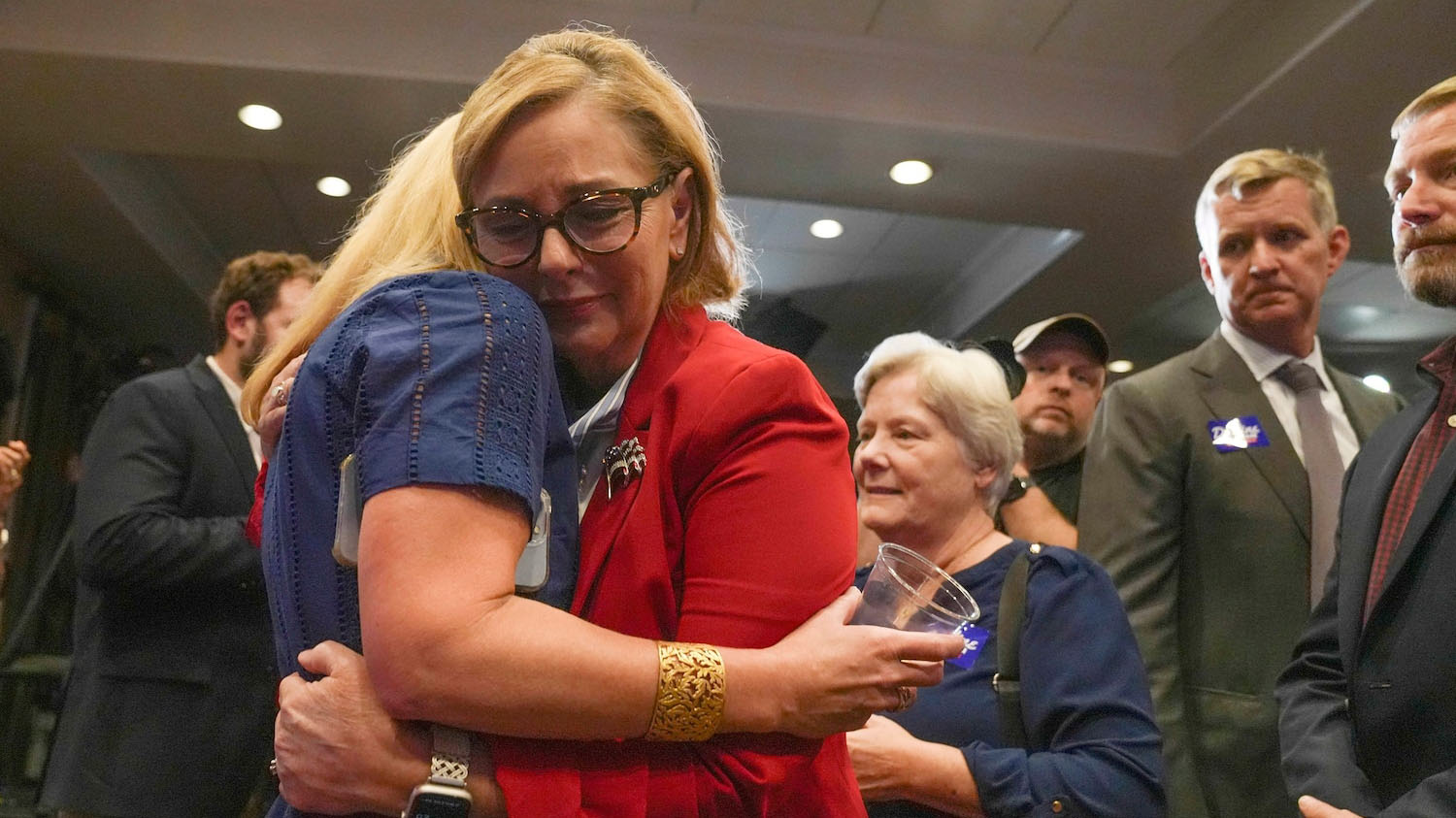

Darline Graham wins GOP runoff to replace brother Lindsey Graham on South Carolina ballot: AP

Sen. Darline Graham gets emotional while hugging Tara Spicer, her finance director, after winning a special Republican primary runoff to replace her brother, the late Sen. Lindsey Graham, in the November general election, Aug. 25, 2026, in Columbia, S.C. (Megan Varner/Getty Images)

(WASHINGTON) -- Sen. Darline Graham -- a political newcomer appointed to the seat held by the late Sen. Lindsey Graham -- will win a special GOP primary runoff to replace her brother on the South Carolina ballot, The Associated Press projected Tuesday.

Graham, who was endorsed by President Donald Trump, defeated Rep. Ralph Norman, a staunch conservative and member of the hard line Freedom Caucus, who had also advanced to the runoff following South Carolina's special Senate primary earlier this month.

Graham will face Democratic candidate Annie Andrews in November.

Speaking to a crowd of triumphant supporters Tuesday night in Columbia, South Carolina, Graham struck a reflective tone at times.

"The past few weeks have been an unbelievably challenging time for our family, but you know what? We did it," she said, while adding that she was feeling "mixed emotions" given her grief over her brother.

As she thanked God, her key supporters and her family, Graham also effusively thanked Trump for his support and endorsement, describing the "bond" between her brother and the president and telling the crowd, to raucous cheers, "South Carolina is truly Trump country."

Graham framed her outsider status as an asset, while pointing to Trump's support as one of the key reasons conservatives should support her bid for a full term. Trump threw more than just a social media endorsement behind her: he flew to Myrtle Beach for a rally on Friday, in one of his first major campaign stops during the 2026 midterms.

"Now, the critics say I shouldn't run for the Senate. They say I'm not a politician. You know what I say? Guilty as charged," Graham said during the rally to cheers. "And by the way, President Trump had never served in an elected office before, and I think he's done a damn good job."

Trump, later on, effusively praised Graham, saying "she only knows how to put America first."

Norman, meanwhile, said that his experience is his "resume" and that conservatives in the Palmetto State could trust him more than a relative unknown like Graham.

"The establishment has already picked their candidate. Same old playbook, same old insiders. I'm not their choice. And this election is not for sale," he said in a campaign ad.

He also questioned why Trump has gotten involved in the race in GOP-favoring South Carolina instead of focusing on ones where the GOP faces an uphill battle against Democrats. The White House, asked about some of Norman's comments about Trump, pointed to Trump's previous social media posts where he endorsed Graham.

Graham, on her end, faced scrutiny from many fellow Republicans over her lack of political experience and occasional missteps on the trail.

During a one-on-one debate she had with Norman last Tuesday, she was asked if Taiwan and the South China Sea are national security issues for the United States. She answered, "I'm not that informed on national security. But I do support the military ... I'm not a polished politician up here. National security is not my thing, not my area of expertise, but I do support the military."

The comment, which contrasted with her brother's major focus on national security, sparked criticism from Norman's allies, including former Gov. Nikki Haley.

"Lindsey Graham was well informed on the United States' national security. Darline Graham admits she's not. This is not something you inherit. And it's critical in the U.S. Senate," Haley wrote on X last week.

Norman, in an interview with local outlet WHNS posted on Thursday, called Graham's answer "surprising" and hammered her for her lack of experience. "There's no more important issue than national security ... there's no time for training on the job," he said.

But Graham, while admitting she feels she got the answer wrong -- telling Fox News she "tripped up on one question" -- told voters at an event last week, "To me, as I've walked around this room and I've asked people, 'Are y'all concerned about Taiwan?' You know what they said? No, they're concerned about the price of groceries, the price of gas, rising healthcare costs."

She also said she believes national security is important and she will become more informed about it. "Everybody has a first day on the job. President Trump -- was he a politician [when he was first elected]? Has he done a good job? Yes, he has," she told attendees.

Heading into the runoff, David Woodard, a political scientist who also managed some of Lindsey Graham's early congressional campaigns, but did not work on this Senate race, told ABC News that he expected relatively low turnout and that those showing up to vote in such an off-cycle election are likely among the most opinionated, plugged-in Republicans.

"I think on the first round, people I was talking to had sympathy for Darline, thought it was great she'd serve out Lindsey's term," he said, adding that some of them "think that Ralph Norman has credibility on issues that Darline lacks."

But heading into Tuesday some voters said they find Trump's endorsement of her, as well as her focus on the economy, a strong selling point.

Mike Funderburk, a contractor from Neeses, South Carolina, who voted early for Graham, said the economy is his top issue.

"I think she's probably going to have a steep learning curve," he said. "But I'm willing to give her the benefit of the doubt."

ABC News' Michelle Stoddart contributed to this report.

Copyright © 2026, ABC Audio. All rights reserved.

Trump administration suggests Kennedy Center could be demolished if court blocks planned renovations

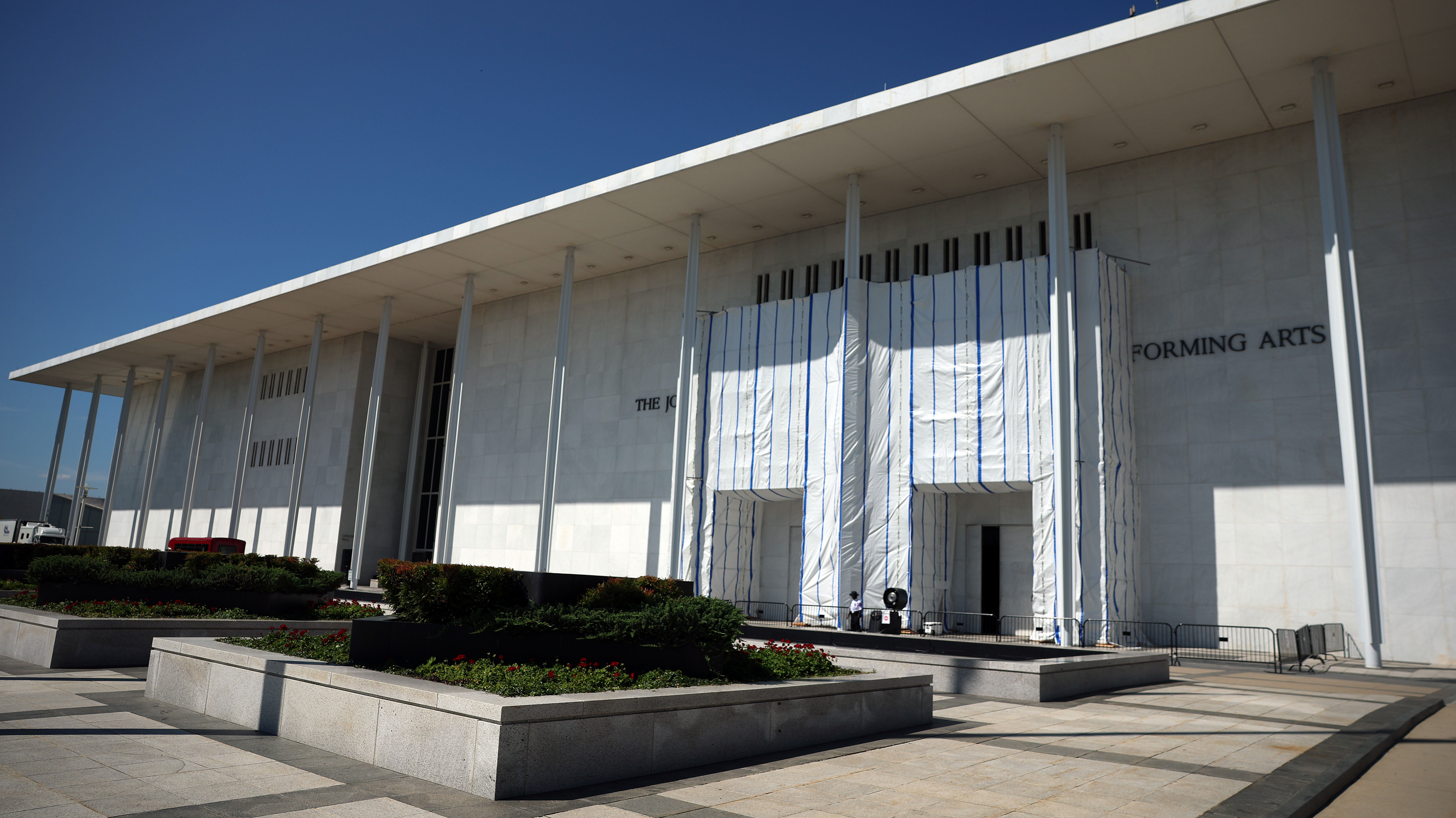
A tarp remains in place on the facade of the John F. Kennedy Center for the Performing Arts on Aug. 25, 2026, in Washington, D.C. (Kevin Dietsch/Getty Images)

(WASHINGTON) -- The Justice Department suggested in a court filing Tuesday that the Kennedy Center could face demolition in the event a federal judge issues an order permanently blocking President Donald Trump's push to renovate the facility with additions intended to recognize Trump personally.

In an extraordinary filing that at times reads like a post from Trump's social media platform, Brantley Mayers — a top official in DOJ's Civil Division — argues the "decrepit" Kennedy Center faces an imminent "death spiral" without Trump's intervention.

"Without those efforts, the Center will deteriorate further into an unsafe, decrepit structure that will be required to be taken down, with a determination to follow on what to build on the site, such as a large outdoor amphitheater overlooking the Potomac River that has been proposed, by some, for many years," the filing said. "Such a replacement will fail to adequately honor President John F. Kennedy, but would be simpler and more economical to build, operate, and maintain."

Mayers uses the filing to repeatedly attack Rep. Joyce Beatty, D-Ohio, a member of the Kennedy Center's board who filed suit last year to have Trump's name removed from the building. Beatty's lawsuit argued the board’s vote to rename the building was illegal because an act of Congress is required for such an action.

Permitting Beatty's legal efforts to continue, Mayers warns the federal judge overseeing the lawsuit, "almost guarantees the continued decline and eventual demise of the Kennedy Center, probably leading to the construction of a new, but very different kind, of venue."

The department describes the initiatives approved by the Kennedy Center's board that intend to honor Trump personally for his effort — including adding the inscription "Renovated and Restored by President Donald J. Trump" on the front of the building and renaming the site that contains the Center the "President Donald J. Trump Plaza" — as "crucial" to ensure payments from donors who have already pledged to help fund the renovation effort. 

"An order blocking the Board from appropriately recognizing President Trump will cause donors to flee, financial contributions to dry up, and structural rehabilitation to stop," the department argues. "There will simply not be the expertise or funding necessary to rebuild and renovate this decimated structure.  The Trump Administration is ready to go but, without it, the Kennedy Center cannot be saved." 

This is a developing story. 

Copyright © 2026, ABC Audio. All rights reserved.

Trump floats renaming Lake Ontario to 'Lake America,' denies claim he'd interfere with Canadians speaking French

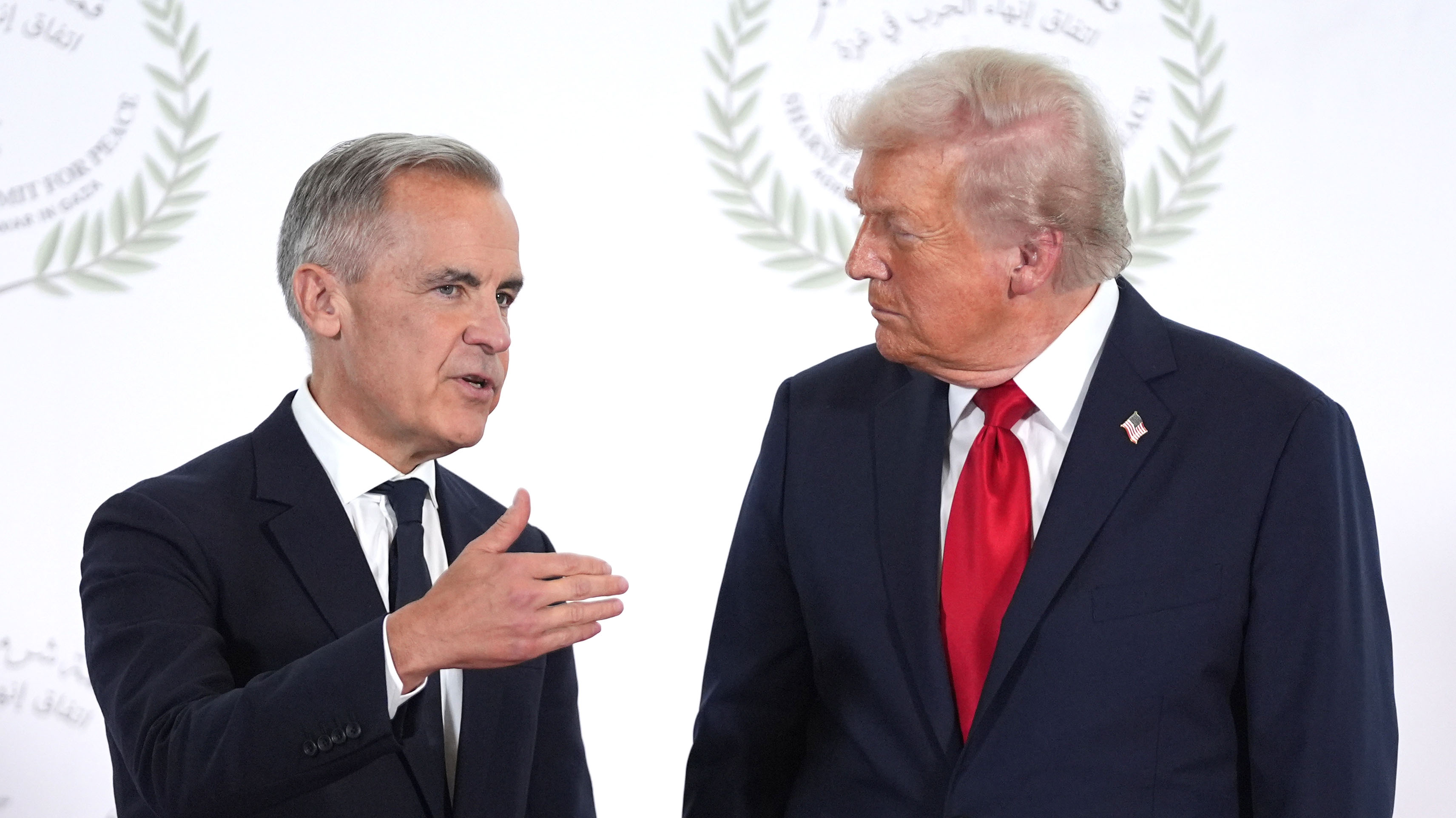
President Donald Trump greets Canada's Prime Minister Mark Carney during a world leaders' summit on Oct. 13, 2025, in Sharm El-Sheikh, Egypt. (Evan Vucci - Pool/Getty Images)

(WASHINGTON) -- President Donald Trump announced Tuesday morning that he is giving "serious consideration" to renaming Lake Ontario "Lake America" -- mirroring his move to rename the Gulf of Mexico to Gulf of America early in his second term.

Trump later posted on his social media platform an altered map of the lake and surrounding area. 

The map posted by Trump depicts the great lake with the official "Lake Ontario" label crossed out. In its place is a "Lake America" label in a larger, gold-colored font and a graphic of an American flag.

Just like the Gulf of Mexico, Lake Ontario is a shared international waterway and multiple international, federal and regional agencies oversee it.  

Split along the U.S.-Canada border, New York state and Ontario each govern their own portion of the lakebed and shoreline. The U.S. and Canada jointly manage it through the International Joint Commission and Great Lakes Water Quality Agreement.

And just like the renaming of the Gulf of Mexico, Trump can unilaterally change a geographic name for official U.S. federal government use, like his action via executive order in that case -- but he doesn't have the authority to dictate what other countries or international bodies call it.

Trump on Tuesday also rejected Canadian Prime Minister Mark Carney's claims that the U.S. was making threats on Canada's use of the French language, as opposed to English, as part of the ongoing trade war. Trump said on social media that he would "never interfere with Canadians speaking French."

"I have never even thought of doing such a stupid thing. This lie was made up by a weak and ineffective Prime Minister in an attempt to gain political support, which he has totally lost, from the people of Quebec. I love French Canadians!" Trump posted on his social media platform. 

During a press conference on Saturday, Carney claimed that one of the reasons the trade talks with the U.S. collapsed is because the Trump administration wanted Canada to make changes to their use of the French language. 

"This was not our choice. We were ready and close to having a comprehensive agreement that would be fair to both countries. But they made changes, including threats on the French language and Quebec culture and Canadian culture. That is not acceptable. That would never be acceptable," Carney said. 

Copyright © 2026, ABC Audio. All rights reserved.

Judge strikes down Trump administration policy that suspended immigrant visas for 75 countries, reinstating evaluations

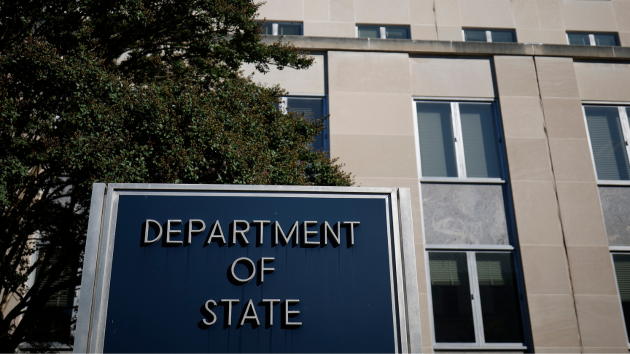
The Harry S. Truman Federal Building, headquarters of the U.S. Department of State, is pictured on October 08, 2024 in Washington, DC.

(WASHINGTON) -- A federal judge on Friday struck down the Trump administration’s policy suspending immigrant visa issuance for nationals of 75 countries, setting aside refusals based solely on the policy and requiring those cases to be reconsidered by consular officers under the normal immigration laws.

U.S. District Judge Jeannette A. Vargas said the policy, announced by the State Department in January, "is contrary to law and was issued in excess of Secretary Rubio's statutory authority."

The directive instructed U.S. embassies and consulates to suspend immigrant visa adjudications while the State Department reassessed its vetting procedures under existing immigration law.

The State Department said in January the pause was intended to "prevent the entry of foreign nationals who would take welfare and public benefits."

Vargas said Friday the policy conflicts with federal immigration law, which gives consular officers "exclusive authority and discretion" to determine whether an immigrant is eligible for a visa.

"The Policy, which categorically prohibits the issuance of immigrant visas based upon the nationality of the applicant, represents a direct abrogation of this statutory scheme," Vargas wrote.

The judge's order also vacates visa denials that were based solely on the policy. 

"The suspension of lawful visa processing across 75 countries separated spouses, parents, and children who were simply following the legal immigration process," said Anna Gallagher, executive director of the Catholic Legal Immigration Network Inc., the group that filed the lawsuit challenging the policy.

"Catholic social teaching calls us to uphold the dignity of every person and recognize the family as the foundation of society," Gallagher added. "Today's decision affirms both those values and the rule of law, allowing families to once again move forward toward reunification."

The State Department did not immediately respond to ABC News' request for comment, nor has it indicated it is going to appeal the decision.

"The Trump administration is bringing an end to the abuse of America’s immigration system by those who would extract wealth from the American people," a State Department spokesman said in a statement when the policy was announced. "The State Department will use its long-standing authority to deem ineligible potential immigrants who would become a public charge on the United States and exploit the generosity of the American people."

Copyright © 2026, ABC Audio. All rights reserved.
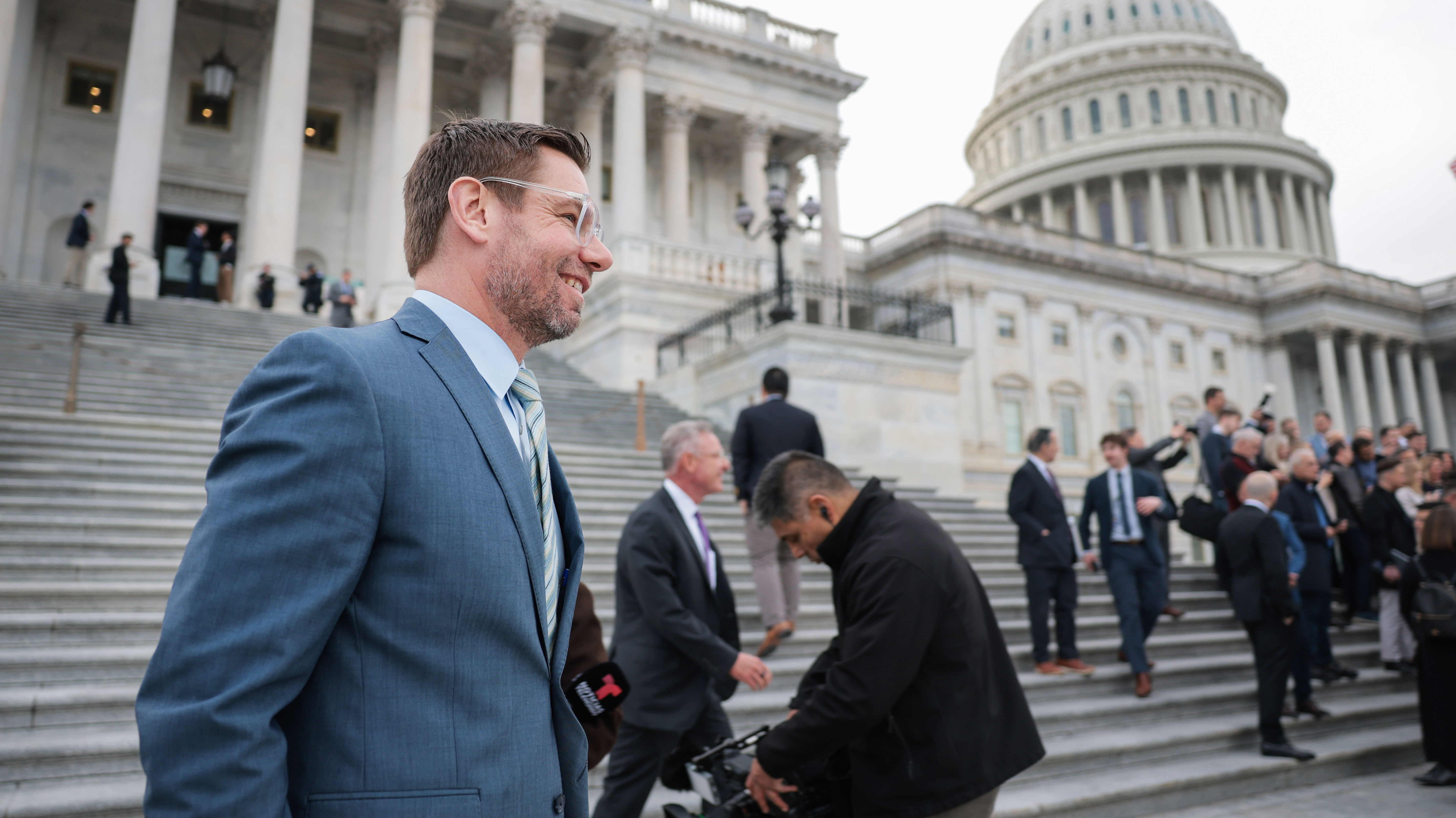

FBI seizes former Rep. Swallwell's phone, devices as part of criminal probe, sources said

Former U.S. Rep. Eric Swalwell departs the U.S. Capitol Building on March 5, 2026, in Washington, D.C. (Anna Moneymaker/Getty Images)

(WASHINGTON) -- The FBI seized former Democratic Rep. Eric Swalwell's electronic devices as part of an ongoing criminal probe, according to sources familiar with the situation. 

Swalwell was served with a search warrant for his cellphone and other electronic devices while he was at San Francisco International Airport on Saturday night, according to sources, and agents served a search warrant at his Washington, D.C., home on Sunday.

Swalwell resigned from Congress in April after being accused of sexual misconduct and was about to face efforts by his colleagues to have him expelled from the House.

Swalwell had suspended his campaign for California governor the day before after the San Francisco Chronicle reported that an ex-staffer alleged that he sexually assaulted her twice when she was too intoxicated to consent.

The House Ethics Committee announced the same day that it was investigating the allegations against him.

Lonna Drewes said in a news conference after Swalwell's resignation that he raped her in 2018 and believes he drugged her drink when the two were planning to attend a political event. 

Drewes is one of at least six women who have made allegations of sexual misconduct against Swalwell.

The Los Angeles County Sheriff’s Department announced it is launching an investigation into Drewes' allegations against Swalwell.

Swalwell has denied the allegations.

In a statement posted on X announcing that he intended to resign from Congress, Swalwell said that he was “deeply sorry” to his family, staff and constituents but that “he will fight the serious, false allegation made against me.”

"I am aware of efforts to bring an immediate expulsion vote against me and other members. Expelling anyone in Congress without due process, within days of an allegation being made, is wrong,” Swalwell said. “But it's also wrong for my constituents to have me distracted from my duties. Therefore, I plan to resign my seat in Congress." 

The Manhattan District Attorney's Office is also investigating allegations against Swalwell, a source familiar with the investigation told ABC News.

Copyright © 2026, ABC Audio. All rights reserved.
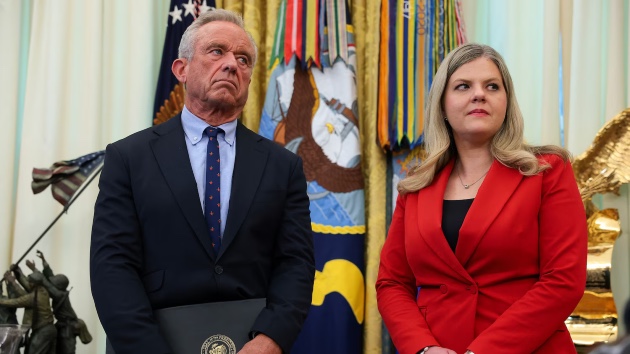

Trump picks White House aide Dr. Heidi Overton for top FDA job

Health and Human Services Secretary Robert F. Kennedy Jr. and Deputy Assistant to the President for Domestic Policy Dr. Heidi Overton attend an executive order in the Oval Office at the White House, August 10, 2026 in Washington. (Anna Moneymaker/Getty Images)

(WASHINGTON) -- President Donald Trump said on Wednesday that he has nominated White House Domestic Policy Council Deputy Director Heidi Overton to be the next commissioner of the Food and Drug Administration.

"Dr. Heidi has been a ROCKSTAR in my Administration, where she has worked directly with Secretary Kennedy, Dr. Oz, and team, to deliver on the MOST TRANSFORMATIVE Health Agenda in History," Trump said in a social media post, adding that he wants her "leadership at the FDA now to ensure that the U.S. remains the WORLD LEADER for Scientific Discovery and CURES."

Overton has been Trump's deputy assistant during his second term, advising him on health policies, including lowering prescription drug prices. Overton has stood alongside Trump for several major health announcements at the White House, including his executive order signing on childhood vaccines earlier this month.

She has espoused anti-abortion views and supported reductions to the childhood immunization schedule, touting the use of "gold-standard science" and restoring vaccination authority to parents while at that executive order signing.

Overton is a physician who holds a doctorate from Johns Hopkins University. Prior to that role, she was vice chair of the America First Policy Institute's (AFPI) Center for a Healthy America, where Overton was also the chief policy officer, a nonprofit that aims to advance policies that it says put the American people first. AFPI was run by Agriculture Secretary Brooke Rollins before Rollins was tapped to join the president's Cabinet. Several Trump administration officials held positions there before he was reelected, including Education Secretary Linda McMahon.

The FDA is one of several agencies under the Department of Health and Human Services, led by Secretary Robert F. Kennedy Jr.

Kennedy expressed his support for Overton on Wednesday, calling her the "best person for the job."

"Heidi brings exceptional judgment, professionalism, discipline, and an unwavering commitment to the American people," Kennedy wrote in a social media post. "I have seen her challenge assumptions, demand excellence, and turn bold ideas into meaningful results."

The FDA commissioner position requires Senate confirmation. During confirmation hearings, Overton is expected to face questions that will test her loyalty to the president, similar to previous confirmation hearings for Trump administration health leaders.

If confirmed, Overton is expected to continue to support the president's health agenda.

"She's gonna stay in line because she's tested," a source familiar told ABC News. "She's a loyalist to the president. That's kind of his thinking behind all of this -- to keep loyalists in these top jobs."

The job is one of the nation's top health posts and has remained without permanent leadership amid the foodborne illness outbreaks of cyclospora and salmonella.

A senior administration official told ABC News that acting commissioner Kyle Diamantas was offered the full-time job several times and declined. Diamantas, who has been leading the investigation into the health outbreaks, has been touted as the driving force behind the administration's food policy and stressed that America's food supply is safe despite consumers' health concerns.

Overton will ultimately be replacing former FDA Commissioner Marty Makary, who resigned in May amid clashes with the White House over pressure from Trump to authorize fruit-flavored vapes. FDA employees, who previously spoke to ABC News on the condition of anonymity, said that they were concerned about the future of the agency’s leadership after Makary's exit. They said the angst stems from a rollercoaster-like experience, including witnessing 20% of the FDA's staff being reduced during the president's second term.

Copyright © 2026, ABC Audio. All rights reserved.

Takeaways from Tuesday primaries: Trump endorsement only goes so far

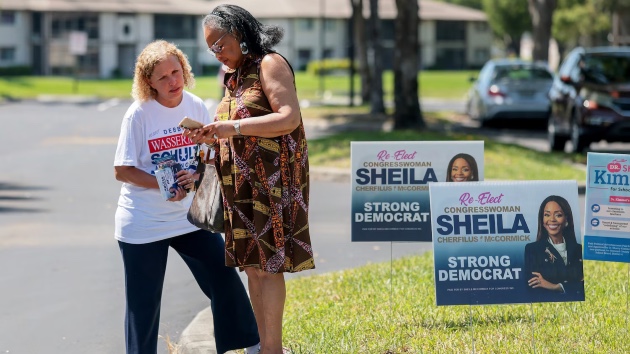
Democratic Congressional candidate Rep. Debbie Wasserman Schultz speaks with voter Camille Edwards as she campaigns outside of the Kings Point Clubhouse polling station, August 18, 2026, in Tamarac, Florida. Joe Raedle/Getty Images

(WASHINGTON) -- Several high-profile primary races Tuesday tested how much President Donald Trump's endorsement can do for a scandal-marred candidate, showed the impact of Republicans' mid-decade redistricting and highlighted the continued battle between established Democratic candidates and progressive challengers.

Here are takeaways from Tuesday's primaries:

Trump endorsement can't lift Mills

Embattled and scandal-ridden Republican Rep. Cory Mills lost his reelection bid in Florida Tuesday, defeated by challenger Ryan Elijah, a former TV news anchor and NFL sideline reporter.

Mills faces a House Ethics Committee investigation; a judge issued a restraining order against him last year after he was accused by his former girlfriend of threatening to distribute sexually explicit videos of her; and in July, ABC News reported that the embattled congressman was also under investigation by the Department of Justice, in part about his finances. Mills has denied the allegations.

Mills' loss suggests that Republicans have limits when it comes to how long they can stand behind a candidate carrying too much baggage. Despite the scandals that have followed him, Mills still retained Trump's endorsement.

Putting aside differences before November

Republican Rep. Byron Donalds unsurprisingly secured his party's nomination in the gubernatorial race in Florida. Donalds' campaign has received immense support among Republicans and Trump's endorsement.

Donalds now faces the task of uniting his party after what was a bruising primary. Donalds said he received congratulatory calls from his competitors, Paul Renner and James Fishback. In his victory speech, Donalds called for Florida Republicans to come together.

"But tonight the primary is over. Tonight we put aside our differences. Tonight we are one united Republican Party," Donalds said.

Wasserman Schultz promises representation matters

Democratic Rep. Debbie Wasserman Schultz won her primary in Florida's historically Black 20th Congressional District that was redrawn this year by the Republican-controlled legislature.

Her decision to run in the district drew criticism from her four Black opponents and other Black Democrats who have already been impacted by Republican redistricting efforts in southern states.

In her victory speech, Wasserman Schultz referenced redistricting Republicans hope will improve their chances of retaining the House in November. She promised the redrawn majority-minority district that increasing representation is among her top priorities.

“This is such a difficult and fraught time in our country. There is so much at stake in this moment, and I want people to know that representation matters. It matters, and I will fight to make sure that representation counts again,” she said Tuesday evening.
Moskowitz fends off challenge from DSA candidate

In the Democratic primary for Florida's 25th District, two-term incumbent Rep. Jared Moskowitz, who was also running in a redrawn district, fended off a challenge from Democratic Socialists of America candidate Oliver Larkin.

The race highlighted how support for Israel is becoming prominent issue in this year's election as more Democrats have become less supportive. Moskowitz has been a staunch supporter of Israel while Larkin has called for the U.S. to cut off aid.

The race was a continuation of established Democratic candidates facing challenges from progressives, as seen in the Senate race in Michigan.

Moskowitz now faces a competitive general election in November, as his seat is one Republicans see as a top pickup opportunity.

Copyright © 2026, ABC Audio. All rights reserved.
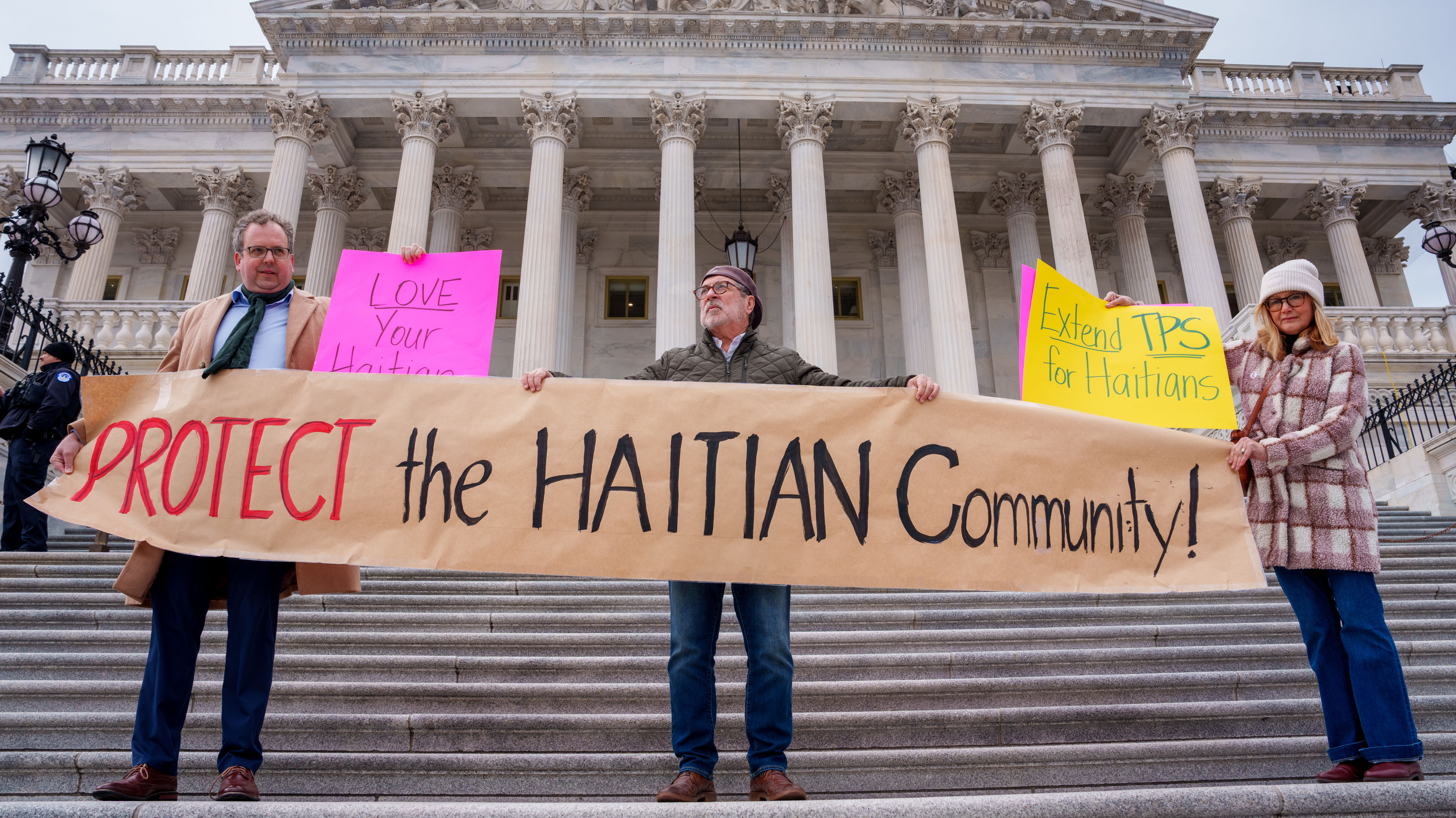

Judge clears way for termination of Ethiopians' Temporary Protected Status

Alexei Laushkin, Rev. Patrick Mahoney and Katie Mahoney demonstrate against the Trump administration's plan to revoke Temporary Protected Status for the Haitian community on March 6, 2025, in Washington, D.C. (Andrew Harnik/Getty Images)

(WASHINGTON) -- A federal judge in Boston has cleared the way for the Trump administration to terminate temporary protected status for Ethiopian nationals.

U.S. District Judge Brian Murphy on Tuesday lifted the administrative stay that had been blocking the termination of the TPS program.

The ruling follows other recent court orders allowing the administration to end protections for TPS holders from countries including Haiti, Somalia, Syria and Myanmar as part of the administration's ongoing immigration crackdown.

The court rulings come after the U.S. Supreme Court ruled in June that the Trump administration could terminate TPS for Haitian nationals. 

The advocacy group African Communities Together filed suit in January, arguing that Ethiopia remains in a humanitarian crisis.

"Should TPS for Ethiopia be terminated, all Plaintiffs will face impossible choices: to uproot their lives yet again in search of a pathway to safety in a third country; to remain in the United States without lawful immigration status, at risk of imminent immigration confinement and removal; or to relocate to Ethiopia, a country still suffering violent conflict," the group said in its original complaint.

TPS status, established by the 1952 Immigration and Nationality Act, provides work authorization and protection from deportation if a foreign country is deemed by the government to be unsafe because of armed conflict, natural disaster, or "extraordinary and temporary conditions."

In a post on X, the Department of Homeland Security said that individuals with terminated TPS should leave the U.S.

"Those with terminated TPS should leave NOW," DHS said. "If they don't, we will DEPORT them."

Copyright © 2026, ABC Audio. All rights reserved.

Trump contradicts Vance, says nukes, not oil prices, No. 1 priority in Iran

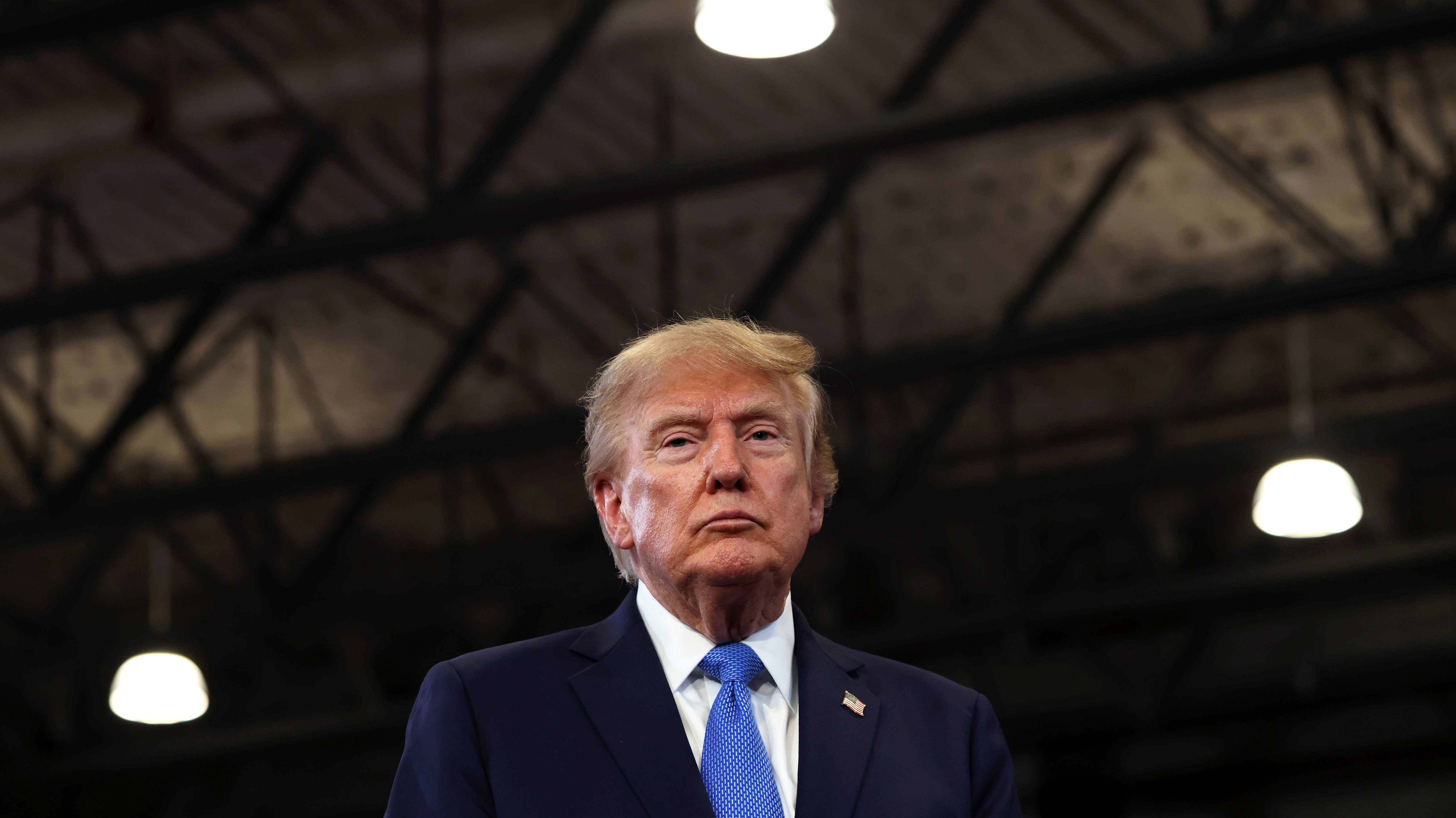
U.S. President Donald Trump departs after delivering remarks at the David S. Mack Center for Training and Intelligence on Aug. 14, 2026, in Garden City, New York. (Samuel Corum/Getty Images)

(WASHINGTON) -- President Donald Trump contradicted Vice President JD Vance on Monday after the vice president asserted last week that the administration’s top priority amid the Iran war was to keep the price of oil and gas down for Americans.

In a social media post on Monday morning, Trump said that the "number one Goal is, and always will be" that Iran can't have a nuclear weapon.

Last Thursday, Vance laid out a different order of priorities on Fox News, saying that "goal No. 1" for the administration amid the war was to "keep oil and gas cheap for Americans all over our country."

"And then obviously, goal No. 2 is ensure that Iran never gets a nuclear weapon," he added. "I feel confident we're accomplishing both of those goals."

Vance’s comments about prioritizing gas prices diverge from the president's stated mission of eliminating Iran's nuclear and ballistic missile programs. And while some Republicans have acknowledged gas prices are too high, Trump said he won't apologize for it.

In the past, the president had outright rejected the idea that the domestic American economy should factor into military decisions around Iran. 

"Not even a little bit," Trump said back in May when asked to what extent financial pressure on Americans was motivating him to strike a deal.

"The only thing that matters when I'm talking about Iran, they can't have a nuclear weapon," he added. "I don't think about Americans' financial situation. I don't think about anybody. I think about one thing. We cannot let Iran have a nuclear weapon, that's all."

Asked about Vance’s comments aboard Air Force One last Friday, White House press secretary Karoline Leavitt said that "both goals are equally as important to the president."

"Of course, we want to keep gas prices low. That's why the administration has done so much to keep the markets stable, but also ensuring Iran can never get a nuclear weapon is the president's priority with respect to the ongoing conflict, and it's something he's going to see through one way or another," she added. 

Trump's apparent rebuke of the vice president came just minutes after "Fox and Friends" anchor Lawrence Jones reacted to Vance’s comments during the program’s Monday morning broadcast, and called for "more clarity" from the White House on the U.S. objectives. Roughly eight minutes later, the president posted his message. 

"It also looks like we got an answer from the president about what is priority No. 1 for the United States," Jones said about an hour later in the broadcast as he relayed the details of the president's post.

While the status of the Strait of Hormuz has become a central focus of the war -- injecting volatility into the global energy market even as the conflict between the two countries has ebbed and flowed -- Trump has repeatedly argued that the cost of not intervening in Iran would far outweigh the higher gas prices Americans are dealing with now.

The average price of a gallon of regular is $4.02 according to GasBuddy, up 7 cents form last week and up more than a dollar per gallon since the start of the war.

Speaking at the New York police academy last Friday, Trump told the gathered crowd that he would not apologize for the price of gas. 

“[Iran's] the No. 1 state sponsor of terror in the world. We don't want to have them have nuclear weapons," Trump said. "So remember that when you have to pay a little bit more, you're at $4. It's OK. I mean, it's, I'm not -- I'm not -- I will never apologize. I did the right thing."

Copyright © 2026, ABC Audio. All rights reserved.

Trump announces White House press secretary Karoline Leavitt stepping down

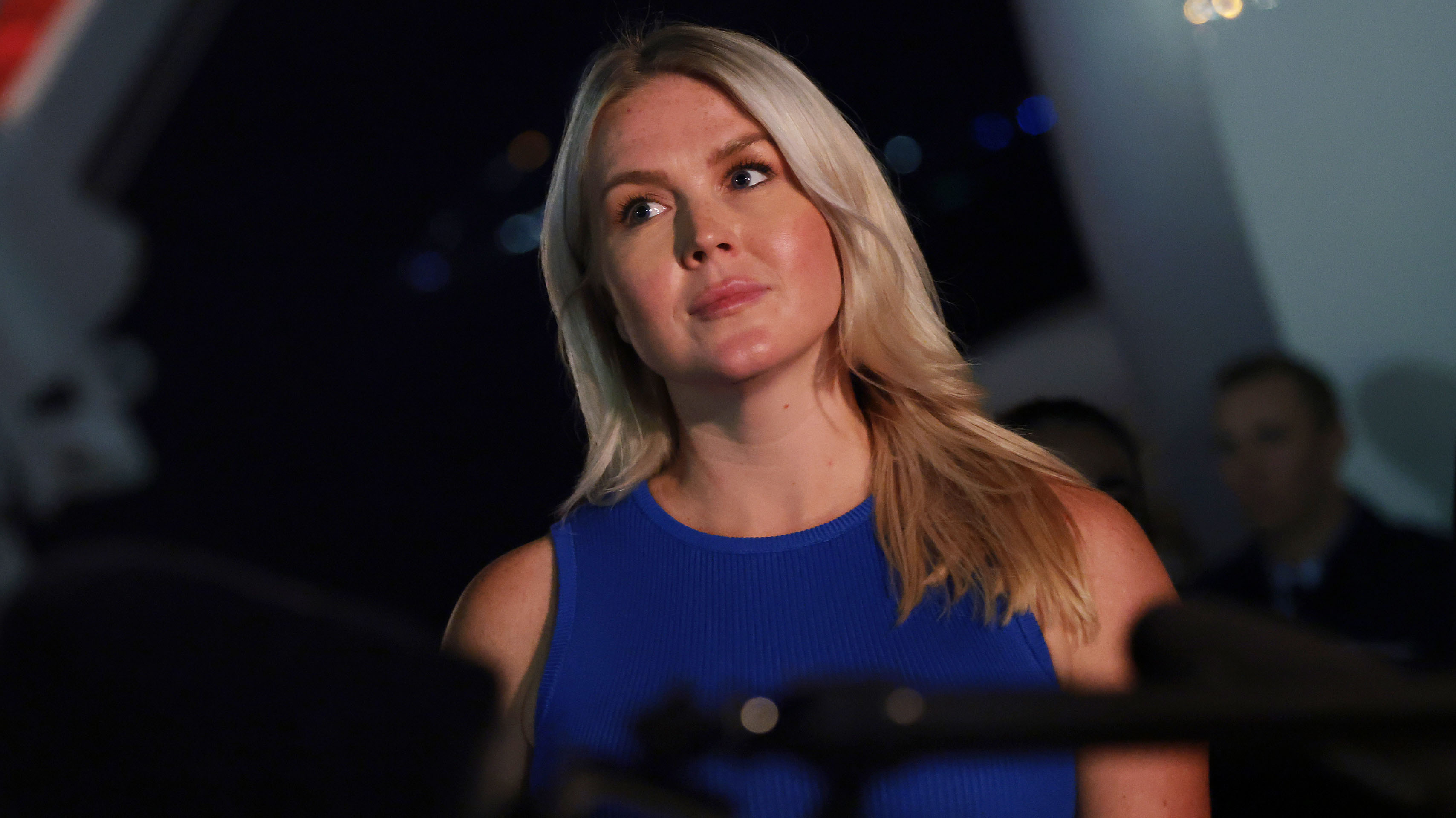
White House press secretary Karoline Leavitt looks on as U.S. President Donald Trump speaks to reporters after stepping off Air Force One on Aug. 11, 2026, in Joint Base Andrews, Maryland. (Anna Moneymaker/Getty Images)

(WASHINGTON) -- White House press secretary Karoline Leavitt will leave her role at the end of August "so she can spend more time with her beautiful young children and family," President Donald Trump announced in a social media post on Wednesday.

The announcement comes less than a month after Leavitt held her first briefing after returning from maternity leave. Leavitt welcomed her second child in May.

Trump, in his social media post, said her decision is one "I totally understand and respect."

The president added that Leavitt would continue to be one of his "top outside advisors" and an "influential voice" within the Republican Party ahead of the midterm elections.

Calling her "one of the best White House Press Secretaries in the History of the Office," Trump thanked Leavitt for a "job well done."

Leavitt became the youngest White House press secretary in history when she assumed the position last year at 27 years old. 

Leavitt confirmed her decision to leave in an X post and expressed her gratitude to the president, saying the role has been "the honor and adventure of a lifetime" and thanked the president for the opportunity to work in his administration. 

She also pointed to her role as a mother of two as her reason for leaving the role of press secretary, saying it has been "rewarding yet challenging" to balance the two. 

"The truth is since returning to the White House after the birth of my daughter, I have felt in my heart that I cannot be the best mom my two young children deserve while devoting the constant time, energy, and attention required of the White House Press Secretary -- and that is why I have ultimately made the bittersweet decision to depart the White House and embark on a new chapter in my life," Leavitt wrote. 

Before serving as press secretary, Leavitt was Trump's spokesperson during his 2024 presidential campaign and his transition. She also worked in Trump's first administration and for Republican Rep. Elise Stefanik.

Leavitt also ran for Congress in her home state of New Hampshire prior to joining Trump's 2024 campaign, though she ultimately lost the general election. 

It is not immediately clear who Trump will pick to replace her.

While Leavitt was on maternity leave earlier this year, a rotating cast of administration officials held press conferences in the briefing room, including Vice President JD Vance, Secretary of State Marco Rubio and Treasury Secretary Scott Bessent.

During Trump's first term, he had four press secretaries: Sean Spicer, Sarah Huckabee Sanders, Kayleigh McEnany and Stephanie Grisham. 

Copyright © 2026, ABC Audio. All rights reserved.

Tuesday primaries: Crowley projected to defeat democratic socialist Hong in Wisconsin

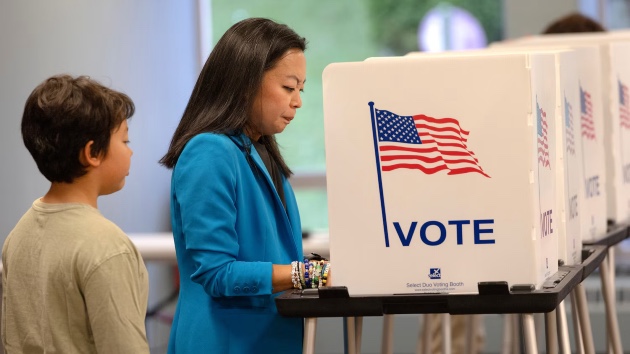
With her son George by her side, Democratic Wisconsin Gubernatorial candidate Francesca Hong votes in the primary election on Aug. 11, 2026, in Madison, Wisconsin. (Scott Olson/Getty Images)

(WASHINGTON) -- Voters in six states on Tuesday decided which candidates will face off in November in House and Senate races that could determine whether the balance of power will shift in the next Congress.

Milwaukee County Executive David Crowley, a centrist Democrat, narrowly won the Democratic primary in Wisconsin in a major upset in the race for governor, the Associated Press projects. He defeated Wisconsin assemblywoman Francesca Hong, a democratic socialist, in what became a high-stakes test for progressives who pinned their hopes on winning a major party nomination in a crucial battleground state.

And in Connecticut, 14-term Rep. John Larson became the seventh House Democrat incumbent to lose a primary during this election cycle.

Here's a look at Tuesday's primaries:

Wisconsin

Republican and Democratic candidates in Wisconsin are vying to win the first open gubernatorial seat since 2010, replacing Democratic Gov. Tony Evers, who announced last year that he wouldn't run for reelection.

There are also primaries in both parties that could have an impact on which controls the House next year.

Live Wisconsin primary results

Connecticut

Incumbent Democratic Rep. John Larson will lose the Democratic primary for his 1st Congressional District seat to challenger Luke Bronin, the former mayor of Hartford, ABC News projects. Larson has held his seat since 1999. Larson is the seventh incumbent House Democrat to lose in primaries this year.

And Gov. Ned Lamont, who was elected in 2018, will fend off a primary challenge from Josh Elliott, ABC News projects. He'll face Republican Ryan Fazio in November. 

Live Connecticut primary results

Minnesota

Sen. Amy Klobuchar will win the Democratic governor primary, ABC News projects, in the race to replace Democratic Gov. Tim Walz, who is retiring. She will face state House Speaker Lisa Demuth, who ABC projects will win the Republican governor's primary, in November.

ABC News also projects Lt. Gov. Peggy Flanagan will win the Democratic primary in the race to replace Democratic Sen. Tina Smith, who is also retiring. She'll face former NFL sideline reporter Michelle Tafoya, who ABC projects will win the Republican primary for Senate.

Minnesota also voted in primaries for several House races that could help determine the balance of power in Congress.

Live Minnesota primary results

South Carolina

Darline Graham, the sister of the late Sen. Lindsey Graham who was appointed to fill the remainder of her brother's term, will face Rep. Ralph Norman in an Aug. 25 runoff to replace Lindsey Graham on the November ballot, ABC News projects.

Lindsey Graham's death in July sparked a rapid-fire campaign season. Eight other candidates besides Graham and Norman were running for the seat.

Live South Carolina special Senate primary results

Vermont

Economist Amanda Janoo will win the Democratic primary for governor, ABC News projects, and will face incumbent Republican Gov. Phil Scott in the general election in November.

Live Vermont primary results

Alabama

In Alabama, some voters decided several House races following the Supreme Court decision that limited portions of the Voting Rights Act and led several states in the South to take part in mid-decade redistricting.

Primaries were held in May, but Republican Gov. Kay Ivey pushed back those in the 1st, 2nd, 6th and 7th districts that were impacted by redistricting after the Supreme Court decision.

Copyright © 2026, ABC Audio. All rights reserved.


On Air Now

Greatest Hits of All Time
5:00am - 9:00am
The Greatest Hits Of All Time

Shanty Creek

Hits FM Facebook


Melinda