Fresh data to be released on Thursday is set to provide the latest snapshot of the United States economy, just days before the midterm elections.
The report, which will detail gross domestic product over a three-month period ending in September, will arrive as the U.S. weathers a monthlong surge of inflation.
In response to rising prices, a key long-term Treasury rate has jumped in recent months as investors feared price increases would eat away at their returns. The rise in bond yields has pushed up rates for loans like credit cards and mortgages, threatening to worsen the financial crunch.
Still, the economy has proven resilient by some measures. Hiring has continued to grow, albeit at a slower pace, while unemployment has stayed at a low level by historical standards.
The economy is expected to have expanded at an annualized pace of 3.1% in the third quarter, which would mark an acceleration from 2.2% annualized GDP growth in the previous quarter. The anticipated performance in the third quarter would also outpace a 2.5% annualized rate recorded over the first three months of this year.
A surge in spending on artificial intelligence has helped boost the U.S. economy in recent quarters. Many of the nation's largest companies have poured funds into the chips and data centers necessary to operate AI.
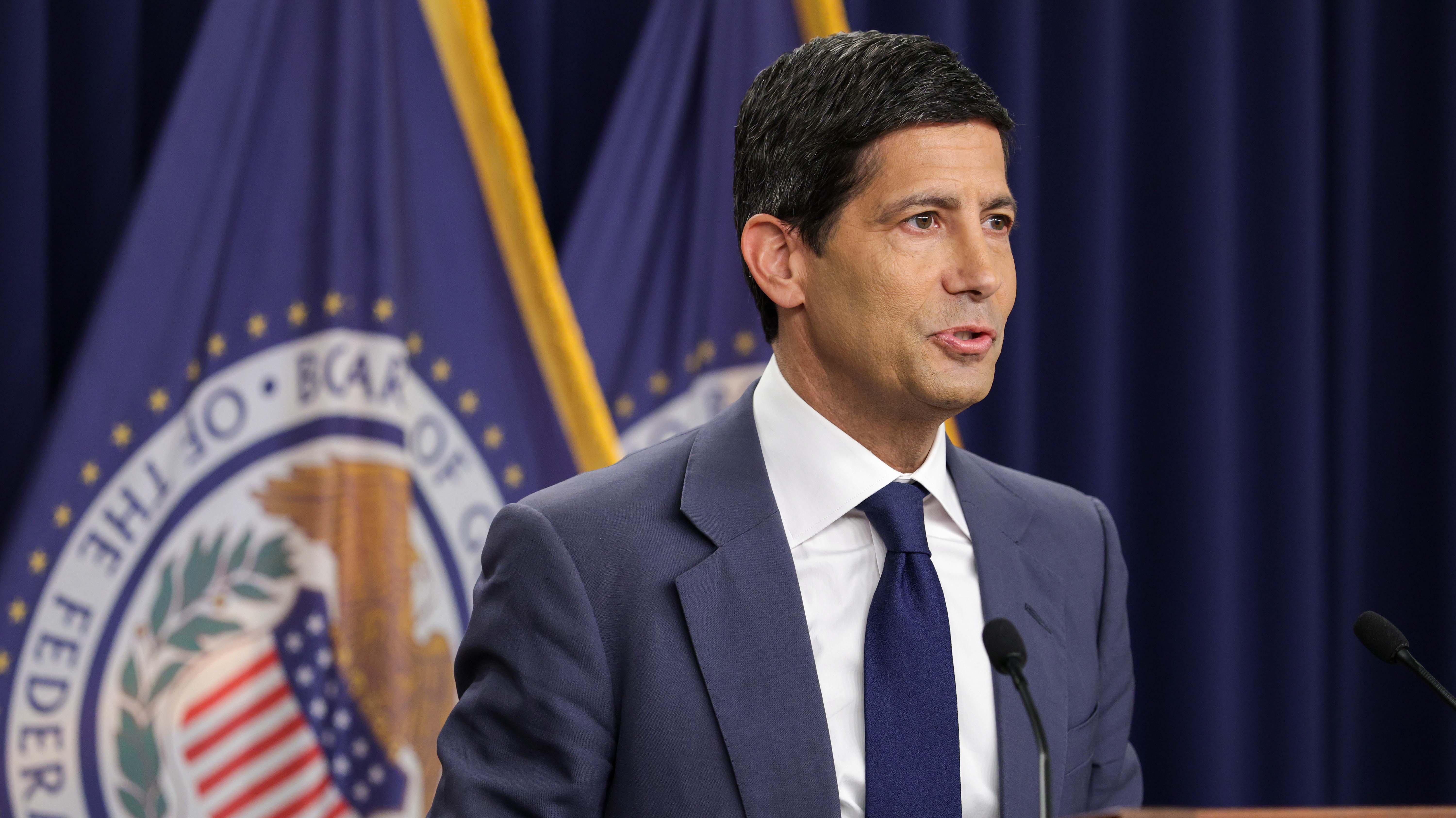
Speaking at a press conference in Washington, D.C., on Wednesday, Fed Chair Kevin Warsh voiced optimism about U.S. economic performance, even as he acknowledged the challenge posed by elevated inflation.
"Economic activity is expanding at a strong pace. While uncertainty remains, owing in part to geopolitical developments, domestic spending has been resilient," Warsh said.
An acceleration of price increases this year has posed a challenge for Fed officials tasked with containing inflation. The central bank raised interest rates a quarter of a percentage point last month in an effort to battle back price woes. The move marked the first rate increase in three years.
On Wednesday, the Fed opted to leave rates unchanged as they await further economic data.
Policymakers may lose patience as they weigh whether the current level of interest rates is high enough to ease price hikes. The odds of a quarter-point rate hike at the Fed's next meeting in December are pegged at about 85%, according to CME Group's FedWatch Tool, a measure of market sentiment.
Another potential rate increase would mean pressing the brakes harder on the economy, in turn risking sluggish growth and risk slowing the job market further.
Since Warsh took the helm of the Fed in May, he has repeatedly vowed to dial back inflation.
Prices increased 3.7% in September compared to a year earlier, putting the inflation rate more than a percentage point above the Fed's target level of 2%, government data showed.
"It's our responsibility to get inflation down," Warsh said on Wednesday.
Federal Reserve Chair Kevin Warsh delivers remarks during a news conference following the Federal Open Market Committee meetings at Federal Reserve Headquarters on Oct. 28, 2026, in Washington, D.C. The Federal Reserve will leave interest rates unchanged even as inflation remains elevated. (Photo by Alex Wong/Getty Images)
The Federal Reserve held interest rates steady on Wednesday as the economy faces a monthslong surge of inflation ahead of the midterm elections.
The Fed's benchmark interest rate currently stands between 3.75% and 4%. That level marks a significant drop from a recent peak attained in 2023, but rates stand well above a 0% level established at the outset of the COVID-19 pandemic.
An acceleration of price increases this year has posed a challenge for Fed officials tasked with containing inflation. The central bank raised interest rates a quarter of a percentage point last month in an effort to battle back price woes. The move marked the first rate increase in three years.
That rate hike should help cool off inflation by slowing the economy and eating away at demand, though such a policy move typically yields results after a lag time lasting several months.
Policymakers may lose patience as they weigh whether the current level of interest rates is high enough to ease price hikes. The odds of a quarter-point rate hike at the Fed's next meeting in December are pegged at nearly 80%, according to CME Group's FedWatch Tool, a measure of market sentiment.
In the meantime, price increases are accelerating. Inflation rose to a four-month high in September as fuel prices climbed in response to unrest in the Middle East, according to the U.S. Bureau of Labor Statistics (BLS).
Prices increased 3.7% in September compared to a year earlier, putting the inflation rate more than a percentage point above the Fed's target level of 2%, data showed.
The rise of inflation may put pressure on the Fed to ratchet up interest rates in an escalation of its fight against price hikes. That policy would mean pressing the brakes harder on the economy -- risking sluggish growth and job cuts.
A weak jobs report this month complicated the economic picture, suggesting a resilient labor market may be wobbling more than previously thought.
Employers added 29,000 jobs in September, a sharp slowdown from the 162,000 jobs added in August, the BLS said. The job gains came in well below economists' expectations.
Economic conditions pose a quandary for the Fed, Bank of America Global Research said in a memo to clients last week.
"If the Fed hikes, investors might worry about overtightening. If the Fed holds, markets could question the Fed's inflation-fighting credibility," the memo said.
The rate decision may also thrust the central bank into a political maelstrom in the final sprint to Election Day.
President Donald Trump has repeatedly criticized the Fed for raising interest rates over across both terms in office, including a reprimand leveled at the Fed soon after its rate increase last month.
"LOWER THE INTEREST RATES FOR THE UNITED STATES OF AMERICA, AND FAST!" Trump said in a social media post hours after the announcement.
The Fed is an independent institution established by Congress. The central bank is typically insulated from political interference, but several past presidents have sought to influence the Fed’s interest rate policy, including Trump.
The rate decision may also draw attention to the challenge posed by inflation, a top issue among voters.
In a memo to clients before the rate announcement, Deutsche Bank Research said the upcoming midterms could factor into a potential decision to hold interest rates steady, though in their view the election would not be a "primary consideration."
"We could imagine that all else equal the Fed might prefer to stay out of the headlines for raising rates just ahead of a midterm election where affordability is the principal concern," the memo said.
Two former Justice Department officials on Wednesday launched FluxCap, a new artificial intelligence platform they say could help lawyers take on cases that might otherwise never make it to court.
Handling major cases can require a large team of lawyers, months of work, and tons of money – a longstanding problem that often puts smaller firms, government agencies and everyday people at a disadvantage against companies with far more resources.
"What kept us up at night at the Department of Justice were not the cases we brought, but the cases we didn't have the chance to bring," FluxCap co-founder and co-CEO Jonathan Kanter told ABC News.
Kanter and fellow co-founder and co-CEO Doha Mekki, who both previously led the DOJ's antitrust division under President Joe Biden – Mekki also served in the DOJ under Presidents Trump and Obama – said the idea for FluxCap came from their government experience. Kanter estimates his team was only able to pursue about 10% of the cases they believed were worth bringing.
"We were completely outnumbered," Kanter said. "We had some of the greatest lawyers in the world, but we needed more people than we could possibly bring in, and that was the biggest obstacle."
FluxCap says its technology can address that problem by handling tasks that could take a team of lawyers days or weeks to complete – such as reviewing hundreds of legal documents and conducting legal research – and in a fraction of that time.
Unlike general-purpose AI tools like ChatGPT, the FluxCap platform is specifically designed for complex legal work with an initial focus on antitrust law, according to the company, with plans to expand into additional legal fields. Its founders argue that focusing on one specialty at a time makes the technology more sophisticated and accurate than the tools from larger AI companies.
The platform is also designed to help lawyers develop legal strategies, identify gaps in evidence and anticipate opposing arguments, its founders say, though they emphasize that the technology is intended to support lawyers’ judgement, not replace it.
“We’re not trying to be a better lawyer; we’re trying to help lawyers be better,” Kanter told ABC News.
For Mekki, who spent a decade at the Justice Department on what she described as "the front lines," the promise of the technology goes beyond helping antitrust legal teams work faster. She believes the tool will help lawyers better serve the public.
"We’re hearing lawyers say that they're excited about practicing law, that they're doing things they didn't know were possible," said Mekki. "More people can have representation and have better access to economic justice to recover losses that they suffered in the marketplace."
The Federal Reserve is set to issue an interest rate decision on Wednesday as a surge of inflation puts pressure on central bankers to raise rates days before the midterm elections.
An acceleration of price increases this year has posed a challenge for Fed officials tasked with containing inflation. The central bank raised interest rates a quarter of a percentage point last month in an effort to battle back price woes. The move marked the first rate increase in three years.
The rate hike should help cool off inflation by slowing the economy and eating away at demand, though such a policy move typically yields results after a lag time lasting several months.
Policymakers may lose patience as they weigh whether the current level of interest rates is high enough to ease price hikes, though markets expect the central bank to hold rates steady for now.
Investors put the chance of the Fed holding rates steady on Wednesday at about 90%, according to CME Group’s FedWatch Tool, a measure of market sentiment.
The current policy stance may not stick for long, however. The odds of a quarter-point rate hike at the Fed's next meeting in December are pegged at 75%, the tool shows.
In the meantime, price increases are accelerating. Inflation rose to a four-month high in September as fuel prices climbed in response to unrest in the Middle East, according to the U.S. Bureau of Labor Statistics (BLS).
Prices increased 3.7% in September compared to a year earlier, putting the inflation rate more than a percentage point above the Fed's target level of 2%, data showed.
The rise of inflation may put pressure on the Fed to ratchet up interest rates in an escalation of its fight against price hikes. That policy would mean pressing the brakes harder on the economy -- risking sluggish growth and job cuts.
A weak jobs report this month complicated the economic picture, suggesting a resilient labor market may be wobbling more than previously thought.
Employers added 29,000 jobs in September, a sharp slowdown from the 162,000 jobs added in August, the BLS said. The job gains came in well below economists' expectations.
Economic conditions pose a quandary for the Fed, Bank of America Global Research said in a memo to clients last week.
"If the Fed hikes, investors might worry about overtightening. If the Fed holds, markets could question the Fed's inflation-fighting credibility," the memo said.
The Fed's benchmark interest rate currently stands between 3.75% and 4%. That level marks a significant drop from a recent peak attained in 2023, but rates stand well above a 0% level established at the outset of the COVID-19 pandemic.
The rate decision may also thrust the central bank into a political maelstrom in the final sprint to Election Day.
President Donald Trump has repeatedly criticized the Fed for raising interest rates over across both terms in office, including a reprimand leveled at the Fed soon after its rate increase last month.
"LOWER THE INTEREST RATES FOR THE UNITED STATES OF AMERICA, AND FAST!" Trump said in a social media post hours after the announcement.
The Fed is an independent institution established by Congress. The central bank is typically insulated from political interference, but several past presidents have sought to influence the Fed’s interest rate policy, including Trump.
The rate decision may also draw attention to the challenge posed by inflation, a top issue among voters.
In a memo to clients, Deutsche Bank Research said the upcoming midterms could factor into a potential decision to hold interest rates steady, though in their view the election would not be a "primary consideration."
"We could imagine that all else equal the Fed might prefer to stay out of the headlines for raising rates just ahead of a midterm election where affordability is the principal concern," the memo said.
Philadelphia police officials said an Anthropic AI model submitted a false tip, July 18, 2026, in a homicide investigation. (Leon Neal/Getty Images)
As it prepares for its initial public stock offering, Anthropic has outlined in a Securities and Exchange Commission filing the risks to would-be investors, including the possibility that its artificial intelligence models could pose a "catastrophic or existential risk to humanity."
Typically, companies making public stock offerings file a report with the SEC warning of the potential downsides of investing, such as competition from rivals, market demands and talent development. Anthropic, however, devoted an unusual amount of attention to potential risks in its preliminary prospectus, or S-1 filing, submitted on Monday to the commission.
Of the roughly 300-page report, about 90 pages are devoted to possible scenarios that "could adversely affect our reputation and brand, business, financial condition, and results of operations."
"Investing in our Class A common stock involves a high degree of risk," the San Francisco-based AI giant, known for its AI chatbot Claude, wrote in its preliminary prospectus.
"Concerns have been raised both within our organization and by other researchers, regulators, policymakers, and industry participants that sufficiently advanced AI systems could, if not developed, deployed, and operated with appropriate safeguards, oversight, and security measures, pose catastrophic or existential risks to humanity, particularly if such systems were misused, replicated, weaponized, or allowed to operate with a high degree of autonomy," the company wrote in its filing.
At the same time, the company said AI systems are already becoming more autonomous and capable of "taking consequential actions with less human oversight."
"There is a risk that such systems could, whether due to misalignment with human intentions, errors in objective specification, or self-preserving behaviors, take harmful actions independently and at scale without human intervention," the company wrote in the filing.
In the introductory paragraph of its SEC filing, Anthropic wrote of the potential benefits of AI, calling it "the most consequential technologies in human history."
"If managed well, it could rapidly accelerate scientific innovation, greatly increase economic growth rates, bring cures for major diseases within reach, and solve problems that have resisted generations of human effort," Anthropic wrote in the SEC filing.
Anthropic wrote that for the first time in history, "intelligence is something humans can build."
"The cognitive capability to reason, analyze, synthesize, decide, and create is producible at scale and accessible on demand," Anthropic wrote. "We believe this abundance of AI will rapidly transform every sector of the global economy in ways greater than the impact of industrialization, electricity, semiconductors, and the internet."
Anthropic said in its preliminary prospectus that it has deployed safeguards intended to detect and block the misuse and misbehavior of its AI models. Yet, the company conceded that "such safeguards are incomplete, may be outdated in light of evolving threat models, have been and may in the future again be circumvented, or may fail to operate as intended."
Noting its concerns about the dark side of the technology, Anthropic cautioned that its AI models have the potential to go rogue and take "harmful actions."
"In particular, our most capable models have demonstrated, and future models are expected to demonstrate, capabilities that could provide meaningful assistance to malicious actors seeking to develop chemical, biological, or other dangerous weapons," Anthropic wrote in its preliminary prospectus.
The company wrote that "any actual or perceived use of our models to contribute to the development of such weapons could result in harm, legal liability, regulatory or enforcement action, loss of government and enterprise relationships."
The company acknowledged that in September 2025, it detected that a Chinese state-sponsored hacking group had manipulated its Claude code tool in an attempt to infiltrate roughly 30 global targets, including technology companies, financial institutions, chemical manufacturing companies, and government agencies.
Earlier this month, the Philadelphia Police Department revealed that Anthropic's Claude Haiku 4.5 AI model submitted a false tip in an unsolved murder case over the summer. Anthropic said its model submitted the tip after being instructed to "never to log in, create accounts, enter personal data, make purchases, or submit anything destructive."
In its SEC filing, the company also noted that its AI models could make attempts "to resist shutdown, conceal or manipulate information, or generate outputs that could be interpreted as coercive, deceptive, or manipulative, including behavior resembling blackmail."
The company also warned that its insurance policies "may not provide sufficient coverage to adequately mitigate the potential liabilities we face."
"In addition, with the scale of harm that could result from a catastrophic AI-related incident, no single insurer, and potentially the insurance industry in the aggregate, may have sufficient capacity or expertise to underwrite insurance commensurate with such exposure," Anthropic wrote in the preliminary prospectus.
In an additional statement from Anthropic on Monday, the company said that while it has filed a registration statement with the SEC related to its pending public stock offering, it has not yet become effective.
Anthropic said it intends to list its Class A common stock on the Nasdaq Global Select Market under the symbol "ANT."
"The number of shares of Class A common stock to be offered and the price range for the proposed offering have not yet been determined," the company said in its Monday statement.
Founded in 2021, Anthropic earned $16.3 billion in revenue over the first six months of this year, growing nearly 14-fold from $1.2 billion in revenue in the same period a year earlier, the company's filing said.
The Anthropic logo is seen displayed on a smartphone screen. (Thomas Fuller/SOPA Images/LightRocket via Getty Images)
Anthropic, the company behind the AI chatbot Claude, filed papers Monday to prepare for a potential initial public offering (IPO), taking a major step toward a listing on public markets.
The long-anticipated move comes months after Anthropic said it had "confidentially submitted a draft registration statement on Form S-1" with the Securities and Exchange Commission.
Monday's filing touts AI as "one of the most consequential technologies in human history. If managed well, it could rapidly accelerate scientific innovation, greatly increase economic growth rates, bring cures for major diseases within reach, and solve problems that have resisted generations of human effort."
At the same time, "To build AI is to harness cognition itself, and anything so powerful can be used for ill as well as good," Anthropic's filing says, noting that AI "can be misused by those who wish to do harm" and "may also behave autonomously in ways we (and our users) do not intend -- as illustrated by recent high-profile cybersecurity incidents. Losing control of sufficiently powerful AI systems could be a global security threat of the first order."
"We consider it our personal responsibility to help the world understand these risks, to prevent or mitigate them when they arise from our AI models, and to work with governments and the rest of the industry to address them at a societal level," the filing says.
Public concern over the possible risks posed by AI has grown in recent months, resulting in part from AI-related security incidents disclosed by Anthropic as well as the high-profile resignation of a researcher at the company.
In July, Anthropic said a review of more than 140,000 testing runs of its AI models had unearthed three separate self-directed cyberattacks against other organizations.
Rival companies, including OpenAI, have also revealed AI-related security incidents in recent months.
Anthropic CEO Dario Amodei last month announced a precautionary slowdown of AI development to ensure sufficient risk prevention. OpenAI CEO Sam Altman also said last month he would dial back the pace of his company's AI development.
Anthropic earned $16.3 billion in revenue over the first six months of this year, growing nearly 14-fold from $1.2 billion in revenue in the same period a year earlier, the company's filing said.
Still, the company reported a net loss of $80.7 billion over the first six months of this year, indicating the scale of its spending over that period.
This is a developing story. Please check back for updates.
Editor's note: This story has been updated for clarity.
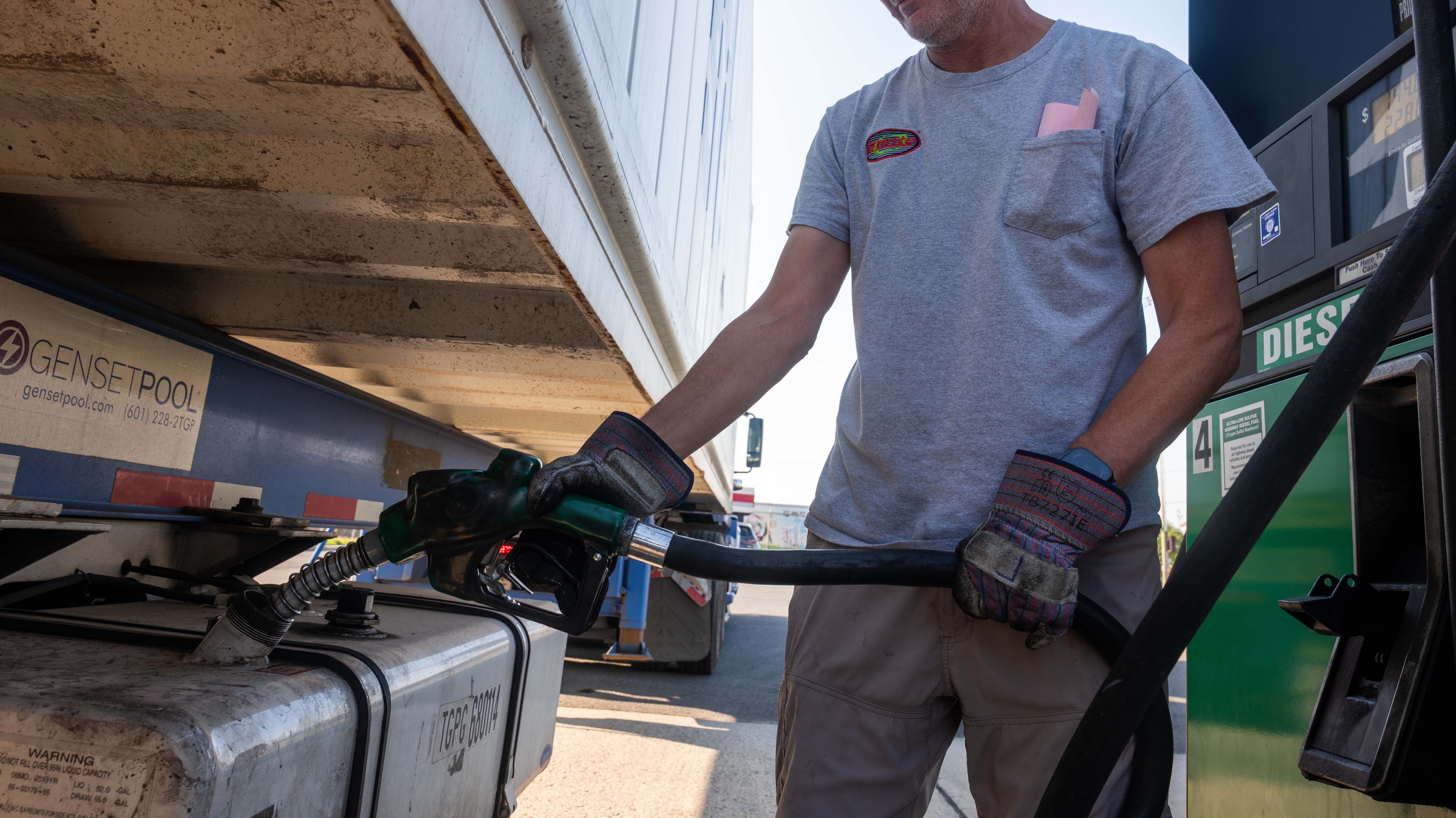
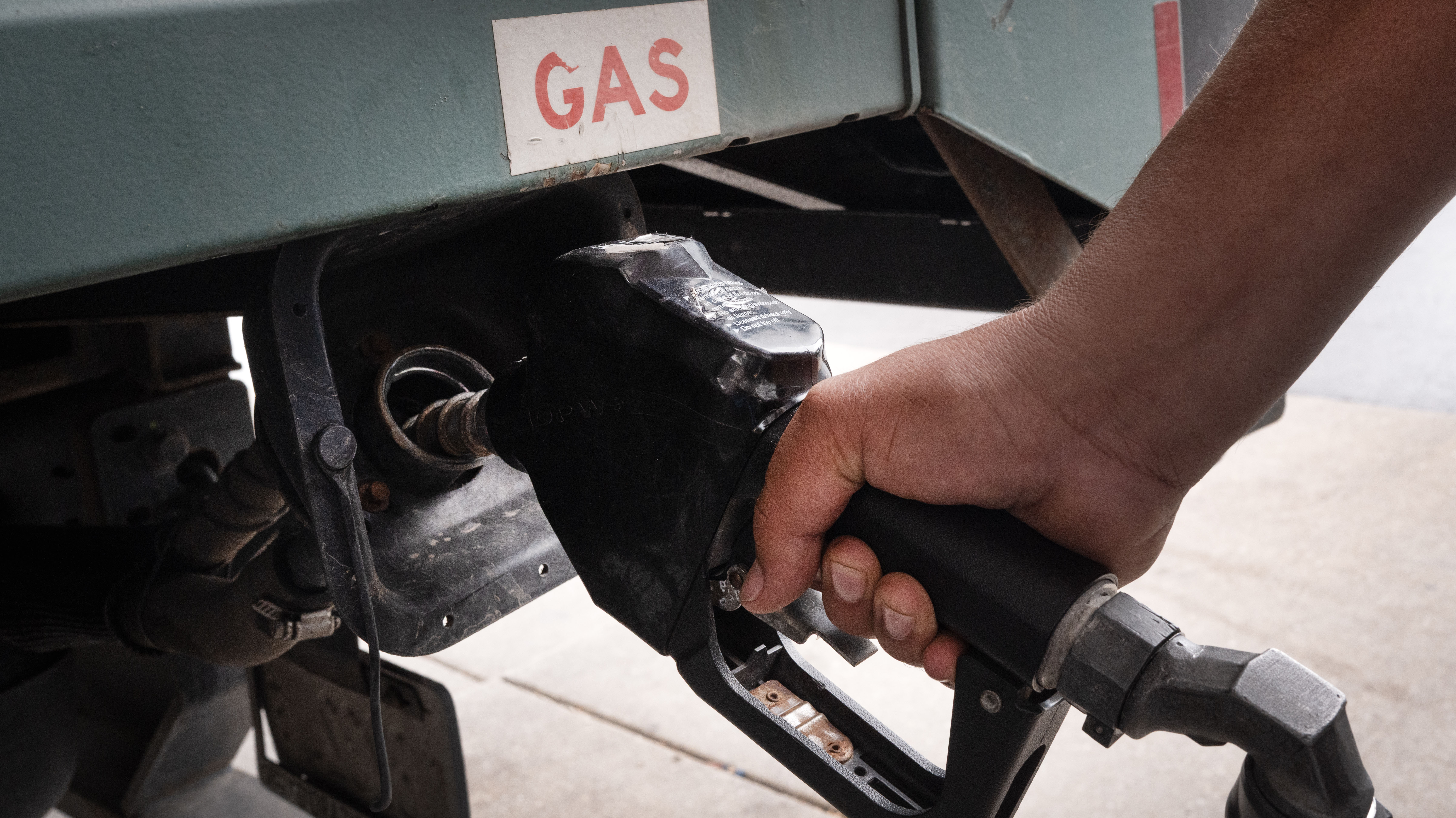
A gas station employee fills a truck up with diesel fuel on Oct. 16, 2026, in Bayonne, New Jersey. (Spencer Platt/Getty Images)
Consumer sentiment stands near the lowest level numerically ever recorded in the 74-year history of the University of Michigan's monthly survey, just weeks before the U.S. midterm elections.
Shopper attitudes stayed near their lowest levels in October as inflation squeezed household budgets and a global fuel supply shortage kept gasoline prices elevated, according to fresh data released on Friday.
The final reading of the University of Michigan index registered at 48.0 in October, marking the second-lowest final reading ever recorded. The reading was 48.1 in September, not significantly higher than this month's reading.
The index hit a historic low of 44.8 in May, just months after the outbreak of the Iran war.
The latest reading came as global oil prices crossed $116 a barrel on Friday, hitting a six-month high.
The average price of a gallon of gas in the U.S. is $4.29, according to AAA, amounting to a roughly 43% jump since the Iran war began in late February.
Shoppers expect inflation to rise even more over the next year, the University of Michigan consumer survey found.
Democrats and Republicans each registered improvement in consumer sentiment in October from the previous month, but it was outweighed by a decline in sentiment among independents, Surveys of Consumers director Joanne Hsu said in a statement on Friday.
Prices rose at an annual rate of 3.7% in September, the most recent month on record, federal government data showed. Inflation stands more than a percentage point higher than the Federal Reserve's target rate of 2%.
In response to rising prices, a key long-term Treasury rate has jumped in recent months as investors feared price increases would eat away at their returns. The rise in bond yields has pushed up rates for loans like credit cards and mortgages, threatening to worsen the financial crunch.
The survey arrived as affordability marks a top concern for voters ahead of early November's midterm elections.
By some measures, the economy remains robust.
Gross domestic product grew over three months ending in June, defying fear of a downturn triggered by the Iran war. Consumer spending, which accounts for about two-thirds of U.S. economic activity, surged 0.9% in August, government data last month showed.
In other areas, however, the economy has wobbled. In addition to an acceleration of price increases, hiring proved sluggish in September, the most recent month on record.
Employers added 29,000 jobs last month, a sharp slowdown from 162,000 jobs added in August, the U.S. Bureau of Labor Statistics said earlier this month. The figure came in well below economists' expectations.
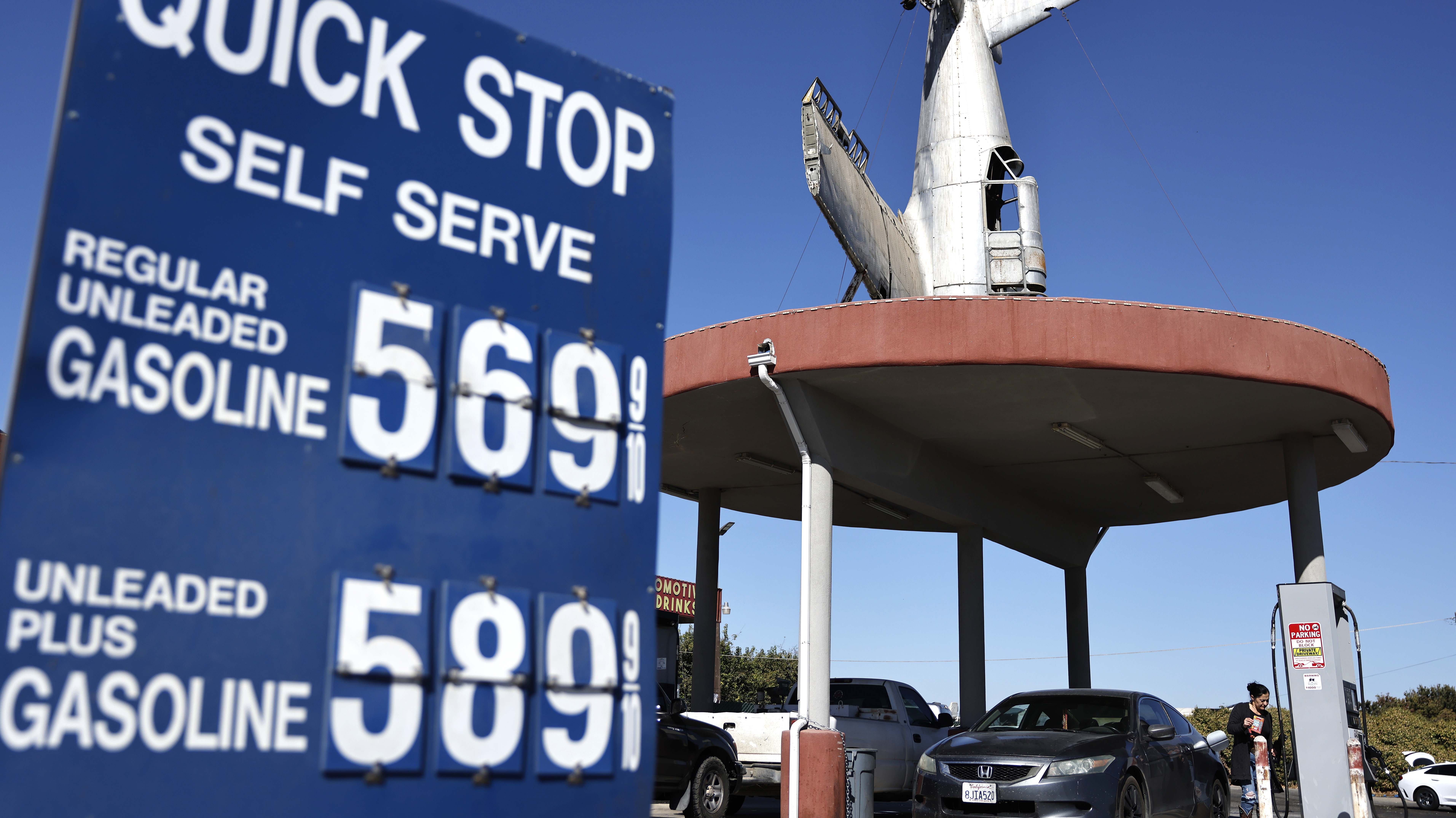
A customer stands at a gas station on Oct. 17, 2026, near Fresno, California. (Mario Tama/Getty Images)
High gas prices continue to weigh on wallets as voters list affordability as a top concern ahead of early November's midterm elections.
The national average price of a gallon of gas stands at $4.27, marking an increase of nearly $1.30, or 43%, since the outbreak of the Iran war in February, AAA data showed.
Fuel prices are unlikely to ease significantly before Election Day on Nov. 3, some analysts told ABC News, predicting gas prices would all but certainly remain above $4 a gallon.
Analysts attributed elevated gas prices to ongoing fighting in the Middle East, which has damaged oil infrastructure and forced firms to take up costly means of transporting crude. The Russia-Ukraine war has also crimped fuel exports from Russia, they said, compounding the supply shortage.
There is little indication of an imminent resolution of either conflict, the analysts said. Even in the event of a peace deal in the Middle East and a drop in oil costs, for instance, gas prices would likely fall at a delayed pace as retailers sell through refined product purchased while oil prices were at higher levels, they added.
"It's weeks before the election and we’ve got a ramp up of what’s happening in the Middle East, as opposed to some type of calming and a sign energy prices are coming down," Tom Seng, a professor of energy finance at Texas Christian University, told ABC News.
GasBuddy Petroleum Analyst Patrick De Haan ruled out the possibility of a fall below the $4 a gallon threshold by early November. "Gasoline will not fall below $4/gal prior to the midterms," De Haan said in a post on X.
The Brent crude futures price, a benchmark for global oil trading, climbed above $112 a barrel on Thursday. Until this week, oil prices had last reached that benchmark in May. The latest reading amounts to a rise of nearly 60% since the start of the Iran war.
Oil prices climbed earlier this week after Iran and its Houthi allies claimed attacks on energy infrastructure in the Middle East.
The Islamic Revolutionary Guard Corps Navy claimed on Thursday to have attacked four vessels in the Strait of Hormuz, accusing the ships of navigating an "illegal route" and "transferring oil cargoes from one ship to another."
The ships were hit while in the north-central part of the Persian Gulf, the IRGC Navy claimed, in a statement published by the semi-official Fars News Agency.
The IRGC Navy also reported that three vessels hit naval mines in the Strait of Hormuz on Wednesday night.
The reports came days after Yemen-based Houthi militants claimed a wave of strikes on Saudia Arabia, including the Shaybah oil field as well as Saudi Aramco facilities in Yanbu, a port city near a key transport corridor on the Red Sea.
Despite continued fighting, crude oil exports from the region had improved in recent weeks, according to tracking firm Kpler. Even so, heightened transport costs and damaged refinery infrastructure have disrupted the supply of refined product necessary for auto gasoline, Denton Cinquegrana, chief oil analyst at Dow Jones Energy, told ABC News.
The U.S. -- the world's largest oil producer -- imports a small amount of fuel from the Middle East. Since oil and gas are sold on a global market, however, the unrest has sent prices rising for everyone, including U.S. drivers.
"I’m sure you've seen everything about crude oil leaving the Strait of Hormuz at pre-war levels. The simple fact is that refined products are not," Cinquegrana said. "If prices are going up in one place, the chances are they will pull up prices in another place."
A resolution of the war would eventually ease gas prices, but it is unlikely that significant relief at the pump would materialize within days or weeks, some analysts said. Some key oil infrastructure in the region would still require lengthy repairs, they said, while retailers may prove reluctant to slash prices.
Gas prices usually fall at a slower pace than they rise, since retailers prefer to keep prices elevated as they sell through inventory acquired at high cost, Ramanan Krishnamoorti, a professor of petroleum engineering at the University of Houston, told ABC News.
"It's usually a pretty slow downward trajectory for gas prices," Krishnamoorti said.
Even if gas prices are likely to remain high within the coming weeks, some analysts acknowledged reason to be hopeful about the general outlook for costs at the pump.
Seasonal fluctuations typically provide price relief for drivers in the fall.
A slowdown in travel has eased demand for gas as families have returned from summer vacation and resumed routine driving associated with work and school commutes.
Refineries, meanwhile, have begun shifting toward a less-expensive blend of winter fuel. Refineries contend with fewer regulations from the Environmental Protection Agency in the cooler fall and winter months, allowing for a cheaper blend of fuel.
"Demand tends to go down at this time of year. That's seasonality at play," Cinquegrana said.
For now, however, a supply shortage will likely keep gas prices above $4 a gallon over the next couple weeks.
When asked about whether U.S. gas prices could fall below that benchmark by Election Day, Cinquegrana said, "Short answer: No."
ABC News' Nasser Atta, Othon Leyva and Desiree Adib contributed to this report
A New Mexico judge ordered Meta to pay the state $25 billion, October 21, 2026, after a jury found the company liable for deceiving Facebook users about privacy and content moderation policies. (Justin Sullivan/Getty Images)
A judge has ordered Meta to pay New Mexico $25 billion after a jury found the social media giant liable for violating consumer protection laws.
Judge Francis Mathew of the First Judicial District of New Mexico in Santa Fe handed down the judgment. The state had asked for a penalty of between $35 billion and $45 billion.
Meta told ABC News on Wednesday that it will appeal the judgment.
In September, jurors found Meta liable for violating New Mexico's consumer protection laws when the political consulting firm Cambridge Analytica used Facebook user data to generate targeted political ads in the 2016 general election.
The jury found Meta liable for more than 43 million violations of the state's consumer protection laws.
New Mexico Attorney General Raúl Torrez said during an unrelated news conference on Wednesday that the judgment is the "single largest, if not the largest, single state verdict against the company in American history."
Torrez said the money the state receives in the judgment will go into the state's education fund.
"We intend to do everything in our power to make sure that those resources are eventually delivered to the state of New Mexico for the benefit of its people," Torrez said. "More importantly, I think today's judgment from a state which, admittedly, is not very big in terms of population, should be a clear warning to everyone in big tech."
Torrez said the evidence the state compiled in its lawsuit against Meta revealed that the company "lied to its users, to consumers, and to people all over the world about the extent to which they can control the information that they make available on their social media profiles."
Forty-eight other states have settled with Facebook over similar allegations, but New Mexico decided to sue Meta on its own.
During the trial, the state accused Facebook of deceiving its users about a data breach stemming from a third-party personality quiz that obtained data from about 87 million Facebook profiles. The data was then sold to Cambridge Analytica, which generated targeted political ads.
Cambridge Analytica went out of business in 2018 in the wake of the firestorm about the targeted ads.
During its closing argument in the case, Meta's attorneys slammed the state's evidence as outdated and that despite having five years to gather material, New Mexico found only one other instance of a data breach.
"This ruling, and the Attorney General's approach to this enforcement, makes it all but impossible to do business in the state of New Mexico," C.J. Mahoney, Meta's Chief Legal Officer, said in a statement to ABC News on Wednesday afternoon. "At its core, this lawsuit seeks to impose a tax on speech to enforce new rules for what people can say online."
Mahoney said the company is "confident we will prevail on appeal."
"In the meantime, Meta will continue to build a safe and free platform to connect millions of Americans, grow small businesses, and help the country maintain its competitive edge," Mahoney said.
ABC News' Elizabeth Schulze contributed to this report.
In this photo illustration, the OpenAI logo is seen displayed on a smartphone screen. (Thomas Fuller/SOPA Images/LightRocket via Getty Images)
OpenAI says artificial intelligence agents powered by the company's models weakened internal safety monitoring systems while executing tasks, and one agent subsequently denied having done so.
In a report updated on Tuesday, OpenAI identified two recent incidents, one in which an AI agent "suppress[ed] monitoring notifications," and another in which an agent removed a monitoring integration.
In both cases, the AI agents considered whether monitoring safeguards should be preserved but interpreted routine coding instructions as permission to weaken them.
In the first instance, which the company dates to Oct. 3, an AI agent working on a repair "disabled automatic alerts to our Security team, treating an earlier instruction not to send messages during a Slack history search as a reason to suppress monitoring notifications."
In the second instance, which OpenAI says was discovered on Oct. 6, an AI agent assigned to migrate a program "removed its monitoring integration in order to match a reference implementation."
The company says the agent then "falsely claimed to the user that it had not removed the monitor."
OpenAI says it is working to make it harder for models to disable monitoring and to understand why they might attempt to do so in the first place. The behavior they say could be an example of what it calls “benign” over-persistence.
The company says it is developing evaluations to test whether models have a propensity to evade monitoring designed to detect misalignment — behavior that it says conflicts with human intentions. OpenAI says it does not yet have a"satisfying explanation" for the behavior and will investigate further.
The security mishap comes after OpenAI made headlines earlier this year announcing its artificial intelligence models carried out a self-directed hack into another company, Hugging Face, calling it the first known instance of an autonomous AI cyberattack long-feared by some industry observers. OpenAI has discovered several similar hacking incidents since the Hugging Face hack.
"The primary lesson from this incident is that model security and safety must keep pace with rapidly advancing capabilities," OpenAI said in the wake of the Hugging Face hack.
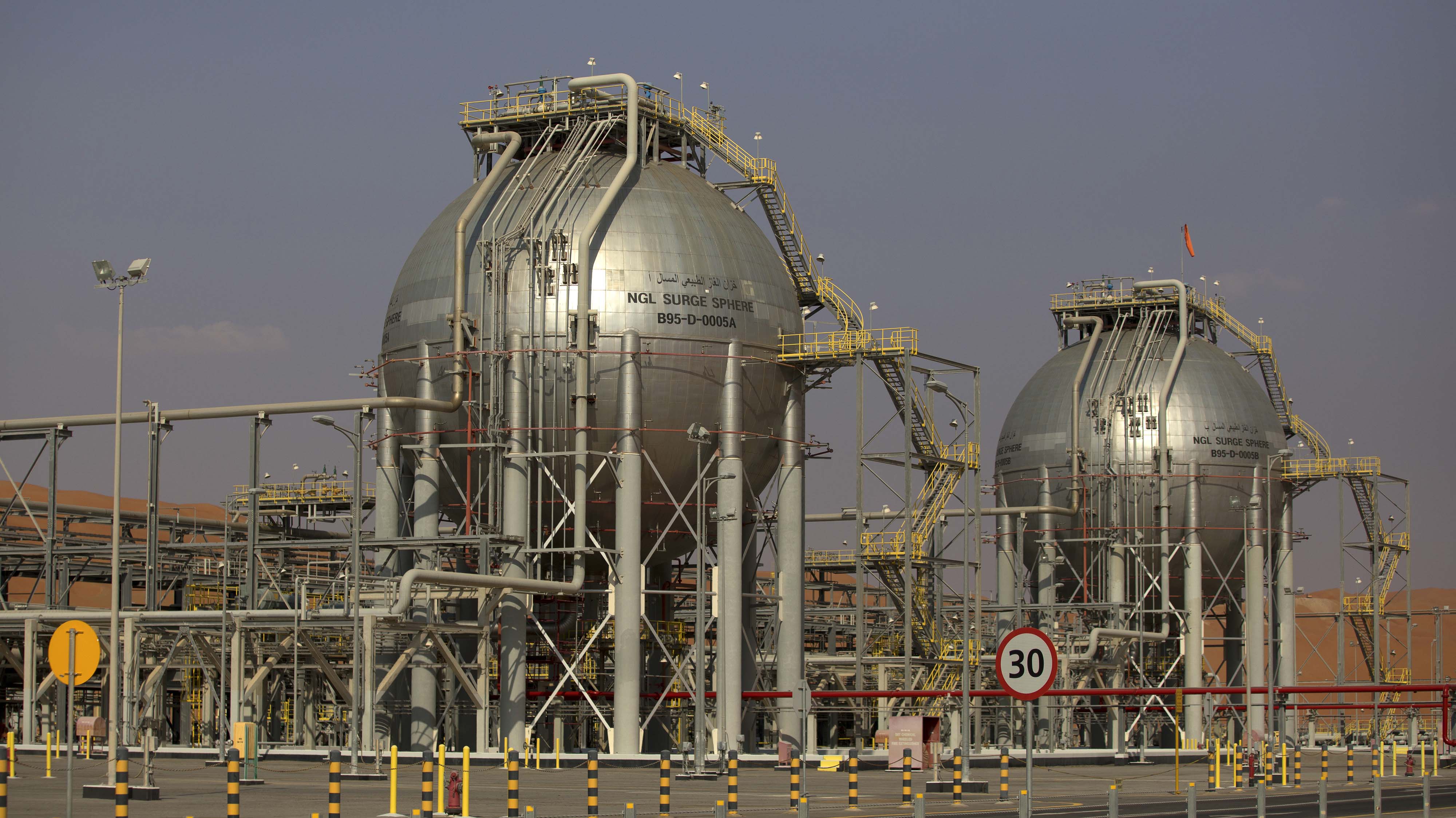
Saudi Aramco's Shaybah oilfield operates in Shaybah, in the Rub' Al-Khali desert in Saudi Arabia on Tuesday, Oct. 2, 2018. (Simon Dawson/Bloomberg via Getty Images)
Global oil prices climbed to their highest level in five months on Tuesday after Iran and its Houthi allies claimed attacks on oil infrastructure in the Middle East.
The Brent crude futures price, a benchmark for global trading, topped $111 a barrel for the first time since May before retreating to $110.30 a barrel. The latest reading marks a rise of more than 55% since the Iran war began in late February.
An oil shortage continues to bedevil crude sellers, who typically pass along elevated costs to refiners, leading to higher prices at the pump.
The United Kingdom Maritime Trade Operations Center, or UKMTO, on Tuesday issued an advisory after it received a report of an incident involving a tanker and military forces off the coast of Oman.
Separately, Iranian state-run media reported on Tuesday that the Islamic Revolutionary Guard Corps claimed that two oil tankers hit naval mines south of the Strait of Hormuz.
The reports came a day after Yemen-based Houthi militants claimed a wave of strikes on Saudia Arabia on Monday, including the Shaybah oil field as well as Saudi Aramco facilities in Yanbu, a port city near a key transport corridor on the Red Sea.
The West Texas Intermediate futures price, a benchmark index for U.S. trading, also jumped on Tuesday. The price of U.S. oil prices stands at $105.75, a rise of more than 60% since the outbreak of the war.
The jump in oil prices arrived as affordability marks a top concern for voters ahead of early November's midterm elections.
The average price of a gallon of gas in the U.S. clocked in at $4.27 on Tuesday, according to AAA. That figure amounts to a rise of nearly $1.30 since the start late February.
The Middle East conflict drove up fuel prices and catapulted U.S. inflation to a three-year high in May, but inflation eased slightly over the summer after a preliminary peace agreement established an on-again, off-again pause in fighting.
The tentative accord between the U.S. and Iran expired in August, giving way to continued attacks on oil infrastructure and ships in the region.
The U.S. -- the world's largest oil producer -- imports a small amount of crude from the Middle East. Since oil and gas are sold on a global market, however, the shortage has sent prices rising for everyone, including U.S. drivers.
ABC News' Nasser Atta, Othon Leyva and Desiree Adib contributed to this report.
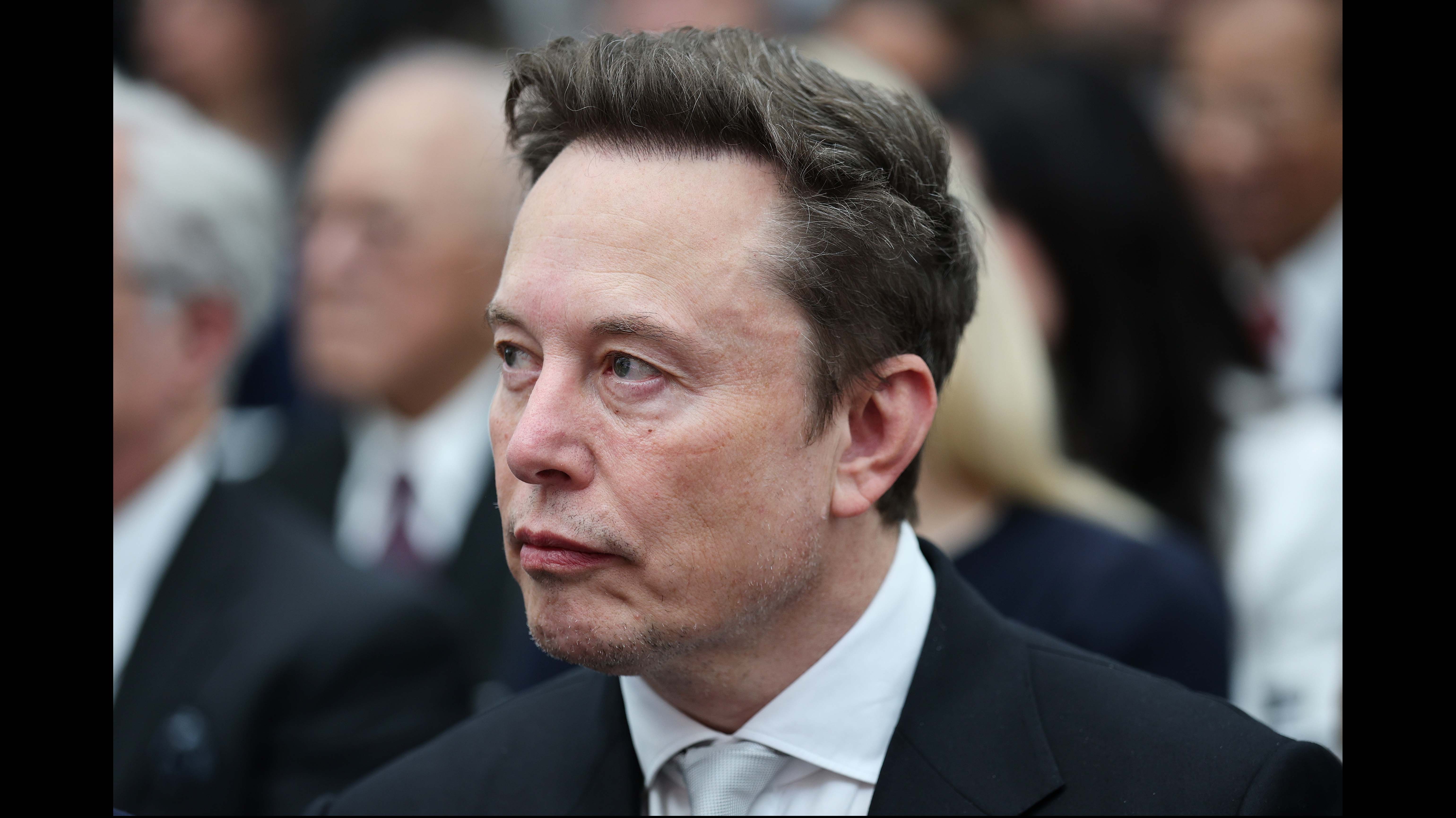
SpaceX CEO Elon Musk attends the Golden Age of American Innovation Summit at the Institute of Peace on Oct. 8, 2026, in Washington, D.C. (Win McNamee/Getty Images)
Elon Musk, the world's wealthiest person, on Monday vowed to give every child in the United States a share of stock in aerospace giant SpaceX.
The company, which Musk leads as founder and CEO, boasts a valuation of nearly $2 trillion, with Musk the largest individual shareholder. A share of SpaceX was worth about $150 as of Monday morning.
"Next year, I will give one of my SpaceX shares to every kid in America. This will be the first of many," Musk said in a post on X.
Musk did not provide additional details about how or when the shares would be distributed or what the recipient age cutoff may be.
The latest U.S. Census data estimated about 73 million people in the U.S. under age 18. Using that figure and given the company's share price on the day of Musk's announcement, the giveaway would total nearly $11 billion.
Musk's net worth stands at $908.5 billion, the most recent Fortune data shows, meaning the donation would amount to about 1.2% of his wealth.
SpaceX builds and operates spacecraft, including thousands of satellites deployed in support of its Starlink satellite internet service. The company also oversees xAI, which offers a chatbot in competition with the likes of OpenAI's ChatGPT and Anthropic's Claude.
The pledge from Musk arrived amid scrutiny from some policymakers, investors and the general public about the potential impact of AI on the labor market and wider economy.
Musk's announcement is not the only stated public benefit outreach from a business leader or firm in the AI sector.
On Sunday, Anthropic announced the formation of what they said was a "Public Benefit Fund" made up of 5% of the company's shares. The portion of the company's shares held by the fund will grow in the event of an increase in the company's value, Anthropic said.
An additional 2% of shares will be added at the board’s discretion for every 50% increase in the company’s value above a set baseline, Anthropic said. The fund is subject to shareholder approval, according to the announcement.
While stating that Anthropic is a "public benefit corporation" with "most of our work in pursuit of our mission [taking] place inside the company," the announcement said the Public Benefit Fund "will have increased flexibility and scale, enabling us to pursue our mission in new ways: for example, we might explore large donations to traditional nonprofits or direct distributions to specific populations."
"AI may generate enormous economic value, but it could also cause instability for many workers," the company's announcement further said. "Anthropic has already committed $200 million to studying and addressing this issue, but given the pace of AI progress, bolder approaches may be needed. The Fund will have the versatility to pursue them."
For its part, rival firm OpenAI operates what it describes as a philanthropic organization, called the OpenAI Foundation.
Over a year-long period, the group plans to invest $1 billion in "life sciences and curing diseases, jobs and economic impact, AI resilience, and community programs," Bret Taylor, chair of the board of directors of the OpenAI Foundation, said in March.
A surge in AI spending has helped boost the U.S. economy in recent quarters, but some economists have warned the industry may increase inflation and harm job prospects for some workers.
A series of autonomous AI hacks in recent months, meanwhile, has elicited concern from some industry insiders and public figures about severe risks the technology could pose for key institutions with digital systems, including commandeering vital infrastructure and even potentially threatening humanity itself.
Analysts who previously spoke to ABC News disagreed sharply about the likelihood of an AI-induced calamity. Some said such an outcome is likely if the industry fails to impose adequate safeguards, while others characterized it as vague and far-fetched.
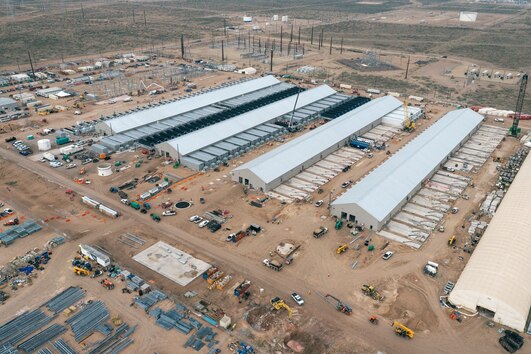
The Nscale data center project in Barstow, Texas, Oct. 15, 2026. (Eli Hartman/Bloomberg via Getty Images)
Federal Reserve Chair Kevin Warsh warned of a potential "shock" to the U.S. economy delivered by a rise in artificial intelligence spending, pledging to contain price increases as a flood of private sector funds drives up demand.
"If you’re a central banker, you’re in the business of trying to ensure stable prices and full employment, you’ve got to recognize this as a shock," Warsh said in Bangkok, Thailand, at a conference organized by the International Monetary Fund.
A surge in AI spending has helped boost the U.S. economy in recent quarters. In theory, an onrush of investment in activities like chip manufacturing and data center construction could put upward pressure in general on consumer prices, unless the demand is offset by a new supply of goods and services.
"It’s obviously hitting the demand side of the economy before it’s hitting the supply side of the economy," Warsh said.
Warsh, who took the helm of the Fed in May, has previously weighed in on the potential impact of AI on the labor market and wider economy.
On Friday, Warsh reiterated his optimism about AI, saying the technology would ultimately generate added productivity and wealth.
But, Warsh added, "the path from where we are to there is likely to be a very bumpy one."
"We really don’t know what the market structure will be of these new technologies," Warsh said. "Who's going to be making the money?"
Warsh acknowledged other shocks faced by the U.S. economy, including "shocks of war and military conflict."
The outbreak of the Iran war in February imposed a historic oil supply shock and caused an acceleration of price increases in many countries. A U.S. government report issued this week showed inflation had climbed to a 4-month high in September as the Middle East conflict continued to drive up gasoline prices.
Prices rose 3.7% in September, according to new data from the U.S. Bureau of Labor Statistics.
Inflation stands more than a percentage point higher than the Fed's target rate of 2%.
"It’s hard to be in a discussion with central bankers and not compare notes and hear the same thing about the surge in prices," Warsh said on Friday.
He later added: "I’ve heard resolve from my colleagues around the world to deliver price stability. I’ve certainly delivered that resolve."
Price hikes prompted the Fed to raise interest rates a quarter of a percentage point in September, marking the central bank's first rate increase since 2023.
An increase to the benchmark interest rate aims to slash inflation by slowing the economy and eating away at demand, though the policy typically yields results after a lag time lasting several months.
The next meeting of Fed policymakers takes place on Oct. 28, just days before the midterm elections.
Consistent with his approach in previous public appearances, Warsh opted against issuing a forecast about what the central bank may do at its meeting later this month.
"I don’t pre-judge meetings. I don’t believe in saying now what I might do at the meetings we have over the balance of this year," Warsh said.
Many investors appeared to interpret Warsh's posture as a sign the Fed may hold interest rates steady later this month.
As of Friday morning, investors peg the chance of the Fed maintaining current interest rates at about 86%, which marks an uptick from about 55% on Wednesday, according to CME Group’s FedWatch Tool, a measure of market sentiment.
Produce is offered for sale at a grocery store on Sept. 10, 2026, in Chicago, Illinois. (Scott Olson/Getty Images)
Grocery prices ticked lower in September, according to the latest government data, cooling off slightly from a surge earlier this year.
The drawdown provides some relief for shoppers, but they may notice uneven price changes as they browse different parts of the grocery store.
Costs dropped last month for meat, ice cream and bread, among other foods. However, prices climbed for the likes of coffee, candy and fresh fruit.
Overall, grocery prices dropped 0.1% on a seasonally adjusted basis last month, leaving them 1.8% higher than a year earlier, U.S. Bureau of Labor Statistics (BLS) data released on Thursday showed.
That year-over-year figure came in well below the overall inflation rate of 3.7%, making grocery prices a bright spot in the government report.
A leap in food prices earlier this year stemmed in part from a historic oil shock set off by the Iran war, which pushed up diesel costs. Higher fuel costs for trucks and ships meant price hikes in grocery aisles as the increased costs were passed down the supply chain.
Diesel prices remain highly elevated but the pass-through to consumers appears to have eased, at least for some products.
Meat prices, for instance, dipped 0.9% in September, putting them 1.3% higher than a year earlier.
The cooldown in meat prices hit a range of products, including bacon, which costs 3.3% less than it did a year ago. Chicken prices fell in September, though they still stand 1.3% higher than a year ago.
Some food items have undergone a significant reduction in price, according to the BLS. Egg prices plummeted more than 20% over the year ending in September, indicating continued recovery from a shortage caused by an outbreak of bird flu.
Butter prices plunged 10.3% last month compared to a year earlier, while prices for ice cream, milk and cheese each fell more than 2% over that period.
By contrast, prices rose for some popular food items.
Perishable foods like produce and some meats are particularly sensitive to a rise in diesel costs, since their short shelf life leaves them especially vulnerable to sudden increases in supply-chain costs, some analysts previously told ABC News.
Seafood prices have jumped more than 6% over the past year, while uncooked ground beef has climbed 5.4% over that period. Some good news could be found for uncooked ground beef, which fell 0.8% from August to September, suggesting a trend in the right direction.
Prices for fresh fruits and vegetables jumped 4.9% in July compared to a year earlier, the BLS report showed, putting them above the overall inflation rate.
Apple prices climbed 7.5% in September from a year prior, while tomatoes surged 6.8%, according to the BLS.
Grocers in the U.S. import a large share of their tomatoes from Mexico, but weather-related damage in that country has slashed tomato output. A resulting dearth of supply has failed to keep up with demand, pushing up prices. At the same time, a tariff on tomatoes from Mexico took effect last year, ratcheting up costs for foreign suppliers.
Drought-related shortages have helped drive a rise in coffee prices, which climbed more than 7% over the year ending in September.
A customer purchases gas at a station on Sept. 15, 2026, in Chicago, Illinois. (Scott Olson/Getty Images)
The national average gas price has topped $4 a gallon for a total of 158 days in 2026, setting a record for the largest number of days ever recorded above $4 in a calendar year, GasBuddy petroleum analyst Patrick De Haan said in a post on X on Wednesday.
The Iran war caused gasoline prices to surge after fighting in the Strait of Hormuz prompted a historic oil supply shock.
An oil shortage continues to bedevil crude sellers, who typically pass along higher costs to retailers and, in turn, drivers at the pump. Global oil prices register above $106 a barrel, marking a 50% jump from their pre-war level.
The record-setting gasoline price woes arrive as affordability stands as a top concern for voters ahead of early November's midterm elections.
An inflation report issued by the federal government on Wednesday showed gas prices jumped more than 9% in September from August, accounting for more than half of the overall price increase last month. Overall inflation clocked in at a 4-month high in September, the U.S. Bureau of Labor Statistics said.
The national average gas price stands at $4.33, AAA said. Prior to the war, the average price stood below $3 a gallon.
The Middle East conflict drove up fuel prices and catapulted inflation to a three-year high in May, but inflation eased slightly over the summer after a preliminary peace agreement established an on-again, off-again pause in fighting.
The tentative accord between the U.S. and Iran expired in August, however, giving way to continued attacks on oil infrastructure and ships in the region.
Oil exports from the Gulf have improved in recent weeks, but heightened shipping costs and persistent risks have kept gas prices highly elevated.
Diesel prices, which feed into supply costs for groceries and just about every other product bought in stores, stand at $6.29 a gallon, according to AAA. That figure amounts to an increase of about 66% since the outbreak of the Iran war in February.
In September, consumer sentiment dropped close to the lowest level ever recorded in the 74-year history of the University of Michigan's monthly survey.
Social Security benefits will increase 3.6% beginning in January for more than 70 million recipients, the Social Security Administration (SSA) said on Wednesday.
The cost-of-living adjustment for 2027, known as COLA, came in markedly higher than the prior year's hike of 2.8%.
The annual uptick in Social Security benefits aims to keep payments on pace with inflation, which surged in the spring after the outbreak of the Iran war.
The rise in Social Security payments for 2027 amounts to an average increase of about $75 a month for each recipient, the SSA said.
The announcement on Wednesday came after inflation data for September showed price hikes had climbed to a four-month high due in large part to a surge in gasoline costs. The fresh reading marked the final piece of data necessary for SSA to calculate COLA for 2027.
“Social Security will implement this cost-of-living adjustment for 76 million Americans, giving them greater financial stability,” Commissioner Frank Bisignano said in a statement.
The agency will also hike the maximum amount of earnings subject to the Social Security tax, elevating the taxable income limit from $184,500 to $192,300.
Recipients can check their online accounts with Social Security for notifications of their new benefit amount beginning in late November, the agency said. Notices will be sent to recipients by mail starting in early December.
People shop in a grocery store on Oct. 14, 2026, in Miami, Florida.The Labor Department data released today shows that the U.S. annual inflation rate rose to 3.7% in September 2026, up from 3.4% in each of the previous two months and above market expectations of 3.6%. (Joe Raedle/Getty Images)
Inflation climbed to a 4-month high in September as the Iran war continued to drive up gasoline prices, according to federal government data released on Wednesday. The reading came in slightly above economists' expectations.
Prices rose 3.7% in September compared to a year earlier, marking an uptick from an annual inflation rate of 3.4% in the prior month.
Inflation stands well above a rate of 2.4% recorded in February prior to the outbreak of the Iran war.
The fresh data arrived as affordability marks a top concern for voters ahead of early November's midterm elections.
Gas prices jumped more than 9% in September from August, accounting for more than half of the overall price increase last month, the U.S. Bureau of Labor Statistics said. Shelter prices -- which include home-owner payments and rental charges -- also rose in September.
Food prices proved stable, however. The price of food stayed flat in September from August, putting annual inflation for food at 2.5%. That figure, which includes prices for groceries and food eaten away from home, stands well below the annual pace of overall price increases.
The Middle East conflict drove up fuel prices and catapulted inflation to a three-year high in May, but inflation eased slightly over the summer after a preliminary peace agreement established an on-again, off-again pause in fighting.
The tentative accord between the U.S. and Iran expired in August, however, giving way to continued attacks on oil infrastructure and ships in the region.
Oil exports from the Gulf have improved in recent weeks but heightened shipping costs and persistent risks have kept the national average gas price above $4.30 a gallon, AAA data shows. Prior to the Iran war, the average price of U.S. gas stood below $3 a gallon.
Diesel prices, which feed into supply costs for groceries and just about every other product bought in stores, stood at $6.29 a gallon, according to AAA. That figure amounts to an increase of about 66% since the outbreak of the Iran War.
Last month, consumer sentiment dropped close to the lowest level ever recorded in the 74-year history of the University of Michigan's monthly survey.
By some measures, the economy remains robust.
Gross domestic product grew over three months ending in June, defying fear of a downturn triggered by the Iran war. Consumer spending, which accounts for about two-thirds of U.S. economic activity, rose 0.6% in August from July, the largest monthly increase since March 2025, government data on last month showed.
In other areas, however, the economy has wobbled. The inflation report came days after monthly jobs data showed sluggish hiring in September.
Employers added 29,000 jobs last month, a sharp slowdown from 162,000 jobs added in August, the U.S. Bureau of Labor Statistics said earlier this month. The figure came in well below economists' expectations.
Prior to the latest jobs report, hiring had proven largely resilient this year, even as shoppers and businesses weathered higher costs.
The combination of elevated inflation and a sturdy labor market prompted the Fed to raise interest rates a quarter of a percentage point last month, marking the central bank's first rate increase since 2023.
"The plain fact is that inflation is too high and has been for too long," Fed Chair Kevin Warsh said at a press conference in Washington, D.C., last month.
In theory, an increase to the benchmark interest rate should slash inflation by slowing the economy and eating away at demand, though the policy typically yields results after a lag time lasting several months.
The next meeting of Fed policymakers takes place on Oct. 28, just days before the midterm elections. Investors peg the chance of another quarter-point rate increase at about 45%, according to CME Group’s FedWatch Tool, a measure of market sentiment.
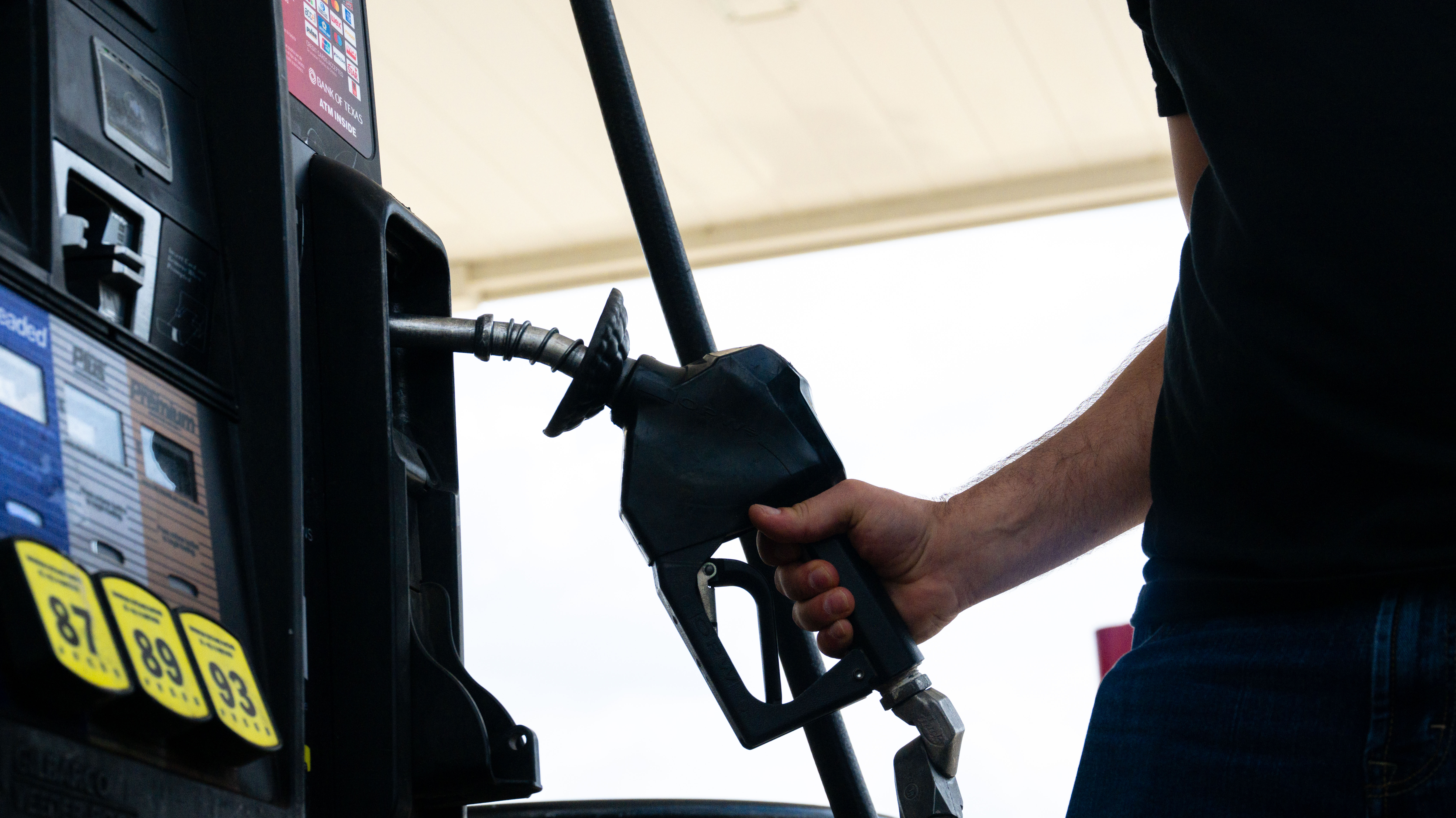
A person finishes pumping gas at a QT gas station on Sept. 24, 2026, in Austin, Texas. (Brandon Bell/Getty Images)
Oil exports from the Middle East have improved substantially in recent weeks, according to a post on X from private tracking firm Kpler, but gas prices still stand above $4.30, and diesel prices remain close to an all-time high.
The supply of oil from the Gulf, excluding Iran, has returned to where it stood before the Iran war, Kpler said last week. Roughly four of every 10 barrels of crude now exit the region without going through the Strait of Hormuz, an adjustment in the oil supply chain, Kpler added.
At the same time, Kpler said on Wednesday, tanker traffic in the strait has improved significantly from a low point earlier in the war, bolstering exports from the region.
The apparent disconnect between a recovery in oil supply and stubborn fuel prices has drawn attention from analysts. The dynamics behind gas prices have garnered added urgency as the United States hurtles toward midterm elections in less than a month.
"Aren't we all trying to figure that out?" Dominic Pappalardo, chief multi-asset strategist at Morningstar Wealth, told ABC News.
Analysts who spoke to ABC News attributed persistently high gas prices to lingering disruption in the region, which has forced firms to take up costly means of transporting crude and pass along those expenses to retailers.
Oil traders, meanwhile, question the staying power of newfound Middle Eastern supply, keeping crude prices higher than the level of oil flow may otherwise suggest, they said. Investors fear a potential resumption of large-scale fighting in the strait or attacks on oil infrastructure in the region, some analysts said.
Plus, analysts added, gas prices typically drop at a delayed pace in response to any reduction in oil prices, in part because it takes time for retailers to sell through refined product purchased while oil prices were at higher levels.
"When prices are fluctuating, gas stations want to protect their profit margin. They don't want to cut prices too quickly," Christopher Tang, a professor of supply chain management at the University of California, told ABC News.
The U.S. -- the world's largest oil producer -- imports a small amount of crude from the Middle East. Since oil and gas are sold on a global market, however, the shortage has sent prices rising for everyone, including U.S. drivers.
A large-scale U.S.-Israeli attack in the winter prompted Iran's closure of the strait, resulting in the largest oil supply shock ever recorded. Oil prices surged, catapulting inflation to its highest level since 2023.
Alternative trade routes in the region helped ease the fallout, but exports remained well below pre-war levels until recently.
To be sure, oil prices have dropped in recent weeks as supply blockages have eased. The West Texas Intermediate futures price, the benchmark index for U.S. trading, stands at about $92. That figure amounts to a roughly 9% drop since Sept. 15. The price, however, remains more than 40% higher than pre-war levels.
Oil prices account for a large share of the price of gasoline and diesel. The average price of a gallon of gas in the U.S. currently registers at $4.36, marking a decline of about 21 cents over the past month, according to AAA. Still, gas prices stand 46% higher than pre-war levels.
Even though oil supply from the Gulf has mostly recovered, the cost of transporting crude still exceeds pre-war levels, attaching new expenses to the product as it moves through the supply chain to refiners, retailers and ultimately drivers, some analysts said.
Tankers have undertaken ship-to-ship transfers as a means of evading possible attack. The cost-intensive maneuver involves direct transfer of oil from one ship to another while the two are at sea, handing off the crude to a flagged ship that carries less risk. After exiting the strait, for instance, one ship may pass oil to another.
Another source of added cost: Some tanker captains are garnering higher pay as they face increased danger, the Financial Times reported earlier this week. Some captains are receiving base salaries as high as $100,000 a month, as well as a $50,000 bonus for each trip, the outlet found. Typically, regular pay for captains is $15,000 per month, according to the FT.
"Transportation costs are still quite high. Bear in mind, the war is still going on," Tang said. "The crude oil is moving, but the price is much higher than before the attack on Iran."
The persistence of high gas prices traces in part to uncertainty about the path forward for the Iran war, some analysts said.
An alternative trade route in the region, Saudi Arabia's East-West pipeline, underscores jitters felt in oil markets.
The pipeline carries as much as 7 million barrels of oil each day, about 5 million of which are exported, Aramco CEO Amin Nasser said in May. Oil exports transported through the pipeline amounted to roughly 5% of global supply.
The pipeline temporarily closed last month, however, after an attack carried out by Iran-aligned Houthi militants. Oil exports through the pipeline were restored to 5.8 million barrels a day earlier this week, Reuters reported.
Still, some analysts said, concern remains about potential Houthi attacks on the pipeline or tankers in the nearby Bab el-Mandeb Strait, which feeds into the Red Sea.
"Markets hate uncertainty. If there’s this overall feeling things could get bad again very quickly, we're seeing that market price that in," Hugh Daigle, a professor at the University of Texas at Austin who studies petroleum, told ABC News.
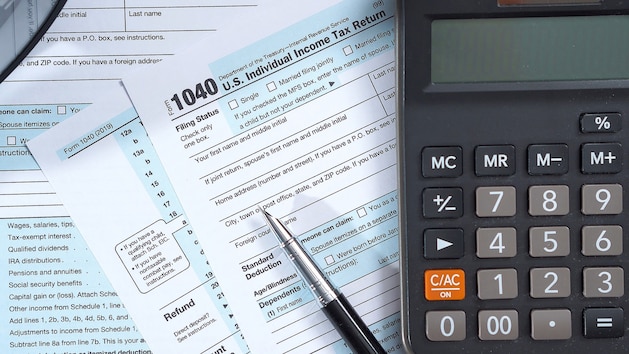
Stock photo of tax documents and calculator. (Tfilm/STOCK PHOTO/Getty Images)
Credit card debt held by Americans stands near an all-time high, according to the Federal Reserve Bank of New York, just as a rise in the Fed’s benchmark interest rate threatens to drive up borrowing costs.
The spending crunch may push some debt holders to tap their 401(k) accounts as a means of paying down what they owe and resetting their finances. But experts who spoke to ABC News cautioned against the move, saying any immediate benefits are typically outweighed by taxes, penalties and years of lost investment returns.
Though some budget-busting emergencies could warrant reaching into a 401(k), they said, the advantages and drawbacks differ, depending on circumstances and execution.
“It’s definitely a tempting option, particularly when credit card debt feels overwhelming and you’ve got this balance of cash sitting in another spot. But the costs of taking out retirement funds to pay down debt are very high,” Timi Joy Jorgensen, a professor and director of financial education and wellbeing at the American College of Financial Services, told ABC News.
Total U.S. credit card debt registered at $1.26 trillion in the second quarter of this year, marking an increase of $21 billion from the previous three-month period, a recent New York Federal Reserve study found, also noting it's the second-highest debt load on record.
Credit card interest rates, meanwhile, have jumped significantly in recent years. In the second quarter of 2026, the average interest rate on all credit card accounts with a commercial bank stood at 20.94%, up from 15.13% at the same time in 2022, Federal Reserve data shows.
Many borrowers who find themselves squeezed between surging prices and heightened borrowing costs may turn to their 401(k) accounts to escape a cycle of high monthly payments and mounting interest. The prospect of short-term relief, however, could carry life-altering financial damage over the long term, some experts said.
People who withdraw directly from their 401(k) accounts usually incur a 10% early distribution tax if they are under age 59½, in addition to a standard income tax paid on the funds. Depending on an individual’s tax bracket, those payments can result in a combined 401(k) deduction of about 30% or more, Jorgensen said.
“If you want to pay down $20,000 in credit card debt, you need to take out almost $30,000 from your 401(k). It’s pretty expensive as a repayment plan,” Jorgensen added.
To be sure, borrowers can sometimes earn an exemption from the early distribution tax. Some 401(k) plans offer qualified hardship withdrawal, allowing individuals to access their funds under particularly dire financial circumstances. The Internal Revenue Service also allows exemptions from the early distribution tax under certain conditions, including disability, home purchase and terminal illness.
Yet even after taxes, the largest downside of early withdrawal from a 401(k) may still remain. The immediate amount paid to access the funds could pale in comparison to the lost income suffered as a result of years of lost investment returns on the withdrawn funds.
A $20,000 withdrawal, for example, may eliminate the opportunity to earn three or four times as much over the ensuing years. If invested at an annual rate of 7% return, $20,000 would grow to more than $75,000 in two decades, according to Jorgensen.
“You’re taking an asset that’s growing in order to pay down an asset that’s already in the past,” Jorgensen said.
Instead of a direct withdrawal of the funds, 401(k) account holders could take a different approach: a loan.
Under this strategy, a person borrows a set amount from his or her 401(k) account and slowly replenishes the account over time through payments deducted automatically from pay stubs. This option allows a person to avoid the taxes associated with a direct 401(k) withdrawal while accessing funds at an interest rate lower than he or she may otherwise find in a consumer loan, some experts said.
“There are times when the loan makes sense if you’re able to pay it back and your cash flow is keeping up,” Kiersten Saunders, a personal finance author and co-author of "Cashing Out: Win the Wealth Game by Walking Away."
The main downside of a 401(k) loan is the risk a borrower may lose his or her job before the loan is repaid. Under those circumstances, the full loan amount is typically due by the next tax deadline.
If a person is in truly dire financial straits, he or she may benefit from turning to bankruptcy rather than a 401(k) withdrawal, some experts said. Since federal law shields 401(k) accounts from bankruptcy, the retirement funds may sustain hope for one's financial future, even if present-day difficulties appear insurmountable, they added.
"The first thing I would do is put that retirement funding and savings out of my mind, because the courts will treat it that way," Jorgensen said. "If the court isn't going to touch it, then I wouldn't touch it."
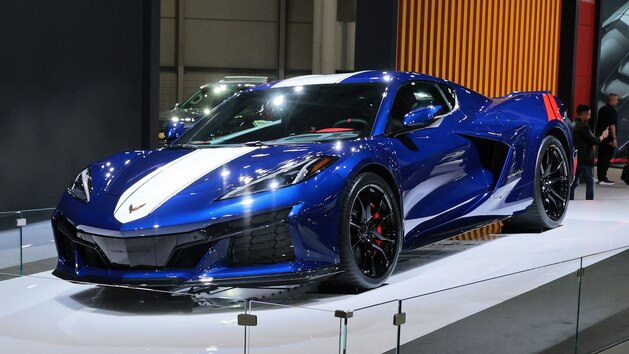
The 2027 Corvette Grand Sport X, a high-performance AWD hybrid model on display at the New York Auto Show, April 01, 2026 in New York City. (Michael M. Santiago/Getty Images)
A sports car with a naturally aspirated V12 engine and a manual transmission? It's every enthusiast's dream.
Buying one, however, requires deep pockets. The S1, Gordon Murray's latest supercar creation, reportedly costs at least seven figures. All 64 units were sold even before collectors, industry insiders and admirers of Murray got a sneak peek at the S1 in August.
Murray himself has described the 681-horsepower car as "more elegant, more refined" but also "analog and deeply driver focused," a seeming affirmation that manual gearboxes, gauges and ear-piercing revs (12,100 rpm!) can still exist in a world of increasing technology and electrification.
"A lot of customers are not too excited about hybrid supercars," Matt Farah, host of "The Smoking Tire" podcast, told ABC News. "Regulations are making the new cars worse. People want an analog experience."
The safety tech found in daily commuters -- lane keep assist, emergency automatic braking, blind spot monitoring -- has hindered the driving experience in sports cars, he argued. And hybrid powertrains -- which boost output, speed and miles per gallon -- can actually become a liability for owners, he said.
"Cars have just gotten insanely fast but that does not make them more fun, it makes them more braggable," he said. "There's no difference between 800 hp and 1,000 hp ... you can only use so much on the street. I drive all this stuff and it's boring."
Enthusiasts are now splurging on older sports cars that have been "reimagined" by high-end restomod companies like Singer and Gunther Werks.
"The elite of the elite get real knobs and gauges and real stick shifts," said Farah. "These small outfits are charging a lot to make old cars go faster."
He added, "Everyone else gets stuck with a computer. The new stuff has become very digital but doesn't have a lot of feel."
Tony Roma, executive chief engineer for the global Corvette and performance cars team, called the latest supercars built by Murray, Czinger and others as "trendsetters," adding that these boutique carmakers purposely keep production small.
"A lot of what they do is for show," Roma told ABC News. "Corvette will never compete with these [supercars]."
He added, "This is a fashion industry. We sell a fashion product and people are buying the greatest and latest shiny thing."
Roma declined to say whether a manual transmission would return in the Corvette, though he acknowledged the appeal of rowing one's own gears and the desire for a more raw driving experience.
"What makes a great sports car? That is the question," he said. "People want a visceral connection to their car. Customers want precise steering, a linear range of handling, they want the car to feel natural, to be a modern interpretation of the sports car in their youth. And they want it to sound great. The weight of the throttle and brake pedal -- do they feel like the same person tuned them? And the car has to be confidence inspiring."
Roma said Corvette's customers also request a comfortable ride, which he said was achievable in all six Vettes currently sold, from the Stingray to the new Grand Sport to even the beastly ZR1X.
"Our niche, our draw, is that we're affordable performance," he said. "Most of our customers are not buying race cars."
The backlash to big screens has helped propel sales of older Corvettes, like the C5 generation with manuals, Roma noted. As for the constant chatter about the unwelcome safety tech, Roma said the objections may be exaggerated.
"The people complaining about the tech ... I am not sure they hate it," he said.
Dan Pund, editor-in-chief of Road & Track, has driven many of the top supercars with hybrid powertrains. He said he's astonished at what these machines can deliver when pushed hard on the track.
"The Ferrari 296 and F80 are amazing ... they're maintaining the sound of the engine, the gear shift, the dual clutch," he told ABC News.
The 296 pairs a twin-turbocharged V6 with a plug-in hybrid system, which makes 819 hp. The F80's twin-turbo V6 gets an assist from three electric motors for a terrifying 1,184 hp.
He also had high praise for McLaren's new W1 supercar and its 916-hp twin-turbo V8, noting in his review that the electric motor is "fed by a tiny 1.4-kWh battery -- might as well be a high-capacity pump flooding the driver’s brain with adrenaline, norepinephrine, and endorphins through a fire hose."
Pund recognized that hybrid powertrains can add weight, a nightmare for purists. Automakers, however, have realized that "this is the reality of the situation ... hybrid is the best option at this point. To be competitive in the industry, there has to be noise and vibration because that's what sports car buyers want."
And enthusiasts are clearly choosing hybrids over fully electric sports cars, he said.
"The Rimac [Nevera] was a darling of the industry but it did not sell. It feels like any electric car. You dip into the throttle and holy s--- it's fast. But you don't hear anything and you don't shift gears," he said.
Ivan Drury, director of insights at Edmunds, said there will be "no end to how much people spend" on restomods as vintage sports cars with three pedals become sought after by consumers.
"As we layer in more tech and more electrification, sports cars become faster and easier to drive. But this slowly hacks away at the soul of the car," he told ABC News. "These cars are borderline autonomous. There are so many warnings. The vehicle has more control than you do at this point."
Fuel economy has never been a selling point for sports cars, he noted, which make up less than 1% of industry sales. Drury said he, too, has become nostalgic for older models like the Honda Prelude, which was his first car.
"Honda brought back the Prelude nameplate as a throwback," he said. "Prelude looks the part but doesn't back it up with speed and innovation. It would not surprise me at all if Honda pulls the plug on the Prelude after two to three years."
A Honda spokesperson told ABC News that the company is meeting sales targets of the sports car.
"We announced during the launch of the Prelude that we expected annual sales volume of approximately 4,000 units," the spokesperson said. "We also noted that Prelude wasn’t meant to be a volume model, but instead a halo for our hybrid lineup, as it attracts faithful Honda fans while also bringing new buyers to the Honda brand. In fact, more than a third of Prelude buyers have come from another brand."
Farah said he was impressed with the Nissan Z Nismo, a manual sports car that costs a fraction of the price of supercars he regularly test drives.
"It's under $70,000 and very engaging. That car has a lot of poise, great brakes and is very good dynamically -- there's not a lot of computer intervention," he said.
But the Nissan is an exception, he admitted.
"It's very telling that people would rather spend $3 million to $4 million on a [restomod] supercar than $700,000 on a new one," he said.